
Short Answer
With each sunrise over the vibrant pitches worldwide, the FIFA World Cup beckons fans into a thrilling realm of athletic prowess, fervent nationalism, and the unpredictable nature of sport. This quadrennial event has captivated billions, leaving an indelible mark on the history of football. It is a testament to not just international competition, but the cultural ethos encapsulated within each nation’s unique relationship with the sport. As the world gears up for yet another exhilarating tournament, let’s delve into the annals of football history and unveil the top ten countries that have triumphed on this global stage most often.
1. Brazil – The Samba Kings
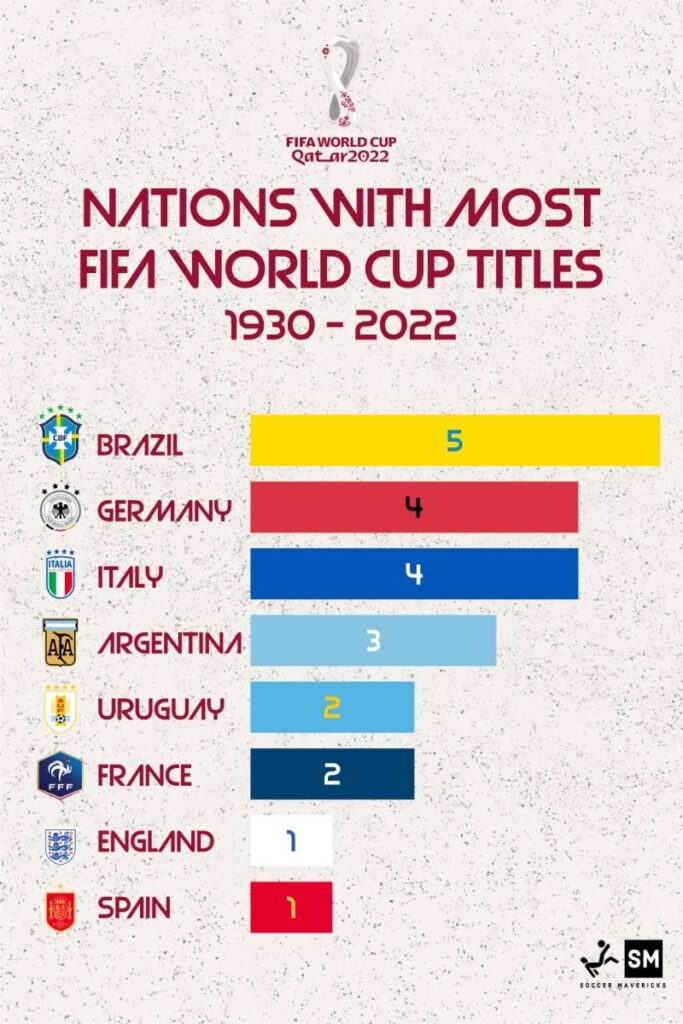
With a dazzling five World Cup titles, Brazil reigns supreme as the most successful nation in this illustrious competition. The history of the Seleção, as they are affectionately known, is bedecked with tales of skillful players—from the legendary Pelé to the contemporary maestro Neymar. They dazzled with a distinctive playing style characterized by flair, rhythm, and an unparalleled passion for the game. Brazil’s victories in 1958, 1962, 1970, 1994, and 2002 reflect not only their prowess but a cultural phenomenon grounded in samba rhythms, showcasing football as a form of art.
2. Germany – The Efficient Machine
With four World Cup trophies, Germany is undoubtedly a formidable force in international football. Their journey began in the early years of the tournament, with wins in 1954, 1974, and 1990 as West Germany, before clinching their most recent title in 2014 as a unified nation. Known for their methodical approach to the game, Germany’s tactical acumen, disciplined training, and relentless work ethic have created a legacy that few can rival. The phrase “Die Mannschaft” is steeped in pride, reflecting a unity and commitment not just to winning, but to the beautiful game itself.
3. Italy – The Azzurri’s Resilience
Italy’s illustrious footballing saga is adorned with four World Cup conquests, echoing tales of tactical ingenuity and defensive mastery. The Azzurri first clinched the cup in 1934, then defended their title in 1938. Their victories in 1982 and 2006 reaffirmed their status as a powerhouse. The Italian style of play, characterized by “catenaccio,” has ingrained resilience into their DNA. Each match represents not just a quest for victory but an embodiment of national pride and historical continuity.
4. Argentina – The Passionate Pioneers
With two World Cup victories, Argentina is synonymous with the artistry of football and unmatched emotional fervor. Their chronicles, epitomized by the brilliance of Diego Maradona and Lionel Messi, transcend mere statistics. Victories in 1978 and 1986 encapsulate their enduring spirit—a narrative of struggle, resilience, and the quest for glory that culminates in euphoria and despair. For Argentinians, the World Cup is not merely a sporting event; it is a deep-seated national ritual that unites millions.
5. Uruguay – The Original Champions
Contrary to what many might assume, Uruguay holds the distinction of being the inaugural World Cup champions. Their twin victories in 1930 and 1950 symbolize a dynamic legacy that belies their size. The “Celeste” team is a reservoir of historical significance, showcasing how a small nation can assert itself on the grandest stage of all. Their surprising triumph over Brazil in 1950 in the famed Maracanã Stadium remains one of the most dramatic moments in World Cup history. Uruguay stands as a testament to the fact that passion and heart can resonate louder than mere numbers.
6. France – The Artistic Revolutionaries
With two cups to their name, France showcases football as a fusion of artistic expression and strategic brilliance. Their victories in 1998 and 2018 reflect a transformative era in which diverse talent harmonizes with an innate understanding of the game. Legends such as Zinédine Zidane and, more recently, Kylian Mbappé, have inspired a new generation, catapulting Les Bleus into the spotlight. The French approach to football embraces creativity, making their matches not just contests but spectacles to behold.
7. England – The Home of Football
England, often considered the birthplace of football, boasts a single World Cup triumph, achieved in 1966. The legendary Geoff Hurst’s hat trick during the final transiently elevated the nation’s spirits, encapsulating a love affair with the sport that transcends time. While they have not replicated that success on the world stage, the Three Lions symbolize determination and the enduring hope for future campaigns. England’s football culture reverberates through its rich history, fervent fans, and iconic stadiums.
8. Spain – The Iberian Artists
With one title secured in 2010, Spain’s ascent in international football is a narrative of resurgence and innovation. Their philosophy, known as “tiki-taka,” revolutionized the game with an emphasis on possession and intricate passing. The triumph in South Africa marked a zenith in their footballing philosophy, merging technical brilliance with a deep commitment to collective teamwork. Spain’s victory redefined expectations, leaving an indelible legacy in World Cup lore.
9. Brazil – The Reigning Champion
Mexico stands out with its unique championship, having hosted the World Cup twice and boasting a strong tradition of football. Though they have not lifted the trophy, their passionate football culture and enduring performances place them prominently in the tournament’s history. Each World Cup engagement acts as an intoxicating celebration, uniting their fervent supporters and solidifying their status in the global football hierarchy.
10. Croatia – The Dark Horses
Emerging from relative obscurity, Croatia’s journey to the World Cup final in 2018 marked a watershed moment for a nation often overshadowed by larger footballing giants. While they have yet to claim the coveted title, their runner-up finish stirred national pride and showcased their burgeoning talent. Led by the indomitable Luka Modrić, Croatia’s playstyle fuses tenacity with skill—a juxtaposition that captivated audiences worldwide.
In conclusion, the FIFA World Cup not only embodies the quest for supremacy but also serves as a canvas upon which nations paint their legacies. These top ten countries have not only amassed titles; they have forged identities within the sport, sculpted cultural narratives, and ignited dreams. As the tournament approach dazzles fans, the anticipation of witnessing moments of glory and heartbreak remains unaltered, reinforcing the idea that football is, at its core, a profoundly beautiful and unifying force in our world.
FAQ
Which country has won the most FIFA World Cups?
Brazil has won the most FIFA World Cups, with five titles in total.
How many times has Germany won the World Cup?
Germany has won the FIFA World Cup four times.
Who was the first FIFA World Cup winner?
Uruguay was the first FIFA World Cup champion, winning the inaugural tournament in 1930.
What is the significance of the World Cup to participating countries?
The World Cup represents national pride, cultural expression, and a global stage for football excellence.
Which country won the World Cup most recently according to the article?
France won the most recent World Cup mentioned in the article, in 2018.





Leave a Reply