
Short Answer
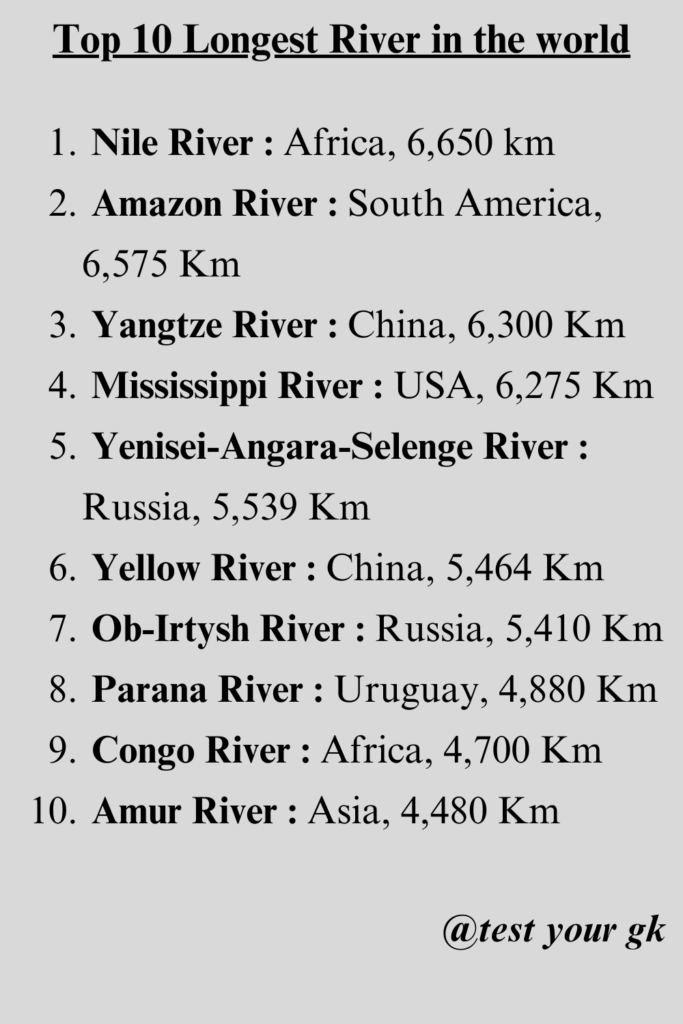
Rivers have been essential to human civilization, providing water, transportation, and fertile lands for agriculture. They carve landscapes, sustain ecosystems, and often act as natural borders between countries. Understanding the longest rivers in the world offers insight into the geography, culture, and history tied to these waterways. This listicle presents the top 10 longest rivers globally, highlighting their lengths, origins, and significance.
1. Nile River
Stretching approximately 6,650 kilometers (4,130 miles), the Nile River is traditionally considered the longest river in the world. Flowing through northeastern Africa, it passes countries such as Uganda, Sudan, and Egypt before emptying into the Mediterranean Sea. The Nile is historically significant for its role in the development of ancient Egyptian civilization, providing water in an otherwise arid region.
2. Amazon River
The Amazon River measures about 6,400 kilometers (3,976 miles) and is the largest river by discharge volume globally. Originating in the Andes Mountains of Peru, it flows eastward across South America into the Atlantic Ocean. The Amazon Basin hosts the world’s largest tropical rainforest and is home to immense biodiversity.
3. Yangtze River
The Yangtze River is the longest river in Asia, with an approximate length of 6,300 kilometers (3,917 miles). It runs entirely within China, originating from the Tibetan Plateau and flowing into the East China Sea near Shanghai. The river is vital for transportation, agriculture, and hydroelectric power, including the Three Gorges Dam.
4. Mississippi-Missouri River System
At roughly 6,275 kilometers (3,902 miles), the combined Mississippi-Missouri river system is the longest in North America. It flows through the central United States, draining most of the continent’s midsection into the Gulf of Mexico. The river system has been crucial for commerce, agriculture, and settlement.
5. Yenisei River
The Yenisei River, approximately 5,539 kilometers (3,445 miles) long, flows from Mongolia through Siberia into the Arctic Ocean. It is one of the largest river systems draining into the Arctic and is important for hydroelectricity, fishing, and transportation within Russia.
6. Yellow River (Huang He)
Measuring about 5,464 kilometers (3,395 miles), the Yellow River is the second-longest river in China and has been called the “cradle of Chinese civilization.” Originating from the Bayan Har Mountains, it flows through northern China to the Bohai Sea. The river is known for its heavy sediment load and historical flooding events.
7. Ob-Irtysh River
The Ob-Irtysh river system extends roughly 5,410 kilometers (3,364 miles) and flows through Russia and Kazakhstan. It is an essential waterway in western Siberia, supporting industries like fishing, transportation, and irrigation of extensive plains.
8. Congo River
The Congo River, about 4,700 kilometers (2,920 miles) long, is Africa’s second-longest river and the world’s deepest river. It flows through central Africa, draining into the Atlantic Ocean. The river basin is rich in biodiversity and serves as a vital transportation route in the region.
9. Amur River
The Amur River, with a length near 4,444 kilometers (2,763 miles), flows in the Far East of Russia and northeastern China. It serves as a natural border between the two countries. The river supports diverse ecosystems and is important for fishing and agriculture.
10. Lena River
The Lena River stretches about 4,400 kilometers (2,736 miles) through eastern Siberia, Russia. It drains into the Arctic Ocean and traverses various ecosystems, including taiga and tundra. The river plays a significant role in regional transportation and wildlife habitats.
FAQ
Which is the longest river in the world?
The Nile River is traditionally considered the longest river in the world, stretching approximately 6,650 kilometers.
What is unique about the Amazon River?
The Amazon River is the largest river by discharge volume globally and flows through the world’s largest tropical rainforest.
Why are rivers important to civilizations?
Rivers provide water, transportation, fertile lands for agriculture, and have historically supported the development of civilizations.
Which river system is the longest in North America?
The Mississippi-Missouri river system is the longest in North America, measuring roughly 6,275 kilometers.






Leave a Reply