Short Answer
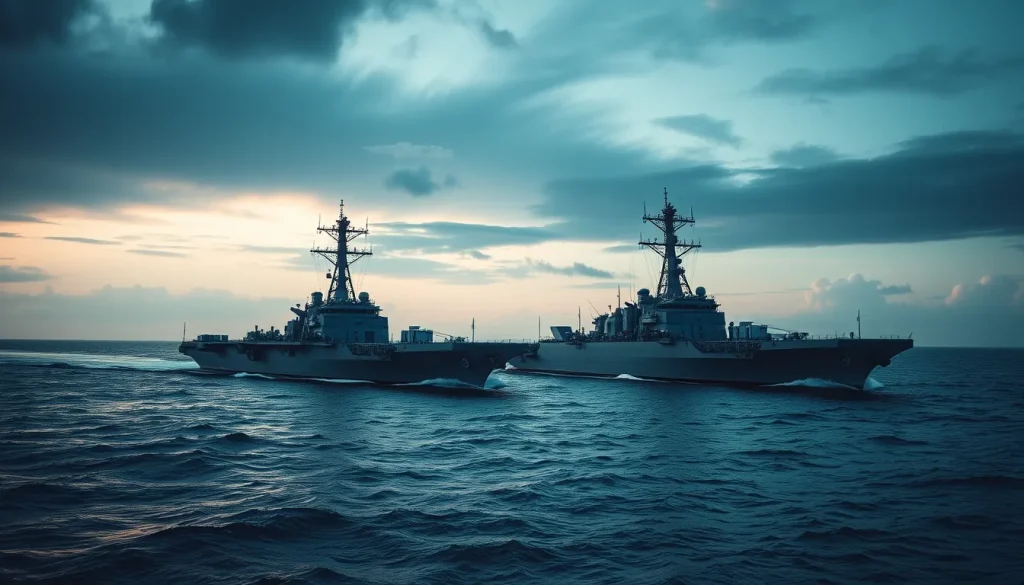
2 hulls; 248 m length; 26,000 t full load; F-35B STOVL conversion in progress
Key Takeaways
- Kaga completed its first of two-stage modification on 29 March 2024, while Izumo left dry dock around 17 April 2026 with a rectangular bow, confirming active shipyard conversion rather than planning [1][2].
- The Izumo-class baseline remains a 248 m, 38 m beam, 7.5 m draft hull with 26,000 t full load; F-35B STOVL operations require heat-resistant deck treatment, aircraft-handling changes and escort-flotilla integration, though exact coating and capacity figures are not publicly disclosed [4].
- The sovereign-funded JMSDF program strengthens Japan’s fixed-wing naval aviation and US-Japan interoperability in the Indo-Pacific, but no DFI debt, concession structure or commercial freight/energy volume applies.
Chronological Milestone Timeline
This tracker covers Japan Izumo Kaga F-35B conversion specs and the program’s movement from policy to shipyard execution. The Izumo-class conversion is a sovereign Japanese defense project, not a commercial infrastructure concession. It involves two hulls, JS Izumo (DDH-183) and JS Kaga (DDH-184), built by Japan Marine United and operated by the Japan Maritime Self-Defense Force (JMSDF) [4]. Public disclosure remains partial: the table distinguishes confirmed events from milestones whose dates are not stated in the provided source set.
| Milestone | Date / window | Status | Analytical note |
|---|---|---|---|
| Platform construction and commissioning | 2012–2017 build; in commission from 2015 | Operational baseline | Two Izumo-class DDHs completed by Japan Marine United; 19,500 t standard / 26,000 t full load [4]. |
| F-35B conversion requirement and sovereign authorization | Pre-modification policy phase; exact authorization date not in provided sources | Authorized | JMSDF proceeded with two-stage special modifications; funding is through defense budget lines, not project finance. |
| JS Kaga first special modification | Completed 29 March 2024 | Completed | First of two-stage modification finished as planned; sea trials were scheduled during FY2024 [2]. |
| JS Kaga post-modification tests | FY2024 onward | Testing / evaluation | Test results were intended to be reflected in Izumo’s second special modification [2]. |
| JS Izumo second special modification | Began FY2024; in dry dock at JMU Isogo | Under construction | Second-phase work included forward flight deck reshaping and F-35B operating changes [1][2]. |
| JS Izumo new bow revealed | Around 17 April 2026 | Physical milestone | Izumo left dry dock with a rectangular bow, replacing the original trapezoidal profile [1]. |
| JS Izumo outfitting, sea trials and RFS | Not disclosed in provided sources | Pending | RFS follows outfitting, sea trials and JMSDF acceptance; exact target date is not confirmed in the search results. |
| JS Kaga second-stage modification and final RFS | Not disclosed in provided sources | Planned / pending | Kaga is a two-stage program; final carrier configuration depends on second-stage work and F-35B integration. |
The critical schedule read is that the program is active, not merely planned. Kaga’s first-stage completion in March 2024 established the modification baseline, and Izumo’s April 2026 dry-dock exit showed the physical bow change [1][2]. However, neither source gives a final operational date for both ships, so the tracker status is under_construction rather than operational.
Consortium, Operators & Financing Breakdown
There is no commercial concessionaire or multilateral debt package in the conventional infrastructure sense. The sovereign sponsor is the Government of Japan through the Ministry of Defense, with the JMSDF as operator and capability owner. Japan Marine United (JMU) is the industrial prime for the Izumo-class and the Izumo second-phase works at its Isogo shipyard in Yokohama [1][4]. The F-35B STOVL aircraft is a separate Lockheed Martin program; the shipyard scope is hull, deck and aviation-support modification.
| Function | Institution / entity | Financing or contractual role |
|---|---|---|
| Sovereign sponsor | Government of Japan / Ministry of Defense | Defense budget appropriation; no project-level financial close disclosed |
| Operator / capability owner | Japan Maritime Self-Defense Force (JMSDF) | Requirements, acceptance, trials, doctrine and deployment |
| Shipyard / EPC | Japan Marine United (JMU), Isogo shipyard, Yokohama [1]; class builder [4] | Modification and outfitting contractor; dry-dock availability is a schedule gate |
| Air system | Lockheed Martin F-35B STOVL | Separate aircraft procurement and sustainment; ship is modified to operate the type [1] |
| Debt / DFI / multilateral tranches | None identified in provided sources | No World Bank, ADB, JBIC or similar project loan is disclosed for the conversion |
| Concession / PPP | Not applicable | Warships are sovereign assets; no concession or availability-payment structure |
| Cost reference | Original first-unit construction cost: 113.9 billion yen [4] | Conversion cost is not disclosed in provided sources; do not conflate build cost with modification cost |
Financing risk therefore sits with the Japanese defense budget and industrial capacity, not with lenders. The absence of DFI debt tranches is analytically important: schedule slips are more likely to reflect technical integration, dry-dock sequencing, F-35B testing and workforce constraints than debt-service or currency mismatches. The program is best tracked through JMSDF announcements, JMU shipyard activity and defense-budget lines rather than through project-finance documentation.
Engineering Specs & Route Bottlenecks
The Izumo-class is a large-deck destroyer with carrier-like dimensions. The table below summarizes baseline platform specifications; conversion-specific figures such as final aircraft capacity, munitions capacity and coating specification are not publicly confirmed in the provided sources.
| Parameter | Baseline figure | Conversion relevance |
|---|---|---|
| Type | Aircraft-carrying multi-role cruiser / helicopter destroyer; aircraft carrier in near future [4] | DDH label reflects current role; F-35B conversion changes operational classification |
| Displacement | 19,500 t standard; 26,000 t full load [4] | Light-carrier scale; supports STOVL aviation without catapults |
| Length | 248 m [4] | Flight deck length constrains short takeoff and deck parking |
| Beam | 38 m [4] | Deck width affects aircraft movement and simultaneous operations |
| Draft | 7.5 m [4] | Port access, dry-dock selection and shallow-water routing constraints |
| Depth | 23.5 m [4] | Hull volume for hangar, magazines, aviation fuel and maintenance spaces |
| Installed power | 112,100 hp (83,600 kW) [4] | Supports 30-knot speed and ship service loads |
| Propulsion | COGAG, two shafts; 4 × GE/IHI LM2500IEC gas turbines [4] | Gas-turbine fleet standard; logistics and exhaust considerations |
| Speed | 30 knots [4] | Enables escort-flotilla transit and flight-operations wind |
| Complement | 520 including flag staff [4] | Baseline crew; aviation detachment adds maintenance and ordnance personnel |
| Combat / sensor suite | ATECS; OYQ-12; OPS-50 AESA; OPS-28; OQQ-23 bow sonar [4] | Supports escort doctrine and aviation-enabled fleet operations |
Deck coatings, bow geometry and F-35B STOVL operations
Heat-resistant flight deck coatings are a central engineering issue for F-35B STOVL operations. The F-35B lands vertically with a hot exhaust plume, placing repeated thermal load on a small landing area. A credible conversion therefore requires a heat-resistant landing spot, deck markings, tie-down points, firefighting arrangements and aircraft-handling procedures. The provided Naval News reports confirm that Izumo’s forward flight deck and bow were modified for the F-35B role, but they do not disclose the coating supplier, thickness, thermal rating or maintenance cycle [1]. Those details should be treated as not publicly confirmed rather than assumed.
The bow reshaping is the most visible marker. Naval News reports that Izumo originally had a trapezoidal bow that narrowed toward the front, while the new configuration introduces right-angled edges and a rectangular layout [1]. The JMSDF describes the modification as part of the conversion to operate F-35B STOVL fighters [1]. Analytically, a rectangular forward deck can simplify aircraft movement and parking geometry, but the provided sources do not state a specific deck-area increase or sortie-rate target. The change should be read as an aviation-support enabler, not merely a cosmetic redesign.
F-35B STOVL operations differ from conventional carrier aviation. The ship needs no catapult or arresting gear, but it must manage vertical landing spots, short takeoff runs, deck motion, fuel and weapons loading, and engine maintenance. The air wing is therefore limited to STOVL jets and helicopters; the Izumo-class cannot operate conventional takeoff and landing carrier aircraft. The main bottlenecks are deck thermal capacity, aircraft handling and elevator flow, hangar space, magazine capacity, and the availability of trained F-35B maintainers.
Route, port and cross-border bottlenecks
Rail gauge, line voltage, substation capacity and customs clearance are not applicable to a warship conversion. The analogous constraints are draft depth at 7.5 m, beam at 38 m, dry-dock availability at JMU Isogo [1], and port access for a 248 m vessel [4]. Cross-border movement is a sovereign naval deployment issue requiring diplomatic clearances and host-nation port arrangements, not commercial customs. Sea state and deck motion affect STOVL recovery, while escort-flotilla logistics affect sustained sortie generation. These are the practical route bottlenecks for this program.
Economic & Geopolitical Significance
Freight and energy volume projections are not applicable because the Izumo-class conversion is a naval capability program, not a commercial corridor. The relevant economic metrics are defense procurement, shipyard workload, F-35B sustainment, and the industrial-base skills needed for deck-coating application, aviation-support systems and aircraft integration. The original first-unit construction cost was 113.9 billion yen [4]; conversion costs are not disclosed in the provided sources, which limits cost-benefit analysis. JMU’s Isogo shipyard activity is the clearest industrial indicator of program execution [1].
Geopolitically, the conversions are significant because they give Japan’s JMSDF a fixed-wing STOVL aviation capability embedded in its escort flotilla doctrine. The Izumo-class began as helicopter-carrying destroyers optimized for anti-submarine warfare and fleet support; the F-35B modification adds a fixed-wing strike, air-defense and interoperability layer. In JMSDF escort flotilla doctrine, a DDH is a core aviation platform accompanied by guided-missile destroyers and other escorts. Converting Izumo and Kaga allows those groups to generate fixed-wing sorties, extend sensor-shooter reach, and operate more closely with US and partner F-35B forces.
For the Indo-Pacific, the program signals Japan’s willingness to fund and field higher-end naval aviation despite fiscal constraints. It strengthens US-Japan alliance interoperability because the F-35B is common to the US Marine Corps and allied operators. It also changes regional calculations in East Asia by introducing two light carriers capable of STOVL operations, even if their air wings remain modest compared with purpose-built supercarriers. The strategic value is less about raw deck area than about sustained training, maintenance capacity, escort integration and the political signal that Japan is normalizing carrier-like aviation within its self-defense framework.
The tracker conclusion is therefore narrow but important: the Izumo and Kaga conversions are under construction, sovereign-funded and technically demanding. Kaga’s first-stage completion and Izumo’s rectangular bow are confirmed milestones [1][2]; final operational dates, aircraft capacity, coating specifications and conversion costs remain undisclosed. For regional analysts, the program should be tracked as a naval aviation and alliance-interoperability project, not as a freight, energy or port concession.
Primary Sources & Official Citations
- Naval News — Japan’s JS Izumo shows off its new bow for the first time — April 2026 disclosure of Izumo’s rectangular bow and second-phase modification at JMU Isogo
- Naval News — Japan completes first stage of JS Kaga modification to operate F-35B — JMSDF announcement that Kaga’s first two-stage modification was completed on 29 March 2024
- Wikipedia — Izumo-class destroyer — Platform specification reference for displacement, dimensions, propulsion, speed and complement
FAQ
What changes were made to JS Izumo’s bow for the F-35B conversion?
Izumo’s original trapezoidal bow, which narrowed toward the front, was replaced with a rectangular layout featuring right-angled edges. Naval News observed the new bow around 17 April 2026 after the ship left dry dock at JMU Isogo; exact deck-area and sortie-rate figures were not disclosed [1].
Has JS Kaga completed its F-35B conversion?
Kaga completed the first of its two-stage special modification on 29 March 2024. Sea trials and evaluation were scheduled during FY2024, and the program remains a two-stage effort; final second-stage timing and operational date are not specified in the provided sources [2].
Do the Izumo-class ships have heat-resistant flight decks for F-35B STOVL operations?
The conversion requires heat-resistant deck treatment for F-35B vertical landings, but the provided Naval News reporting does not disclose the coating supplier, thickness or thermal rating. The ships are confirmed to be modified to operate F-35B STOVL fighters, while exact coating specifications remain publicly unconfirmed [1].

Leave a Reply