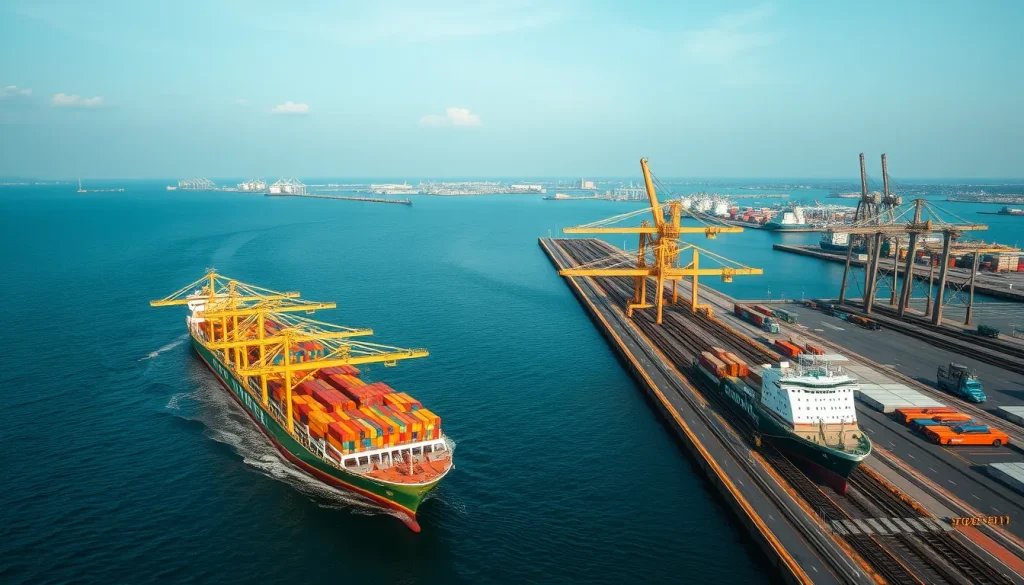
Short Answer
16.5m vs. 13.5m draft; 1.2m TEU Phase 1 at Lekki
Key Takeaways
- Lekki’s 16.5m design draft and 1.2m TEU Phase 1 capacity give it a physical edge for larger container vessels; Apapa’s 13.5m draft caps vessel size and reinforces tidal and lightening constraints.
- Apapa’s strongest operational asset is not water depth but hinterland connectivity: the 2026 Lagos Port Guide identifies it as the primary terminus for standard-gauge rail to Ibadan and Kano, even as road congestion persists.
- West African transshipment competition with Lomé, Tema, Abidjan and Dakar will be won on reliability, customs speed, feeder networks and evacuation cost—not draft alone; Lekki and Apapa should be managed as complementary gateways.
Executive Verdict & Core Distinctions
The Lekki Deep Sea Port versus Apapa Port comparison is not a simple substitution. It is a contest between a greenfield deep-water gateway engineered for larger container vessels and a brownfield legacy port embedded in Nigeria’s largest urban market. The Nigerian Ports Authority (NPA) lists both facilities within its national port system, alongside Tin-Can Island, Onne, Rivers, Delta, Calabar and others, so the operational question is how they divide cargo rather than which port wins outright (NPA Handbook).
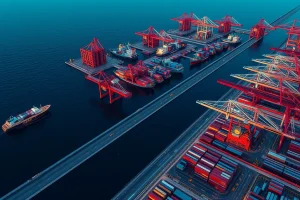
Lekki’s core advantage is physical: a reported 16.5m design draft, Phase 1 capacity of about 1.2m TEU a year, and ship-to-shore (STS) crane infrastructure built around larger boxships. Its strategic backing is a private-public consortium involving Tolaram, China Harbour Engineering Company and Lagos State, with the port developed inside the Lekki Free Zone. Apapa’s core advantage is connectivity: it remains Nigeria’s largest port complex, sits closest to the Lagos industrial and consumer base, and the 2026 Lagos Port Guide identifies it as the primary terminus for the modernised standard-gauge rail link to inland dry ports in Ibadan and Kano (Lagos Port Guide 2026).
The trade-off is equally clear. Lekki’s 16.5m draft can reduce tidal windows and lightening for larger vessels, but its evacuation model is more road-dependent and still ramping up. Apapa’s 13.5m draft limits the size of vessels that can call fully laden, while road congestion and aged yard infrastructure remain chronic. The US$1bn port rehabilitation project cited for 2026 is recognition that Apapa’s brownfield model requires continuous capital renewal, not just concession rhetoric (Lagos Port Guide 2026).
Side-by-Side Technical Comparison
| Metric | Lekki Deep Sea Port | Apapa Port (Lagos Port Complex) |
|---|---|---|
| Design capacity | About 1.2m TEU/year in Phase 1, with expansion potential toward 2.5m TEU/year; greenfield layout supports larger vessel calls. | Nigeria’s largest legacy port complex; aggregate capacity is spread across concession terminals. No single greenfield TEU design figure is comparable because draft, yard and road constraints bind throughput. |
| CapEx / renewal | Reported Phase 1 investment of about US$1.5bn; private consortium financing and free-zone backing. | Ongoing rehabilitation under a US$1bn port rehabilitation project cited in 2026; original brownfield assets are much older. |
| Timeline | Concession and construction in the 2010s; commercial operations from 2023; ramp-up continuing through 2026. | 19th-century port origins; landlord model and terminal concessions from 2006; 2026 rehabilitation phase. |
| Route / specs | 16.5m design draft; greenfield access channel; new STS cranes sized for larger container vessels; Phase 1 container berths. | 13.5m draft; Apapa channel and tidal restrictions; post-Panamax-era STS capability in places but constrained by draft and urban footprint. |
| Evacuation | Road-heavy via the Lekki-Epe corridor; barge potential; rail linkage not yet the primary mode. | Road congestion and truck queuing; modern standard-gauge rail to Ibadan and Kano reduces some hinterland pressure. |
| Consortium backing | Lekki Port LFTZ Enterprise; shareholders include Tolaram, China Harbour Engineering Company and Lagos State. | NPA as landlord; terminal concessions including APM Terminals Apapa and ENL Consortium, among others. |
The table captures the central asymmetry: Lekki is designed around water depth and greenfield throughput, while Apapa is designed around an established urban hinterland and a maturing rail connection. Neither attribute is sufficient on its own. A deep berth without evacuation capacity becomes a floating warehouse; a well-connected port without sufficient draft loses the largest vessel calls.
Option A: Architecture, Strengths & Trade-Offs
Lekki Deep Sea Port: deep-water greenfield
Lekki is best understood as an architectural attempt to escape the physical limits of Lagos’s legacy port estate. Its 16.5m draft is the headline specification because it changes the vessel envelope: larger container ships can approach with less tidal dependency, and the port can be marketed as a West African transshipment gateway rather than only a Nigerian import terminal. Phase 1 capacity of roughly 1.2m TEU a year is meaningful in a market where Apapa and Tin-Can have historically absorbed demand under congestion. The STS crane package is part of the same design logic: newer quayside cranes with greater outreach and lift height are necessary to serve the larger vessels that the draft is meant to attract.
The strengths are real. First, Lekki offers a modern terminal layout in a free-zone setting, which is more amenable to integrated logistics and industrial clustering than a densely built-up port district. Second, the consortium structure—Tolaram, China Harbour Engineering Company and Lagos State—gives the project commercial, engineering and state backing, reducing the risk that the port is treated purely as a public works project. Third, the draft advantage supports a transshipment proposition: Lekki can aspire to capture feeder traffic now routed through Lomé, Tema, Abidjan or Dakar, provided customs, marine services and feeder connectivity meet regional standards.
The trade-offs are equally architectural. A greenfield port must build its cargo base and evacuation network at the same time. Lekki’s inland access is road-heavy through the Lekki-Epe corridor, with barge operations offering a partial alternative and rail not yet the primary mode. That creates a potential mismatch: the port can discharge containers faster than trucks, barges and inland depots can clear them. The bottleneck is not the quay crane alone but the entire chain—berth window, yard density, customs release, truck appointment, barge scheduling and dry-port capacity. For shippers, Lekki’s deeper draft may reduce vessel-side costs, but inland evacuation risk can offset those gains.
The governance test is also unresolved. The GPH study on Nigerian port infrastructure administration frames the problem around infrastructure development and performance prospects, comparing Nigeria with Singapore, Rotterdam, China and Morocco (GPH Journal 2026). Lekki tests whether a private greenfield model can deliver the reliability those benchmark ports achieve. If the port’s commercial team can coordinate terminal productivity, customs and inland logistics, Lekki becomes a genuine deep-water hub. If not, it becomes a high-capacity asset constrained by the same Nigerian evacuation problems that have long dogged Apapa.
Option B: Architecture, Strengths & Trade-Offs
Apapa Port: brownfield connectivity and rehabilitation
Apapa is the opposite architectural model. It is a legacy port complex that grew with Lagos, with multiple terminals, established freight-forwarding networks and a dense industrial catchment. Its 13.5m draft is the binding physical constraint: it limits the size of vessels that can enter fully laden and forces reliance on tidal windows, lightening or transshipment for larger parcels. The STS cranes at Apapa’s concession terminals may be capable post-Panamax equipment, but crane outreach cannot compensate for channel depth. A port’s vessel envelope is set by the shallowest link in the marine chain.
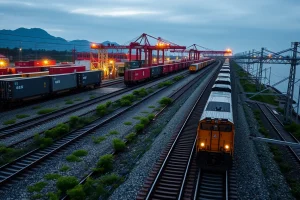
Yet Apapa’s strengths are not obsolete. It remains Nigeria’s largest port complex, and the 2026 Lagos Port Guide identifies it as the primary terminus for the modernised standard-gauge rail link that allows containers to move from the quayside to inland dry ports in Ibadan and Kano without hitting Lagos traffic (Lagos Port Guide 2026). That rail connection is a strategic asset: it gives Apapa a hinterland evacuation mode that Lekki does not yet match. For importers whose final market is Lagos or the northern dry-port network, Apapa’s proximity and rail link can outweigh the draft penalty. The port also benefits from an established ecosystem of clearing agents, hauliers, warehouses and terminal operators that a new port must recreate.
The trade-offs are chronic congestion and capital renewal. Apapa’s road access is constrained by urban traffic and truck queuing, and the port’s brownfield layout limits yard expansion. The US$1bn rehabilitation project cited for 2026 is therefore not a cosmetic upgrade but a necessary response to decades of underinvestment (Lagos Port Guide 2026). Rehabilitation can improve quay condition, yard capacity and terminal productivity, but it cannot create deep water where none exists. It can, however, make Apapa more reliable for the cargo sizes it is physically able to handle.
Apapa’s strategic risk is coordination. The landlord model divides responsibilities between the NPA and multiple concessionaires. That can improve terminal-level efficiency, but it can also complicate system-level planning for channel dredging, road access and rail integration. The NPA Handbook presents the port system as a national network, yet in practice Apapa’s performance depends on aligning terminal operators, customs, hauliers and rail operators. When that alignment fails, the port’s connectivity advantage is consumed by congestion.
Strategic Outlook: Which Scenario Matters Most
The most important scenario is not a binary choice between Lekki and Apapa. It is the division of labour across the Lagos port system. For containerised imports destined for Lagos and the northern hinterland, Apapa remains competitive because of its rail link and established market proximity, even with a 13.5m draft. For larger vessel calls and transshipment-oriented cargo, Lekki’s 16.5m draft and 1.2m TEU Phase 1 capacity give it a structural advantage. The practical question for shippers is cargo profile: vessel size, inland destination, time sensitivity and evacuation cost should determine the gateway, not port branding alone. PSI Global Logistics makes a similar point when it notes that the choice among Apapa, Tin Can, Lekki and Onne affects freight cost, vessel availability, customs timing and inland delivery (PSI Global Logistics).
For West African transshipment competition, Lekki has the stronger physical proposition but not yet the stronger commercial network. Lomé, Tema, Abidjan and Dakar have established feeder services, customs processes and shipping-line relationships. Lekki can compete only if it offers reliable berth windows, competitive marine charges, fast customs clearance and a feeder network that regional carriers trust. Draft depth is necessary but not sufficient. The same is true of STS crane specifications: a modern crane package raises theoretical throughput, but actual productivity depends on yard planning, labour, maintenance and digital clearance systems.
For policymakers, the lesson is to treat Lekki and Apapa as complementary assets within one national logistics strategy. That means investing in multimodal evacuation—rail, barge and dry ports—rather than assuming that new berths solve congestion. It means using the NPA’s landlord role to coordinate channel dredging, port access roads and rail schedules across terminals. It also means avoiding a capacity race that leaves both ports underutilised while inland infrastructure lags. Nigeria’s port problem has never been only water depth; it is the cost and reliability of moving cargo from quay to final market. Lekki improves the quay. Apapa still holds much of the hinterland. The winning strategy connects them.
Primary Sources & Official Citations
- Nigerian Ports Authority Handbook (3rd Edition) — Official NPA port system overview and port list
- GPH International Journal of Business Management: Ports Infrastructure Administration in Nigeria — Peer-reviewed assessment of Nigerian port infrastructure challenges and prospects
FAQ
Is Lekki Deep Sea Port deeper than Apapa Port?
Yes, by design: Lekki is reported at 16.5m draft versus about 13.5m at Apapa. The deeper draft allows larger container vessels and reduces tidal and lightening constraints, but throughput also depends on cranes, yard capacity and evacuation.
Can Lekki replace Apapa for Nigerian imports?
Not fully. Apapa remains Nigeria’s largest port complex and has the stronger rail-to-hinterland link to Ibadan and Kano. Lekki adds deep-water capacity and transshipment potential, but road and barge evacuation plus demand ramp-up mean the two ports are complementary.
What is the main logistics bottleneck at Lekki?
Evacuation. The port’s 16.5m draft and 1.2m TEU Phase 1 capacity can discharge cargo faster than the road-heavy Lekki-Epe corridor and nascent barge and rail network can clear it, so inland modal capacity is the binding constraint.

Leave a Reply