
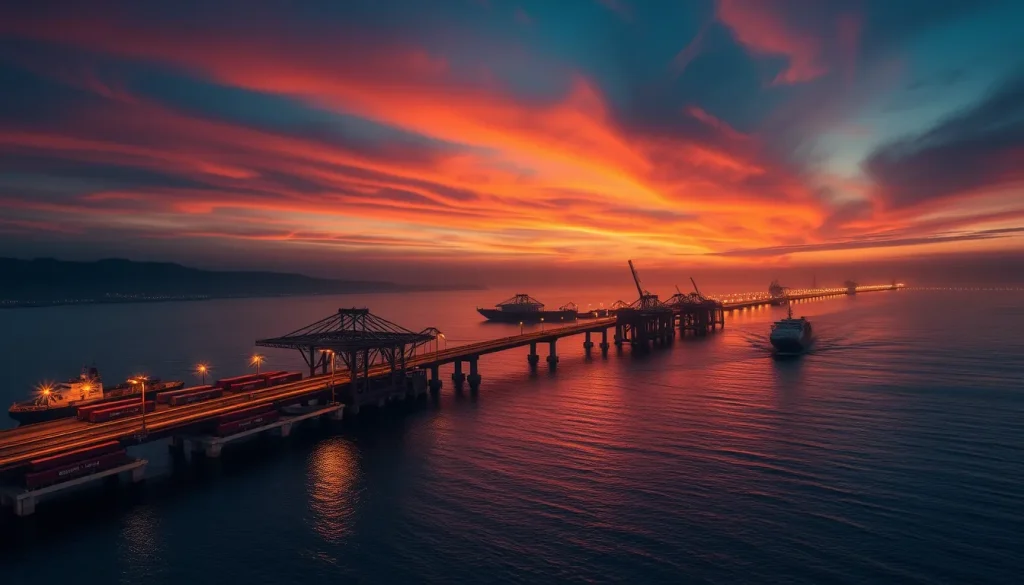
Short Answer
US$250+/container penalty; 54h land transfer vs 48h Malacca transit
Key Takeaways
- Thailand’s landbridge is reported at US$28–30bn for a 90-km Chumphon–Ranong multimodal link; critics estimate over US$250 extra per container versus direct Malacca transit.
- The landbridge transfer is estimated at roughly 54 hours, potentially longer than the 48 hours to transit Malacca, eroding its speed advantage.
- With 74% of Thai trade already served by efficient regional routes, the project’s commercial case depends on strategic resilience, energy-pipeline niche demand, and global operator participation rather than replacing Malacca.
Executive Verdict & Core Distinctions
The Thailand Landbridge and the Strait of Malacca are not symmetric alternatives. The Malacca Strait is an operating natural chokepoint with embedded network effects, established ports, frequent sailings, and a century of commercial use. The landbridge is a proposed 90-km multimodal corridor linking new deep-sea ports at Chumphon on the Gulf of Thailand and Ranong on the Andaman Sea. Bangkok presents it as a strategic alternative to Malacca; the 2026 evidence supports a narrower verdict: Malacca remains the commercial default, while the landbridge is a strategic hedge and possible energy-pipeline corridor, not a container-route successor.
The core distinctions are capacity, cost, and backing. On capacity, the reviewed 2026 sources do not disclose a verified TEU or oil throughput for the landbridge; its capacity would be modular and dependent on port, rail, and pipeline build-out. Malacca has no project design capacity either, but its effective throughput is continuously tested by draft, channel width, traffic separation, and chokepoint management. On cost, the landbridge is reported at roughly US$28–30bn, or trillion-baht scale in Thai reporting, while Malacca has no comparable capex; users pay vessel, port, fuel, and risk costs. On backing, the landbridge is Thai state-led and under a 90-day review led by Finance Minister Ekniti Nitithanprapas, with critics urging direct global shipping-operator involvement. Malacca is backed by incumbency, littoral-state governance, and market habit.
The decisive operational number is double handling. Nation Thailand reports that the dual-port system and cross-land transport could make the landbridge over US$250 more expensive per container than shipping through Malacca, and that the land transfer could take about 54 hours, potentially longer than the 48 hours required to navigate Malacca. That combination attacks the project’s core commercial claim: a landbridge must be faster or cheaper, not both slower and dearer, unless it is priced as strategic insurance.
Side-by-Side Technical Comparison
| Dimension | Option A: Thailand Landbridge | Option B: Strait of Malacca |
|---|---|---|
| Design Capacity | Proposed twin deep-sea ports and a 90-km multimodal corridor; reviewed sources do not disclose a verified TEU or oil throughput. Practical capacity would depend on terminal berths, rail slots, pipeline diameter, and customs throughput. | Natural strait, not a designed facility. Effective capacity is set by draft, channel width, traffic separation, weather, and traffic management; no single project capacity figure applies. |
| CapEx | Reported at about US$28–30bn; Atlas cites US$30bn and Nation Thailand describes a trillion-baht project. Includes ports, land link, and enabling infrastructure in public descriptions. | No project capex comparable to a new corridor. Costs are ongoing dredging, navigation safety, security, port upgrades, and inland logistics. |
| Timeline | Revived in 2026 and under a 90-day review; no verified construction completion date in the reviewed sources. Past Thai mega-project failures are cited as a caution. | Operational now. Capacity and resilience evolve through maintenance, digital traffic management, and port investment rather than a single construction timetable. |
| Route/Specs | 90-km land link between Chumphon and Ranong, connecting the Gulf of Thailand to the Andaman Sea by rail and pipeline; containers require discharge, inland transfer, and reload. | Maritime passage through the Malacca and Singapore straits; cited comparison uses about 48 hours to navigate Malacca. Direct sea transit avoids a land transfer. |
| Consortium Backing | Thai government-led; global shipping operators are being urged to participate in feasibility evaluation. No named private consortium appears in the reviewed sources. | No single consortium. Littoral-state governance and market users sustain the route; shipping lines, ports, insurers, and navies all have stakes. |
The table exposes the asymmetry. The landbridge is a capital project with a discrete sponsor and a financing problem; Malacca is a system with no single balance sheet but enormous installed coordination. That matters because shippers do not buy corridors in the abstract. They buy berth windows, sailing frequency, container availability, inland connections, and predictable total landed cost.
Option A: Architecture, Strengths & Trade-Offs
Architecture
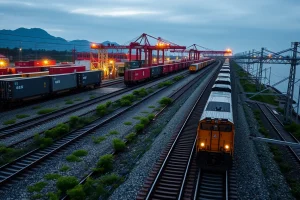
The landbridge’s architecture is a 90-km multimodal bridge between two deep-sea ports: Chumphon on the Gulf side and Ranong on the Andaman side. In container form, a vessel would discharge at one port, cargo would move by rail or road to the other, and a second vessel would reload it. In liquid or gas form, the link could be a pipeline, which is why Maverick Consulting Group notes a pivot toward an oil and gas pipeline corridor. The pipeline variant avoids container lift-on/lift-off at both ends, but it still requires storage, blending, metering, and port-to-pipeline interfaces.
Strengths
The strategic case is real. A working landbridge would give Thailand and its partners a bypass around a single maritime chokepoint, improve logistics resilience, and strengthen Thailand’s regional relevance. It could support energy security if the pipeline variant matures, and it gives Bangkok a geopolitical bargaining chip. For cargoes with high strategic value or crisis exposure, a priced redundancy option can matter even when peacetime economics are unfavorable.
Trade-Offs
The commercial case is weaker. Nation Thailand reports that the landbridge could be over US$250 more expensive per container than Malacca and that the transfer could take about 54 hours, potentially longer than the 48-hour Malacca transit. Double handling is the culprit: two port interfaces, two sets of port dues, inland haulage, customs and documentation, container yard handling, and schedule buffers. Cargo imbalance between the two ports could force vessels to operate below capacity, raising unit costs further. The project also lacks a clear incentive for the 74% of Thai trade already using efficient regional routes to switch.
These are not minor frictions. A corridor with a US$250-per-container penalty must offer reliability, congestion avoidance, or strategic pricing to offset it. The reviewed sources do not show that willingness to pay. Critics also warn of repeating the Hopewell and airport-rail pattern: large Thai projects that struggled on cost and commercial risk. Without anchor shipping lines, volume commitments, and an operator-led design, the landbridge risks becoming a high-cost symbol rather than a functioning route.
Option B: Architecture, Strengths & Trade-Offs
Architecture
The Strait of Malacca is a natural maritime corridor between the Indian Ocean and the South China Sea, with the Singapore hub as its commercial hinge. It is not a single port or project. It is a chokepoint managed through traffic separation, navigation aids, port services, and littoral-state cooperation. For a container shipper, the architecture is simple: one vessel, one sea passage, no land transfer, and a dense network of scheduled services on either side.
Strengths
Malacca’s strength is installed economics. It avoids double handling, offers frequent sailings and competitive port services, and spreads fixed costs across a huge user base. The cited 48-hour transit is faster than the landbridge’s 54-hour transfer estimate. For most cargo, the route is already embedded in contracts, insurance, vessel rotations, and inventory planning. That incumbency is why Atlas Institute assesses the landbridge as more likely to become a strategic supplement than a successor.
Trade-Offs
Malacca’s risk is concentration. A chokepoint can suffer congestion, draft constraints, accidents, piracy, or geopolitical disruption. Those risks are systemic rather than project-specific: no single sponsor can solve them, and mitigation runs through naval cooperation, traffic management, insurance, inventories, and diversified sourcing. The route is also not free; users bear fuel, port, congestion-linked delay, and emissions costs. Still, those costs are revealed in a competitive market rather than locked into a new US$28–30bn asset.
The displacement narrative has long been treated skeptically. ASEAN Wonk described the Malacca-killer hype as masking landbridge risks as early as 2023. The burden of proof remains on the challenger: it must show a lower total landed cost and comparable reliability. On the 2026 numbers, it does not.
Strategic Outlook: Which Scenario Matters Most
Three scenarios matter. In the base case, Malacca remains the default for containers, and the landbridge is delayed, redesigned, or narrowed. The 90-day review and the pipeline pivot suggest that outcome is plausible: a full container corridor is harder to justify than a strategic energy link. In the hedge case, the landbridge proceeds as a supplement for energy, crisis redundancy, and selected cargoes, supported by public capital or strategic pricing. In the breakout case, it captures meaningful container transshipment, but that requires beating the US$250 penalty and the 54-hour transfer estimate, which the reviewed evidence does not support.
For shippers, the practical implication is to keep Malacca in base-case routing and treat the landbridge as a contingency option, not a near-term cost lever. For operators, participation should be conditional on volume commitments, transparent access charges, and control over terminal and rail interfaces. For Thai policymakers, the priority is to separate strategic resilience from commercial viability. A pipeline-first or phased port strategy may be more defensible than a full twin-port container corridor. The project’s strongest case is not that it replaces Malacca, but that it buys Thailand an option against chokepoint risk. That option has value, but it should be priced explicitly rather than hidden in optimistic traffic forecasts.
The bottom line: Thailand Landbridge vs Strait of Malacca is not a close commercial contest in 2026. Malacca wins on cost, speed, and network depth. The landbridge can still matter as a strategic supplement, especially if it pivots toward energy and resilience. But it should not be sold as a default route until the double-handling penalty is solved.
Primary Sources & Official Citations
- Nation Thailand — Land bridge faces scrutiny over cost and commercial risks — Container cost penalty, transit-time comparison, cargo imbalance, Thai trade share.
- Atlas Institute for International Affairs — Thailand’s Revived $30 Billion Land Bridge — Project scale, 90-km Chumphon–Ranong corridor, strategic supplement thesis.
- Maverick Consulting Group — Thailand Land Bridge 2026: Chokepoints, Cost & Geopolitics — 2026 review, oil and gas pipeline pivot, chokepoint context.
- ASEAN Wonk — Malacca Straits Killer Hype Masks Thailand’s Land Bridge Risks — Skeptical assessment of Malacca-displacement claims.
FAQ
Is Thailand’s Landbridge cheaper than shipping through the Strait of Malacca?
No on cited 2026 estimates. Nation Thailand reports the dual-port and cross-land transfer could be over US$250 more expensive per container than Malacca and take about 54 hours, versus 48 hours for the sea passage.
What is the Chumphon–Ranong Landbridge route?
A proposed 90-km multimodal corridor linking deep-sea ports on Thailand’s Gulf coast at Chumphon and Andaman coast at Ranong, with rail and pipeline links intended to move cargo between the two seas without sailing through Malacca.
Would the Landbridge replace the Strait of Malacca?
Most likely not. Atlas assesses it as a strategic supplement rather than successor; Nation Thailand notes weak incentives for the 74% of Thai trade already using efficient regional routes, and critics urge global operator involvement before commitment.




Leave a Reply