
Short Answer
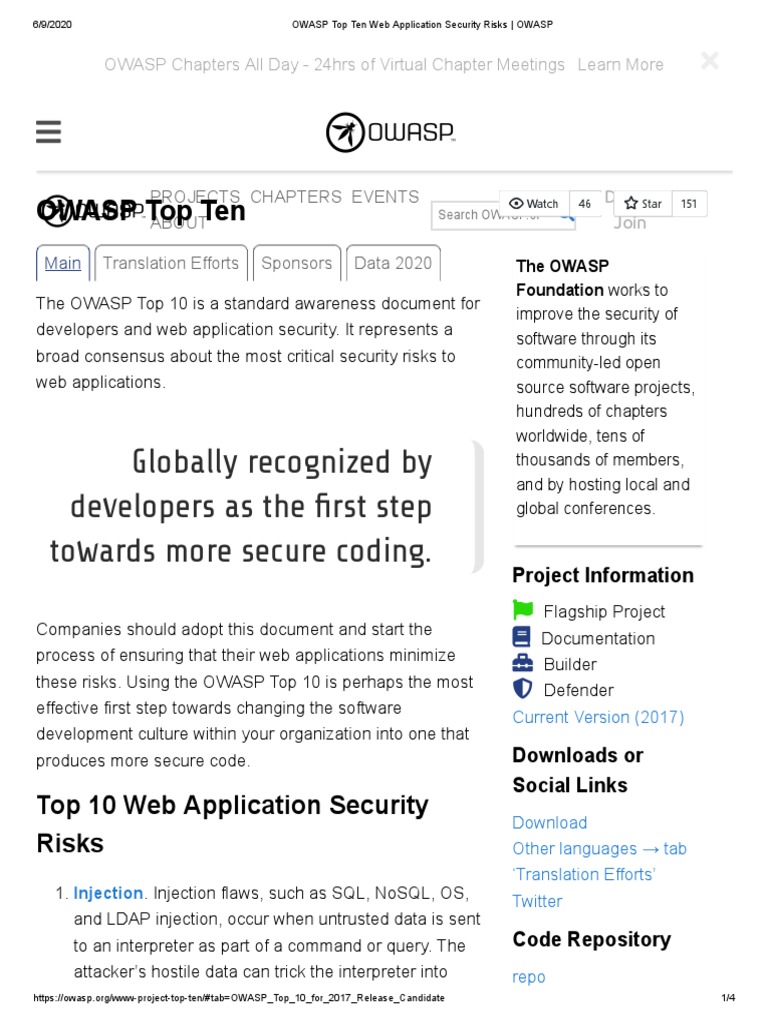
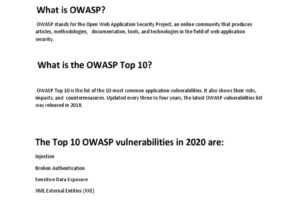
In the digital landscape where cyber threats proliferate, understanding security vulnerabilities is paramount. The Open Web Application Security Project (OWASP) has tirelessly worked to provide resources that help organizations bolster their security postures. At the core of their contributions is a list of top security risks that developers, system architects, and stakeholders alike must comprehend. Here, we delve into the ten most critical OWASP security risks, illuminating each risk’s nature and potential ramifications.
1. Injection Attacks
Injection vulnerabilities occur when an attacker injects malicious code into a program, which then executes with elevated privileges. SQL injection is ubiquitous, allowing intruders to manipulate databases, wreaking havoc by exfiltrating sensitive data or altering critical records. Similarly, command injection attacks can allow a perpetrator to execute arbitrary commands on the server. Recognizing potential injection vulnerabilities during the development phase is essential for preemptive defense.
2. Broken Authentication
Authentication mechanisms are integral to safeguarding sensitive data. However, flaws in these systems can lead to unauthorized access. Poor password management, session fixation attacks, and reliance on inadequate security measures can create pathways for deceitful actors. Ensuring robust authentication protocols, such as multi-factor authentication (MFA), can significantly reduce the risk of these breaches.
3. Sensitive Data Exposure
Data sensitivity encompasses everything from personally identifiable information (PII) to payment details. With the rise of data breaches, protecting sensitive information through encryption, both in transit and at rest, is critical. Developers must evaluate data storage practices and ensure that sensitive data is adequately shielded from potential eavesdropping and unauthorized access.
4. XML External Entities (XXE)
XML parsers that handle untrusted XML input can be susceptible to XXE attacks, allowing attackers to access internal files and establish denial-of-service attacks. By exploiting this vulnerability, a malicious actor might read sensitive files from the server or even execute server-side requests without authentication. Careful validation of XML input and proper parser configurations are vital in mitigating this risk.
5. Broken Access Control
Access controls keep data secure by ensuring that users can only interact with resources they are permitted to access. However, inadequate enforcement can lead to detrimental fallout, increasing the likelihood of unauthorized actions. Implementing stringent role-based access controls, combined with regular audits and testing, helps fortify the integrity of access management systems.
6. Security Misconfiguration
A misconfigured security setting can render systems vulnerable to exploitation. This can manifest in numerous ways—from overly permissive permissions to default accounts that remain active. Continuous monitoring, thorough configuration reviews, and adherence to industry best practices can minimize the risk of security misconfiguration across environments.
7. Cross-Site Scripting (XSS)
XSS attacks enable attackers to inject malicious scripts into web pages viewed by unsuspecting users. By compromising user credentials or executing malicious operations, these attacks can severely undermine trust. Employing output encoding, implementing Content Security Policy (CSP), and validating input fields are crucial strategies to counteract XSS vulnerabilities.
8. Insecure Deserialization
Deserialization transforms data into objects, which adds complexity but also introduces risk. Attackers may exploit insecure deserialization vulnerabilities to execute arbitrary code or manipulate application logic. Safeguards such as strict controls over deserialization processes and careful validation of incoming data can mitigate this risk.
9. Using Components with Known Vulnerabilities
Many applications rely on third-party components or libraries, which sometimes harbor known vulnerabilities. Failing to maintain an up-to-date inventory of used components can lead to unintended security pitfalls. Regularly scanning for vulnerable libraries, along with promptly applying patches and updates, is essential in defending against these risks.
10. Insufficient Logging and Monitoring
Effective logging and monitoring systems are vital for the timely detection of security incidents. Insufficient logging can lead to a delayed or ineffective response, worsening the impact of a breach. Establishing robust logging practices, coupled with proactive monitoring, ensures that unusual activities are promptly identified and addressed, thereby adding an additional layer of security to applications.
In conclusion, the digital domain is fraught with complexities and vulnerabilities. The OWASP Top Ten security risks provide a critical framework for understanding potential threats that could jeopardize information integrity and user trust. Awareness and proactive measures taken against these risks are indispensable for achieving a fortified security posture. Developers, as well as organizations, must prioritize security as a fundamental aspect of their operational protocols, ensuring resilience against the ever-evolving landscape of cyber threats.
FAQ
What is OWASP?
OWASP (Open Web Application Security Project) is a non-profit organization focused on improving software security through community-led open source software projects, tools, and resources.
Why are OWASP Top 10 security risks important?
The OWASP Top 10 highlights the most critical security vulnerabilities in web applications, helping developers and organizations prioritize their security efforts.
How can I protect my application from injection attacks?
Protecting against injection attacks involves using parameterized queries, input validation, and employing least privilege principles in database access.
What is broken authentication?
Broken authentication refers to vulnerabilities that allow attackers to compromise user identities or session management, often due to weak password policies or session handling.
What steps can be taken to secure sensitive data?
Sensitive data can be secured by proper encryption in transit and at rest, strict access controls, and regular auditing of data storage practices.



Leave a Reply