
Short Answer
Mountains have long captivated human beings, serving not only as natural wonders but also as cultural symbols of aspiration, endurance, and mystique. The highest peaks on our planet evoke both awe and trepidation, their towering edifices standing testament to the grandeur of nature. Each summit boasts its own distinct character, contributing to the myriad ways we engage with these colossal natural sculptures. This article embarks on a journey to explore the top ten highest mountains in the world, detailing their unique attributes and the indelible allure they hold.
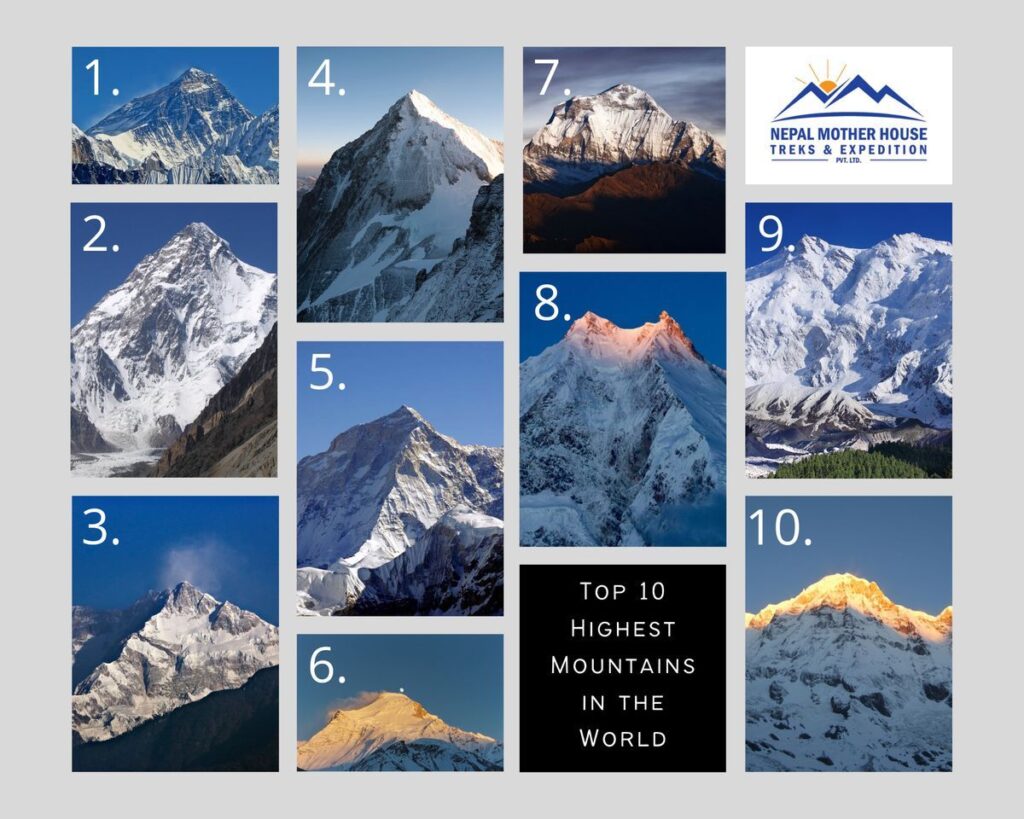
1. Mount Everest (8,848.86 meters / 29,031.7 feet)
Reigning supreme, Mount Everest is the world’s highest mountain, a formidable giant nestled in the majestic Himalayas along the border of Nepal and the Tibetan Autonomous Region of China. For climbers, its allure is multifaceted: the challenge of conquering the “Roof of the World” represents the ultimate test of strength, skill, and resolve. The desolate beauty of its icy landscape, coupled with the thrill of traversing the treacherous Khumbu Icefall, underlines humanity’s relentless quest to breach the heights of our own limitations.
2. K2 (8,611 meters / 28,251 feet)
K2, known as “Chogori” in the local Balti language, stands as the second-highest mountain on Earth, residing in the Karakoram Range between Pakistan and China. Renowned for its steep and perilous ascents, K2 has garnered an infamous reputation, often dubbed the “Savage Mountain” due to its high fatality rate among climbers. It is characterized by a mystique that deepens with its remoteness and unpredictability, drawing adventurers who find themselves enchanted—or perhaps even haunted—by the sheer ferocity of its challenges.
3. Kangchenjunga (8,586 meters / 28,169 feet)
The majestic Kangchenjunga, situated on the India-Nepal border, is revered not only for its height but also for its captivating beauty and rich biodiversity. It is considered sacred by local communities, often referred to as the “Five Treasures of Snow,” symbolizing the five repositories of God’s treasures. Climbers who are privileged enough to stand atop this behemoth are often struck by the visual splendor of its surrounding valleys, reinforcing the profound connection between nature and spirituality.
4. Lhotse (8,516 meters / 27,940 feet)
Nipping at the heels of its illustrious neighbor, Lhotse is notorious for its dramatic south face, which presents one of the most daunting climbing challenges in the world. Situated just south of Everest, this formidable peak is often less frequented, offering a solitude that can be breathtaking. The mountain—and its neighboring peaks—seem to whisper tales of resilience and introspection to those brave enough to venture into their realm.
5. Makalu (8,485 meters / 27,838 feet)
With its distinctive pyramid-like shape, Makalu appears almost sculpted beneath the heavens, located southeast of Everest. This majestic mountain not only offers breathtaking views but also poses a unique challenge for climbers due to its steep and unforgiving terrain. Makalu’s isolation enhances its allure, captivating mountaineers seeking both solitude and the thrill of exploration in one of Earth’s last great frontiers.
6. Cho Oyu (8,188 meters / 26,864 feet)
Known for its relatively gentle slopes, Cho Oyu is often regarded as the most accessible of the 8,000-meter peaks. The mountain, situated on the Nepal-Tibet border, provides breathtaking vistas that have inspired many to embark on expeditions. Its sheer majesty, paired with the spectacular views of surrounding peaks, invites reflection on both the power of nature and the depth of human perseverance.
7. Dhaulagiri (8,167 meters / 26,795 feet)
Dhaulagiri, meaning “White Mountain,” looms proudly in Nepal, distinguishing itself with its stark and magnificent contrast amidst deeply cut valleys. The mountain’s formidable nature is accentuated by its dramatic ridges and snow-clad peaks, captivating those who attempt to scale its heights. Often considered an expedition for the most adventurous, Dhaulagiri challenges not just the physical but the mental fortitude of climbers, reinforcing the idea that the greatest journeys often lie beyond one’s comfort zones.
8. Manaslu (8,163 meters / 26,781 feet)
Often overshadowed by its more illustrious counterparts, Manaslu is revered by many for its pristine environment and rich cultural heritage. Nestled in the Mansiri Himal of Nepal, it boasts not only its altitude but also a spectrum of unique flora and fauna that thrive in its shadow. Climbers are often drawn to Manaslu not solely for the challenge but for the opportunity to engage with the local culture and the breathtaking serenity that the region encapsulates.
9. Annapurna I (8,091 meters / 26,545 feet)
Breaking the mold with its distinctive geography, Annapurna I is notorious for its high death rate relative to the number of ascents. Located in Nepal, the mountain’s harsh conditions and unpredictable weather create an allure that is both dangerous and enticing. The intensity of climbing Annapurna reflects a deeper human desire to confront our fears, showcasing the duality of beauty and danger that draws climbers to its slopes.
10. Gasherbrum I (8,080 meters / 26,509 feet)
Known as “Hidden Peak,” Gasherbrum I basks in the serenity of the Karakoram, its isolated beauty providing a sense of otherworldly charm. The peak, submerged in ice and rock, offers climbers the opportunity to transcend ordinary existence, standing at a juncture where earth and sky converge. The journey to Gasherbrum I often leaves an indelible mark on its visitors, echoing the significance of exploration and the humbling confrontation with nature’s majesty.
In essence, the allure of these majestic peaks reaches far beyond their heights; they embody human tenacity and curiosity. Each mountain tells a story of both triumph and tribulation, serving as a canvas adorned with the dreams and aspirations of those who venture to explore them. The fascination with these monumental formations continues to inspire generations, reminding us that the journey to the summit is often as profound as the attainment of the summit itself.
FAQ
What is the highest mountain in the world?
Mount Everest, standing at 8,848.86 meters (29,031.7 feet), is the highest mountain on Earth.
Which mountain is considered most dangerous to climb?
Annapurna I has the highest fatality rate among the 8,000-meter peaks, making it one of the most dangerous mountains to climb.
What makes K2 notable among climbers?
K2 is known for its steep, challenging terrain and is nicknamed the 'Savage Mountain' due to its high fatality rate.
Are these mountains located in a specific region?
Yes, the highest mountains are primarily located in the Himalayas and Karakoram mountain ranges across Nepal, China, India, and Pakistan.




Leave a Reply