
Short Answer
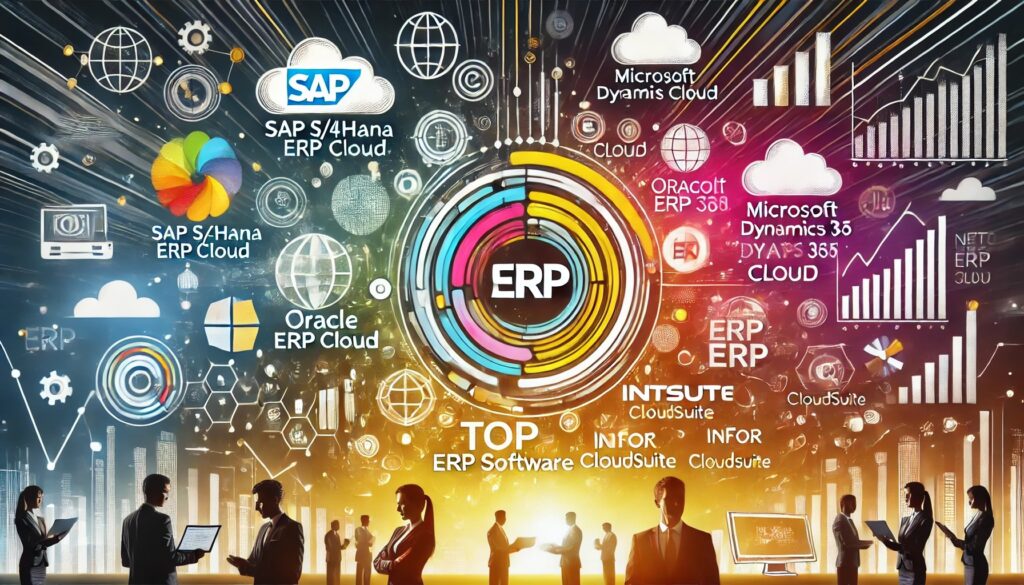
Enterprise Resource Planning (ERP) software is not merely a tool; it represents a paradigm shift in how businesses operate and optimize their resources. In today’s competitive landscape, leveraging the appropriate ERP system can lead to enhanced efficiency, streamlined operations, and improved decision-making capabilities. With countless options available, discerning which ERP software best suits your organization’s needs can feel daunting. To alleviate this conundrum, we present a meticulously curated list of the top 10 ERP software solutions for businesses. Each of these platforms promises not only to facilitate day-to-day operations but also to catalyze strategic evolution.
1. SAP S/4HANA
SAP S/4HANA stands as a beacon of innovation in the ERP realm. Renowned for its robust functionalities, this suite leverages real-time data processing, empowering organizations to make informed decisions swiftly. The software’s in-memory computing capabilities enable superior analytics, allowing for predictive insights that can transform business strategies. Industries ranging from manufacturing to retail have benefited immensely from its configurable modules, ensuring a customized experience that aligns with operational needs.
2. Oracle ERP Cloud
Oracle ERP Cloud epitomizes flexibility and scalability, making it a premier choice for various business sizes. The platform integrates seamlessly with existing infrastructure and offers a wide array of functionalities, including financial management, project management, and procurement. Its robust analytics tools provide visibility into key performance indicators, thus enabling proactive decision-making. Furthermore, the cloud-based architecture ensures that organizations can scale effortlessly as they grow, without the burden of on-premises hardware constraints.
3. Microsoft Dynamics 365
Microsoft Dynamics 365 serves as a comprehensive business management solution that blends ERP and Customer Relationship Management (CRM) capabilities. Its modular architecture allows businesses to adopt functionalities at their own pace, catering to unique operational requirements. The integration with other Microsoft products enhances user experience and facilitates smoother workflows. Enhanced by AI-driven insights, Dynamics 365 empowers organizations to innovate continuously, fostering a culture of adaptability and growth.
4. NetSuite ERP
NetSuite ERP, a subsidiary of Oracle, is hailed for its unparalleled cloud-native capabilities. This system is particularly appealing to fast-growing companies that require a unified platform for financial management, inventory, and order processing. The real-time financial visibility represented in its dashboards assists businesses in monitoring performance effortlessly. Furthermore, its e-commerce capabilities make it a prime option for retail enterprises looking to integrate operations across channels.
5. Infor CloudSuite
Infor CloudSuite provides a vertically focused approach, catering to industries such as healthcare, manufacturing, and retail. It combines industry-specific functionalities with advanced analytics, machine learning, and AI, enriching the business intelligence landscape. The user interface is intuitively designed, promoting user engagement and adoption across teams. By optimizing operations uniquely tailored to industry challenges, Infor enables organizations to enhance productivity and reduce operational costs effectively.
6. Acumatica
Acumatica is a cloud-based ERP system that is particularly prized for its ease of use and affordability, making it ideal for small to medium-sized enterprises. Its comprehensive suite includes CRM, project management, finance, and inventory control modules. The flexibility of its pricing model, allowing for unlimited users, promotes collaboration and accessibility across the organization. Acumatica’s commitment to mobile accessibility also ensures that users can operate critical tasks anywhere, a pivotal feature in today’s fast-paced business environment.
7. Sage Intacct
Sage Intacct specializes in financial management and is a sought-after choice for organizations prioritizing sophisticated accounting capabilities. The system’s robust tracking of financial performance through advanced reporting tools makes it indispensable for finance teams. By automating key processes such as billing and revenue recognition, Sage Intacct alleviates the administrative burden and enhances accuracy. Its focus on financial integrity positions businesses to make informed strategic decisions based on real-time data.
8. Odoo
Odoo is an open-source ERP solution that prides itself on its modular approach, allowing businesses to customize their ERP experience extensively. With thousands of available modules, Odoo caters to diverse needs across sectors, from manufacturing to e-commerce. This flexibility promotes innovation, enabling rapid adjustments in response to market dynamics. The community-driven development aspect also reflects a commitment to continuous improvement, ensuring that the software evolves alongside user demands.
9. Epicor ERP
Epicor ERP shines in manufacturing and distribution sectors, boasting functionalities that enhance supply chain visibility and resource management. The software’s focus on the unique needs of manufacturers, particularly in production planning and inventory control, fosters operational efficiency. Moreover, with its predictive analytics capabilities, organizations can anticipate market demands, mitigate risks, and optimize resource allocation, ensuring they remain competitive in an ever-changing marketplace.
10. Workday
Workday exclusively focuses on human resources and financial management, providing deep insights into workforce analytics and payroll systems. The intuitive user interface fosters engagement, while comprehensive reporting tools facilitate data-driven decision-making. Organizations seeking to enhance their talent management processes and financial planning will find Workday’s integrated approach invaluable. With an eye toward strategic HR and financial alignment, Workday equips businesses to harness the full potential of their workforce.
In conclusion, selecting the right ERP software is not just about improving operations; it’s about pioneering a new era of business performance. The selection process should embrace the unique dimensions of each organization, acknowledging diverse needs and growth potential. The software solutions outlined above each offer innovative functionalities that transcend traditional operations, offering an invitation to form new perspectives on efficiency and effectiveness. As organizations navigate the evolving business landscape, investing in the right ERP system can serve as a cornerstone for sustainable growth and innovation.
FAQ
What is ERP software?
ERP software integrates various business processes into a single system to streamline operations, improve efficiency, and support decision-making across departments.
How do I choose the right ERP software for my business?
Choosing the right ERP software depends on your business size, industry needs, budget, and specific functional requirements such as financial management, supply chain, or human resources.
What are the benefits of cloud-based ERP solutions?
Cloud-based ERP solutions offer scalability, lower upfront costs, accessibility from anywhere, and easier upgrades compared to traditional on-premises ERP systems.
Can ERP software be customized for different industries?
Yes, many ERP systems provide industry-specific modules and customizable features to align with unique operational requirements and regulatory needs.





Leave a Reply