
Short Answer
In a world perpetually swirling in the torrents of time, a number of ancient living entities stand as eternal sentinels to the past. These remarkable organisms chronicle not merely their own survival but the intricate tapestry of life itself—spanning eons when the Earth was a vastly different place. Delving into the peculiar lives of the oldest living things unveils an awe-inspiring saga of resilience and adaptability. Here, we will explore some of these age-old wonders, each a living testament to nature’s unyielding spirit.
1. The Bristlecone Pine: The Methuselah of Trees
Amidst the arid slopes of the White Mountains lies the Bristlecone Pine (Pinus longaeva), the oldest known non-clonal organism, with some individuals exceeding 5,000 years of age. Resembling ancient sculptures, these twisted trees endure harsh climatic conditions, their gnarled branches reaching skyward like the hands of a timeworn philosopher in quiet contemplation. The resilience of the Bristlecone Pine elucidates profound truths about survival; its slow growth, layered structure, and ability to thrive in nutrient-poor, rocky soils make it a stunning emblem of endurance.
2. Pando: The Trembling Giant
Pando, a colossal colony of quaking aspen (Populus tremuloides) in Utah, represents a unique phenomenon. Although individual trees may live for a mere 100 years, the root system is estimated to be around 80,000 years old, making it one of the oldest living organisms on Earth. Imagine an exquisite tapestry woven from countless golden threads—each aspen tree contributing to the colossal, interconnected organism. Pando’s lifeblood flows beneath the surface, a reminder of the hidden connections that bind life together, frantically quaking in synchrony when the wind sweeps through its majesty.
3. The Ocean’s Living Fossils: Planktonic Foraminifera
Dotted throughout the oceans, planktonic foraminifera are microorganisms whose ancestors date back over 500 million years. In a sense, these minuscule entities embody the cosmos itself, swirling through the water like galaxies in an endless void. Their calcium carbonate shells, upon die-off, contribute to the depths of sedimentary layers, fostering life through decomposition. These minute architects of the sea teach us about the evolutionary continuum; they persist, a whisper of ancient oceans echoing through the ages.
4. Old Tjikko: A Tree that Stands the Test of Time
Old Tjikko, a Norway spruce (Picea abies) residing in Sweden, is estimated to be over 9,500 years old. Its above-ground appearance belies the intricate underground network of a clonal organism renewing itself through generations of vegetative reproduction. Each year, as winter fades, new branches bloom, a testament to rebirth and continuity amid the ever-changing seasons. Old Tjikko stands firm, showing us the potency of perseverance, draping the landscape in a vestige of age-old wisdom.
5. The Immortal Jellyfish: Turritopsis dohrnii
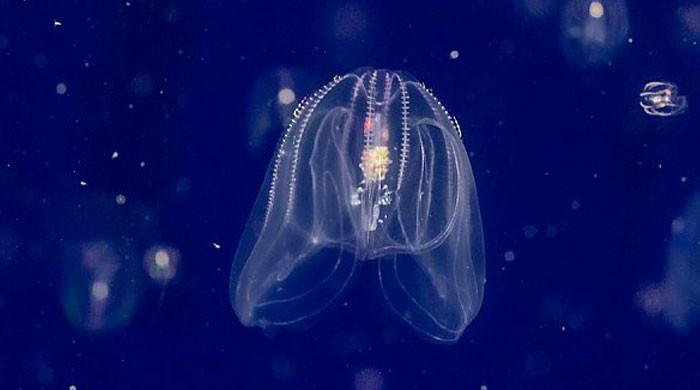
Within the depths of the ocean resides Turritopsis dohrnii, a species of jellyfish that has captivated scientists due to its astounding biological ability to revert its cells to a younger state—a process known as transdifferentiation. In essence, it can potentially evade death, transcending the boundaries of biological aging. This jellyfish encapsulates the metaphor of life fluidity; it represents a cycle wherein endings are merely new beginnings, challenging our understanding of mortality.
6. Matushka: The World’s Oldest Coral
A sprawling expanse of coral known as Matushka off the coast of the coast of the United States is estimated to be roughly 5,000 years old. This ancient coral formation resiliently withstands the test of changing oceanic conditions. Matushka’s corals embody a vibrant, submerged art gallery—each polyps rhythmically dancing in an entrancing performance. Corals may appear unassuming, but they signify crucial ecosystems, evoking the delicate balance of life beneath the waves.
7. The Ancient Spruce of Norway: A Hidden Gem
Known as “Old Tjikko’s cousin,” a spruce tree located in Norway is believed to be over 9,500 years old, persisting through ice ages and climate shifts. This organism thrives amid the rugged landscape, its intricate root system weaving through history like threads of a timeless narrative. Each ring in its trunk records a story, preserving chapters of Earth’s geological tales— a pacific yet poignant reminder of unyielding life amidst an ever-changing world.
Conclusion: A Tapestry of Time
As we traverse the landscape of the oldest living things on Earth, we unveil a dazzling portrait of survival intertwined with the essence of time. These ancient organisms embody not only the stories of their own odyssey through the eons but also reflect our deep-rooted connection to nature and the delicate balance of existence. In a world that often rushes toward the future, the resilience of the oldest living entities reminds us to pause, reflect, and appreciate the enduring legacy of life. Each ring, each strand, each delicate cell connects humanity with the immense tapestry of life’s journey, instilling in us a sense of reverence for the wondrous durability of the natural world.
FAQ
What is the oldest known tree species still alive today?
The Bristlecone Pine is the oldest known non-clonal tree species, with some individuals living for over 5,000 years.
How does the clonal colony Pando differ from individual trees?
While individual aspen trees live about 100 years, Pando's root system is a single organism estimated to be around 80,000 years old, making it extraordinarily old.
Can any living organism be considered immortal?
The immortal jellyfish can revert its cells to a younger state, potentially avoiding death and biological aging, but true immortality is a complex scientific concept.
Why is it important to study ancient living organisms?
Studying ancient living organisms helps us understand resilience, evolution, and the history of life on Earth.




Leave a Reply