
Short Answer
Project-level CAPEX, power tariffs, and rail-port capacity determine corridor viability; no consolidated public cost exists.
Key Takeaways
- Processing is not a simple extension of mining: investment weight shifts toward feedstock security, energy costs, industrial infrastructure, technology capability, product qualification, offtake demand, market structure, waste governance, and policy durability (Vivoda, 2026).
- Beneficiation mandates in Indonesia, the DRC, Zambia, Zimbabwe, and Guinea can attract smelters and refineries only when power, rail, port, offtake, and social licence terms align; export bans alone do not create midstream capacity.
- The mines-to-markets model treats resource states as industrial partners rather than raw-material suppliers, making corridor governance, diversified finance, and Western diversification from Chinese refining central to supply-chain strategy (CFR, 2026).
Quick-Spec Summary
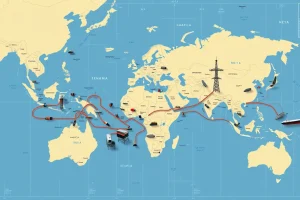
Critical minerals processing corridors Global South are integrated systems that connect extraction sites to beneficiation plants, smelters, refineries, industrial parks, dedicated power, rail links, and port terminals. They are not single projects. They are bundles of mining, processing, energy, logistics, and contractual arrangements whose bankability depends on whether ore, power, transport, finance, and offtake arrive at the same place and time. The table below summarises the core corridor archetypes examined in this explainer.
| Corridor or System | Route / Scope | Capacity | Estimated Cost | Lead Stakeholders | Current Status |
|---|---|---|---|---|---|
| Indonesia nickel downstreaming corridor | Nickel laterite mines in Sulawesi and Halmahera to integrated pyrometallurgical and hydrometallurgical industrial parks, captive power, and port terminals. | Project-level smelter and refinery capacity; no consolidated aggregate in the cited sources. | Not disclosed in aggregate; smelter, power, and port capex are project-financed. | Government of Indonesia, state-linked entities, Chinese and other EPC investors, industrial park operators, offtakers. | Operational and expanding under policy-driven downstreaming. |
| DRC-Zambia copper-cobalt corridor | Kolwezi-Lubumbashi-Solwezi-Ndola mining and refining zone; rail links toward Lobito, Dar es Salaam, Beira, and Durban. | Project-level concentrators, smelters, and refineries; no consolidated aggregate in the cited sources. | Not disclosed; rail and port rehabilitation plus refinery capex are separate project packages. | Governments, state miners, private miners and traders, corridor authorities, development finance institutions. | Operating; corridor upgrades and refining expansion are uneven. |
| Zimbabwe lithium corridor | Lithium mine and concentrator cluster to road and rail links toward Beira and Durban; limited local refining. | Project-level concentrator output; no consolidated aggregate in the cited sources. | Not disclosed; mine and concentrator capex plus logistics upgrades. | Government, private miners, Chinese and Western offtakers, rail and port operators. | Export-oriented concentration; refining policy and implementation evolving. |
| Guinea bauxite-alumina corridor | Boke bauxite mining zone to Kamsar port; proposed alumina refineries and captive power. | Project-level bauxite and alumina capacity; no consolidated aggregate in the cited sources. | Not disclosed; alumina refinery and power are large project-level costs. | Government, mining companies, port operators, development and export-credit financiers. | Bauxite exports operational; alumina refining plans face power and capex hurdles. |
The common thread is that processing corridors are judged by different criteria from mines. A mine can be viable with strong geology and secure tenure. A smelter or refinery needs reliable feedstock, competitive energy, industrial utilities, qualified operators, product offtake, and predictable waste regulation. That distinction is central to understanding why so many resource-rich countries can export ore but struggle to capture downstream value.
How It Works & Strategic Mechanics
A critical minerals processing corridor is a spatially linked system that moves material from a mining hub into one or more processing zones and then to export or domestic industrial markets. The physical layers are extraction, beneficiation or concentration, smelting or refining, power generation, water and waste management, rail and road logistics, and port handling. The institutional layers are tenure and permitting, fiscal terms, local-content rules, environmental standards, offtake contracts, corridor authorities, and development finance. A corridor becomes operational only when these layers are synchronised. A refinery without power is a stranded asset; a rail line without port capacity is a queue; a processing park without offtake is a subsidy programme.
Vivoda argues that processing investment is neither simply an extension of mining nor governed by an entirely separate set of determinants. It changes the relative weight, configuration, and timing of familiar investment conditions. Mining investment is anchored in geological prospectivity, tenure security, fiscal stability, regulatory clarity, infrastructure, and social licence. Processing is more strongly shaped by feedstock security, energy costs, industrial infrastructure, technology capability, product qualification, offtake demand, market structure, waste governance, and policy durability (Springer, 2026). This is the analytical baseline for the corridor model. Geology gets a project started. Power, logistics, and contracts determine whether processing follows.
The five-layer corridor architecture
- Extraction and feedstock security. A processing corridor needs enough contained metal or mineral in a stable jurisdiction to justify long-lived refining capacity. Feedstock security is not only about reserves. It is about mine ramp-up schedules, ore grade variability, blending, and whether the processor has contracted supply from multiple mines. A refinery that depends on one mine carries operational and political risk.
- Beneficiation and concentration. The first processing step is usually physical or chemical upgrading: crushing, grinding, flotation, magnetic separation, leaching, or drying. This is where beneficiation mandates often bite. Governments may require local concentration or prohibit raw ore exports to force some value addition before shipment. But concentration is not the same as refining. It is usually more feasible because it requires less capital, less power, and less complex technology than smelting or battery-grade refining.
- Smelting, refining, and product qualification. This is the capital-intensive midstream. Nickel requires pyrometallurgical or hydrometallurgical routes. Cobalt and copper require hydrometallurgical or pyrometallurgical refining. Lithium requires concentration and chemical conversion to carbonate or hydroxide. Bauxite requires alumina refining and then aluminium smelting. Each step has different power intensity, reagent needs, waste streams, and product specifications. Product qualification is a market barrier: battery makers, stainless steel producers, and defence suppliers require consistent specifications and traceability.
- Captive power and industrial utilities. Processing is energy-intensive. In corridors where the national grid is weak, unreliable, or far from the mine, project sponsors build captive power. The power choice shapes cost and emissions. Captive coal has underpinned parts of Indonesia’s nickel processing system but faces carbon-border and financing pressure. Hydropower is attractive in parts of the DRC and Zambia but depends on grid and transmission reliability. Gas, heavy fuel oil, and renewables-plus-storage are alternatives with different cost profiles. Water, reagents, oxygen, and sulphuric acid supply also matter.
- Rail-to-port logistics and governance. Corridors need transport that can move heavy, low-value-per-tonne material at predictable cost. Rail is usually preferred for long-haul bulk movement, but road transport often fills gaps. Ports need bulk handling, storage, and berth capacity. The Lobito-Kolwezi-Lubumbashi-Solwezi-Ndola corridor is one example of a regional economic corridor intended to integrate mining areas with export logistics (Africa Center, 2026). Corridor governance matters because rail, border posts, and ports cross institutional boundaries. The Africa Center notes that regional economic corridors require strong coordination bodies, diversified financing, and alignment with regional priorities (Africa Center, 2026).
Beneficiation mandates and the policy toolkit
Governments use beneficiation mandates to push processing into their jurisdictions. The toolkit includes raw ore export bans or quotas, export taxes, local-content requirements, preferential power tariffs, tax holidays, industrial park incentives, and state equity. The political logic is straightforward: capture more value, create jobs, build industrial skills, and reduce dependence on imported finished products. The economic logic is conditional. A mandate can create a domestic processing market only if investors can secure power, logistics, water, permits, and offtake at competitive terms. If those conditions are missing, the mandate may simply redirect trade, encourage smuggling, or delay mine development.
Indonesia is the most prominent case. Its nickel ore export restrictions, introduced in 2020, pushed miners and processors toward domestic smelting and industrial parks. The result has been a large expansion of nickel processing capacity, especially in integrated pyrometallurgical and hydrometallurgical complexes. But the model depends on captive power, port access, Chinese engineering and investment, and offtake into stainless steel and battery supply chains. It also raises waste-management and emissions questions. The corridor is real, but it is not a generic template that can be copied without those enabling conditions.
The DRC and Zambia illustrate a different model. The copper-cobalt belt is a mining hub with existing concentrators and smelters, but midstream refining and logistics remain uneven. The DRC is a dominant source of cobalt, while Zambia has copper smelting and refining capacity. Both countries have an interest in capturing more refining value, but they face power deficits, rail bottlenecks, border delays, and policy uncertainty. The corridor discussion is therefore not only about building new refineries. It is about repairing and integrating the rail and port links that determine whether refined or semi-refined product can reach buyers. The Lobito corridor and alternative routes to Dar es Salaam, Beira, and Durban are part of that calculation.
Zimbabwe has used lithium beneficiation rules to push miners toward local concentration and processing. Lithium is lighter and lower-volume than copper or bauxite, but battery-grade lithium chemicals require sophisticated conversion. Zimbabwe’s corridor logic is therefore more about concentration, sorting, and early-stage processing than about full battery-grade refining. Road and rail links to Beira and Durban remain critical. Without reliable logistics, even a viable concentrator can face working-capital stress and price penalties.
Guinea’s bauxite-alumina corridor is shaped by the difference between mining and refining. Bauxite export is a bulk logistics business: mine, truck, rail or conveyor, and port. Alumina refining is an energy-intensive chemical process that requires reliable power, caustic soda, and waste management. Guinea has attracted bauxite investment, but alumina refinery plans face large capex, power supply, and market-risk hurdles. The corridor is therefore a test case for whether a resource-rich country can move from ore export to refining without simply subsidising an uncompetitive project.
Industrial parks, captive power, and corridor contracts
Industrial parks are the organisational form that many processing corridors take. A park concentrates shared infrastructure, power, water, port access, and permitting in one geography. It can reduce transaction costs and attract clusters of smelters, refiners, and supporting industries. But parks also concentrate environmental risk and can become enclaves if local linkages are weak. The most effective parks combine shared utilities with clear environmental monitoring and local supplier development.
Captive power is often the decisive variable. A smelter or refinery cannot run on unreliable grid power. In Indonesia, captive coal has been central to nickel processing. In parts of Africa, hydropower and regional power pools are attractive but require transmission investment and contractual reliability. The financing challenge is that power plants are long-lived assets, while commodity prices and policy regimes are volatile. Power purchase agreements, sovereign guarantees, and multilateral de-risking are often needed to make captive power bankable.
Corridor contracts tie the system together. These include feedstock supply agreements, tolling arrangements, offtake contracts, power purchase agreements, rail haulage agreements, port access agreements, and fiscal stability agreements. The quality of these contracts determines whether a corridor can survive a price downturn or a change of government. Policy durability is therefore not a soft issue. It is a core investment condition (Springer, 2026).
Key Bottlenecks, Fault Lines & Risks
Financing gaps and the capex cycle
Processing corridors are capital-intensive and cyclical. Smelters, refineries, captive power plants, rail upgrades, and port terminals all require long payback periods. Commercial banks are often unwilling to take early-stage commodity and sovereign risk. Development finance institutions, export credit agencies, and state-backed lenders therefore play a central role. The Africa Center notes that African economic corridors require diversified financing and stronger coordination bodies (Africa Center, 2026). The same applies to critical minerals corridors. A single lender or a single off-taker can make a project possible, but it also concentrates leverage. Diversified financing is a resilience strategy, not just a funding tactic.
The capex cycle creates a timing problem. Processing capacity must be built before offtake volumes are fully proven, but offtake contracts are often needed before financiers will commit. Governments can bridge the gap with guarantees, tax incentives, or equity, but those instruments transfer risk to the public balance sheet. If commodity prices fall, the corridor may face stranded assets, debt distress, or renegotiation demands. The risk is highest for projects that rely on a single mine, a single buyer, or a single rail route.
Energy and power reliability
Energy is the most consistent bottleneck across corridor types. Alumina refining, nickel smelting, and copper refining are electricity- and fuel-intensive. Lithium conversion requires reliable heat and chemical inputs. If power is expensive or unreliable, the corridor cannot compete with established refining hubs. Captive coal can solve reliability but creates emissions and carbon-border exposure. Hydropower can be low-carbon but depends on rainfall, transmission, and regional politics. Gas can be competitive in some locations but requires pipelines or liquefied natural gas import infrastructure. Renewables require storage or firming capacity. The power question is therefore not only about generation cost. It is about firmness, duration, and contractual allocation of fuel and foreign-exchange risk.
Rail-to-port chokepoints and logistics
Rail-to-port corridors are vulnerable to physical and institutional chokepoints. A single-track rail line, a border post, a bridge, or a port berth can constrain the entire system. The DRC-Zambia copper-cobalt corridor depends on multiple routes, each with different reliability and cost. The Lobito corridor is one attempt to create a more integrated route, but it requires coordination across countries and sustained investment. Road transport can bypass rail failures, but at higher cost and with more congestion and accident risk. Port capacity is another constraint: bulk minerals require stockyards, loading equipment, and berth depth that may not exist at smaller ports.
Redundancy is expensive but valuable. A corridor with only one export route is cheaper to build but more exposed to disruption. A corridor with multiple routes is more resilient but may suffer from underutilization if volumes are spread across too many assets. Governments and investors therefore face a trade-off between redundancy and efficiency. The right answer depends on the commodity, the volume, and the security environment.
Regulatory friction and policy durability
Beneficiation mandates can change quickly. Export bans, tax rates, local-content rules, and ownership requirements may be revised when governments change or fiscal pressure rises. For investors, the risk is not only the current rule but the probability of future revision. Policy durability is especially important for processing because the assets are long-lived and illiquid. A smelter cannot be relocated easily. A refinery cannot be repurposed quickly. Regulatory clarity and credible dispute resolution are therefore part of the investment case.
There is also a coordination problem between mining and processing regulations. Mining laws may encourage ore export, while industrial policy encourages domestic processing. Environmental rules may be enforced at the mine but under-resourced at the refinery. Customs procedures may not distinguish between ore, concentrate, and refined metal. These frictions increase transaction costs and discourage integrated projects.
Technology, skills, and product qualification
Processing corridors need more than capital. They need metallurgists, chemists, maintenance technicians, safety managers, and quality-control staff. They also need technology licences and operating know-how. Nickel hydrometallurgy, cobalt refining, lithium chemical conversion, and alumina refining are not plug-and-play technologies. Product qualification can take years, especially for battery-grade chemicals and aerospace or defence applications. A new refinery may produce metal that meets a generic specification but not the specific requirements of a major customer. This is a hidden barrier to entry that is often underestimated in policy debates.
Waste governance and social licence
Processing generates waste. Tailings, slag, red mud, spent catalysts, and wastewater require engineered management. Smelters and refineries can also produce air emissions and local pollution. If communities and regulators do not trust the environmental management system, projects can face delays, litigation, or licence revocation. Social licence is therefore a material investment condition, not a public-relations add-on. The Institute of the Americas identifies environmental risks and social licence imperatives as central issues in critical minerals value-chain development (Institute of the Americas, 2026). The same logic applies across the Global South.
Market structure and offtake concentration
China’s dominance in refining and processing is a structural feature of many critical minerals supply chains. The United States and its partners have made diversification away from China a national and economic security priority (CFR, 2026). For new corridors, this creates an opportunity but also a risk. Western buyers may pay a premium for diversified supply, but they also require traceability, environmental standards, and reliable delivery. Chinese buyers and processors may offer faster financing and more flexible offtake, but at the cost of continued dependence. Corridor sponsors must navigate this geopolitical market structure while maintaining commercial discipline.
Regional Economic & Geopolitical Impact
Southeast Asia: Indonesia’s nickel downstreaming model
Indonesia has moved further than most resource-rich countries in forcing downstream processing. Its nickel ore export restrictions and industrial park model have attracted significant investment and expanded smelting and refining capacity. The corridor has created jobs, export revenue, and industrial skills, but it has also concentrated environmental risk and dependence on captive coal. The model’s success depends on continued access to Chinese capital and technology, competitive power, port logistics, and offtake into stainless steel and battery supply chains. If carbon-border adjustments or battery traceability rules tighten, Indonesia’s nickel corridor will face pressure to decarbonise. The strategic impact is clear: Indonesia has become a midstream player, but it remains exposed to policy and market shifts in China, Europe, and the United States.
Africa: copper, cobalt, lithium, and bauxite corridors
In the DRC and Zambia, the copper-cobalt corridor is central to global battery and industrial supply chains. The region has the geological endowment, but its processing and logistics systems are incomplete. Rail-to-port routes are the binding constraint. The Lobito corridor and alternative routes to Dar es Salaam, Beira, and Durban are not just transport projects. They determine the cost and reliability of exports, and therefore the viability of refining investments. The Africa Center’s analysis of regional economic corridors stresses that strong coordination bodies, diversified financing, and alignment with regional priorities are essential (Africa Center, 2026). That is directly relevant to copper-cobalt corridor governance.
Zimbabwe’s lithium corridor is earlier in its development. Beneficiation rules have encouraged concentration, but full chemical conversion remains limited. The corridor’s future depends on power, water, road and rail access, and offtake contracts with battery and cathode producers. Guinea’s bauxite-alumina corridor is a test of whether a bulk-export mining system can evolve into refining. Alumina refineries require large, reliable power supplies and significant capital. Without those, Guinea will remain a bauxite exporter rather than an alumina producer.
The broader African impact is twofold. First, processing corridors can increase value capture, create jobs, and build industrial capabilities. Second, they can create enclaves that are linked to global markets but weakly linked to local economies. The difference depends on supplier development, skills transfer, local content enforcement, and infrastructure that serves both the corridor and the surrounding region.
Global South geopolitics and the mines-to-markets model
The United States and its partners are promoting a mines-to-markets approach that treats resource-rich countries as development and industrial partners rather than just sources of raw materials (CFR, 2026). This model implies financing for processing, infrastructure, and skills, not only mining. It also implies standards for environmental, social, and governance performance. For Global South governments, the opportunity is to negotiate better terms. The risk is to become a geopolitical battleground where competing powers finance competing corridors, leading to duplication and stranded assets.
The strategic mechanics are already visible. Critical minerals are important for military capabilities, energy and communications infrastructure, semiconductors, and artificial intelligence (CFR, 2026). That elevates processing corridors from commercial projects to security assets. Governments may offer sovereign guarantees, export credit, or strategic stockpile arrangements. They may also impose controls on Chinese investment or require local partners. The result is a more politicised investment environment, with higher risk premiums and more complex contracting.
Trade, supply-chain, and security implications
For emerging markets, the key trade implication is that processing corridors can change the composition of exports. A country that exports ore has a different trade profile from one that exports refined metal or chemicals. Refined products have higher value, but they also require more reliable inputs and stricter quality control. Corridors can therefore improve terms of trade, but only if the processing step is competitive. Otherwise, the country may export less volume at a higher cost, or subsidise a refinery that cannot survive without protection.
For supply-chain security, the implication is that midstream capacity is the chokepoint. Mining can be diversified across countries, but refining is often concentrated. Building new refining capacity in the Global South requires not only capital but also power, logistics, technology, and offtake. The corridors that succeed will be those that integrate these elements rather than treating them as separate projects. The corridors that fail will be those that assume a beneficiation mandate is sufficient.
For regional security, rail-to-port corridors can have dual-use significance. They move minerals, but they also move equipment, fuel, and people. They can strengthen regional integration or create new dependencies. They can be targets for disruption or instruments of influence. Corridor governance therefore needs security planning, redundancy, and transparent contracting. The most resilient corridors will combine commercial discipline with public-interest safeguards.
In summary, critical minerals processing corridors in the Global South are not a single model. They range from Indonesia’s nickel industrial parks to the DRC-Zambia copper-cobalt belt, Zimbabwe’s lithium concentrators, and Guinea’s bauxite-alumina plans. Their common requirement is systems integration: feedstock, power, infrastructure, technology, offtake, waste governance, and policy durability. The countries that master that integration will capture more value. Those that rely on mandates alone will continue to export raw materials while importing the industrial products made from them.
Primary Sources & Official Citations
- Vivoda, What attracts critical minerals processing? Mineral Economics, Springer Nature — Peer-reviewed analysis of processing investment conditions beyond the mine
- Council on Foreign Relations, Mines to Markets: A Critical Minerals Strategy for the Western Hemisphere — Policy analysis of diversification from China and mines-to-markets supply-chain strategy
- Africa Center, Transforming Africa's Economic Corridors for a New Era — Regional corridor analysis including Lobito-Kolwezi-Lubumbashi-Solwezi-Ndola
- Institute of the Americas, Critical Minerals: The Western Hemisphere's Opportunity — Value-chain, regulatory, environmental, and social-licence reference report
FAQ
Why do critical minerals processing corridors locate near mines?
Proximity to mines improves feedstock security and reduces the cost of moving bulky ore, but processing corridors also require reliable power, industrial infrastructure, rail and port access, technology, and offtake. Geology alone is not sufficient.
Are beneficiation mandates enough to build refining capacity?
No. Export bans or local-content rules can push investment toward domestic processing, but refiners also need competitive energy, water, logistics, qualified operators, environmental management, and long-term offtake. Without those conditions, mandates may redirect trade rather than create viable midstream capacity.
Which corridors are most exposed to rail-to-port bottlenecks?
The DRC-Zambia copper-cobalt corridor and Zimbabwe's lithium corridor are especially dependent on rail and road links to ports such as Lobito, Dar es Salaam, Beira, and Durban. Single-route dependence, border delays, and port capacity constraints can raise costs and reduce reliability.



Leave a Reply