
Short Answer
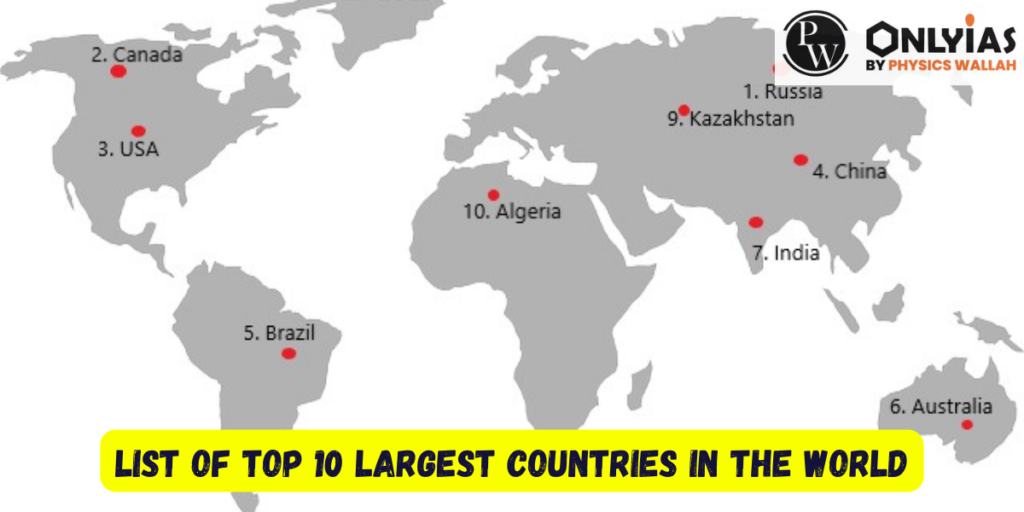
When considering the vastness of our planet, one cannot help but marvel at the sheer scale of its largest countries. Have you ever pondered which nations stretch across the widest expanses? What challenges do these colossal countries face due to their size? Let us embark on a geographical expedition as we uncover the top 10 largest countries in the world by size, reveling in the magnificence of their landscapes and the diverse cultures that inhabit them.
1. **Russia**
At the unparalleled zenith of landmass, Russia sprawls over eighteen million square kilometers, making it the largest country in the world. This transcontinental titan extends across Eastern Europe and northern Asia, captivating with its diverse topography, which includes the Ural Mountains, Siberian plains, and the frozen tundra of the Arctic. Russian culture is as expansive as its geography, boasting a rich history of literature, ballet, and art.
2. **Canada**
Second on the list is Canada, covering roughly 9.98 million square kilometers. Renowned for its breathtaking natural beauty, Canada is a tableau of towering forests, vast prairies, and glimmering lakes. From the Rocky Mountains of Alberta to the coastal imagery of British Columbia, this country exemplifies the grandeur of nature. The cultural mosaic reflects its diverse population, with influences from Indigenous peoples, French and British colonizers, and contemporary immigrants.
3. **China**
China occupies the third position, with an area of about 9.6 million square kilometers. It boasts one of the oldest civilizations, replete with historical marvels like the Great Wall and the Terracotta Army. China’s landscape is boundlessly diverse, ranging from the arid deserts of the Gobi to the verdant hills of Sichuan. Its rapid modernization juxtaposed with rich traditions makes China a fascinating study of contrasts.
4. **United States**
The United States, covering roughly 9.52 million square kilometers, stands fourth on our list. Renowned for its geographical variety, it encompasses everything from the sun-drenched beaches of California to the majestic peaks of the Rocky Mountains and the dense forests of the Pacific Northwest. Each state has its own unique characteristics and cultural heritage, making the U.S. a kaleidoscope of experiences.
5. **Brazil**
Fifth place belongs to Brazil, home to approximately 8.51 million square kilometers. This South American giant is synonymous with the Amazon rainforest, the largest tropical rainforest in the world. Brazil’s landscape features a harmonious blend of urbanization and natural beauty, highlighted by vibrant cities such as Rio de Janeiro and São Paulo alongside sprawling rural areas and breathtaking coastlines. The cultural exuberance, epitomized by its music, dance, and festivals like Carnival, showcases its dynamic spirit.
6. **Australia**
Occupying about 7.68 million square kilometers, Australia is the sixth-largest country and is often referred to as both a continent and a nation. Its geographic uniqueness is reflected in its diverse environments ranging from the Outback desert to lush coastal regions. Australia is renowned for its vibrant ecosystems, including coral reefs and unique flora and fauna. The indigenous cultures that have thrived for millennia add a profound depth to understanding this vast land.
7. **India**
Seventh on the list, India spans approximately 3.29 million square kilometers and is marked by its rich tapestry of cultures, languages, and religious traditions. From the Himalayan heights in the north to the tropical beaches in the south, India offers a startling diversity. Its major cities, such as Mumbai and Delhi, are bustling centers of economy and culture. India’s long and complex history implicates its vastness and integral role in global narratives.
8. **Argentina**
Argentina corners the eighth spot with an area of about 2.78 million square kilometers, showcasing dramatic landscapes, from the glorious Andes mountains to the expansive Pampas grasslands. This South American country captivates any traveler with its tango rhythms and sizzling cuisine. The famed Iguazu Falls further embellish its geographic splendor, where the confluence of nature and human experience creates an irresistible allure.
9. **Kazakhstan**
The ninth-largest country, Kazakhstan, is vast, covering approximately 2.72 million square kilometers. This Central Asian land experiences a continental climate, presenting extremes in temperature and varied landscapes, including steppes and mountains. Historically a crossroads of cultures, Kazakhstan is also known for its rich nomadic traditions and practices that echo the resilience of its people.
10. **Algeria**
Rounding out our top ten is Algeria, with an area of approximately 2.38 million square kilometers. The largest country in Africa, Algeria’s terrain is predominantly covered by the Sahara Desert. Its cultural heritage reflects a blend of Berber, Arab, and French influences. Algeria’s diverse landscapes and rich history provide a unique context that captivates both locals and explorers worldwide.
In conclusion, the largest countries in the world, measured by size, each offer their own unique tapestry of landscape, culture, and history. Each nation, from the frozen expanses of Russia to the sun-soaked plains of Australia, poses its own challenges and opportunities that come with such vast territory. As we traverse the globe and contemplate these enormities, one might wonder about the adventures that lie ahead. Which of these towering giants will you explore next, and what stories will you glean from their immense landscapes and vibrant cultures?
FAQ
Which country is the largest in the world by size?
Russia is the largest country in the world by land area, covering over 18 million square kilometers.
How many countries are among the top 10 largest by size?
The article lists the top 10 largest countries in the world by size.
What factors influence the size ranking of countries?
Countries are ranked by their total land area, which includes both land and inland water bodies.
Are the largest countries also the most populous?
Not necessarily; some large countries like Russia and Canada have relatively low population densities compared to smaller but more populous countries.





Leave a Reply