
Short Answer
Imagine you’re at an international gathering, surrounded by individuals representing diverse cultures, traditions, and languages. The air is thick with the excitement of multilingual conversations, and you find yourself wondering: if you could master any language in the world, which one would you choose? While you ponder this playful question, it’s essential to understand the languages that dominate our globe, shaping communication, culture, and connection. Let’s embark on an exploration of the ten most widely spoken languages worldwide, unveiling the stories behind each and the unique challenges they present in mastering them.
1. Mandarin Chinese
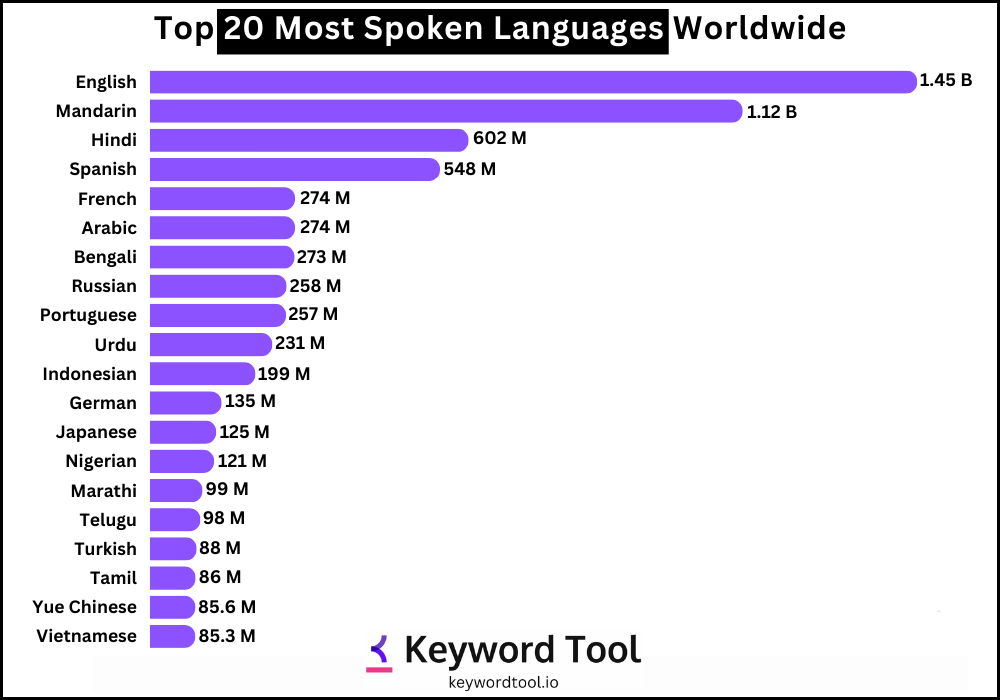
With over a billion native speakers, Mandarin Chinese reigns supreme as the most spoken language globally. It serves as the official language of China and Taiwan, as well as one of the four official languages of Singapore. The tonal nature of Mandarin can pose a substantial challenge for new learners. What makes it even more intriguing is the enormous array of characters in its written form, requiring significant memorization and practice. Despite these hurdles, mastering Mandarin opens doors to understanding a rich tapestry of culture and history.
2. Spanish
Spanish, with approximately 460 million native speakers, is celebrated for its rhythmic charm and linguistic fluidity. Spread across Spain, Latin America, and even parts of the United States, Spanish offers a vibrant gateway into countless cultures, culinary delights, and artistic expressions. An exciting facet of Spanish is its regional dialects. Each variant presents not just different pronunciations but also unique vocabulary, which can challenge even the most ardent learners. Can you imagine navigating these delightful intricacies while trying to hold a conversation?
3. English
As a global lingua franca, English connects people across continents. With around 380 million native speakers and an estimated 1.5 billion total speakers, English’s versatility is remarkable. Its vocabulary draws from multiple languages, presenting both riches and complexities. This eclectic nature can make mastering English daunting; nuances in idioms and variations in dialects add layers that learners must decipher. What’s more, the unpredictable spelling can leave even native speakers scratching their heads. Are you up for this captivating challenge?
4. Hindi
Hindi, the predominant language in India with nearly 340 million native speakers, is deeply entrenched in the country’s heritage. Written in the Devanagari script, Hindi is not just a means of communication; it is a vehicle for expressing diverse cultures and philosophies. One of the more intriguing challenges of learning Hindi is acclimating to its grammatical structure, which varies significantly from English. Additionally, the language’s vast array of dialects introduces further layers of complexity. How well can you adapt to such a beautifully intricate language?
5. Arabic
Encompassing a rich spectrum of dialects, Arabic boasts around 310 million native speakers. The classical form of Arabic is profoundly influential, interlacing language with the realms of religion, literature, and philosophy. However, learners often find themselves navigating the maze of non-standard dialects and the unique script that is read from right to left. Arabic grammar can also be intricate, adding another level of intricacy for the uninitiated. Can you picture yourself unraveling the mysteries of this ancient and powerful language?
6. Bengali
Bengali, with roughly 230 million speakers, is the language of Bangladesh and the Indian states of West Bengal and Tripura. It boasts a rich literary tradition that dates back centuries. Bengali script presents a phonetic charm, but the intricate script and pronunciation can pose a significant challenge for learners. Moreover, cultural references embedded within the language add layers that may be daunting yet fascinating to decode. Would you embrace the intellectual adventure of mastering Bengali?
7. Portuguese
With about 220 million native speakers, Portuguese emerges as a prominent language, primarily spoken in Brazil and Portugal. The language is notable for its lyrical quality and cultural depth, influenced by its history of exploration and colonization. However, learners must navigate its tricky pronunciation and varied regional dialects, especially between Brazil and Portugal. The question arises: how would you tackle the delightful but complex tapestry of this language?
8. Russian
Russian stands as the eighth most spoken language globally, with around 154 million native speakers. It serves as a critical medium across Eastern Europe and Central Asia. The Cyrillic script can present an initial barrier for newcomers, while the grammatical intricacies, including case systems and vocabulary adjustments, can be formidable. Yet, the richness of Russian literature and culture may invigorate your determination. Is this captivating challenge one you would dare to undertake?
9. Japanese
Japanese, spoken by approximately 125 million people, presents a unique blend of tradition and modernity. Its three writing systems—Hiragana, Katakana, and Kanji—offer distinct challenges for learners. The context-dependent expression of politeness in Japanese adds another layer of complexity. Yet, delving into the world of anime, manga, and Japanese cuisine can motivate many to embrace the challenge. Does immersing yourself in this multifaceted language excite you?
10. Punjabi
Punjabi, with approximately 125 million speakers, is one of the most spoken languages in India and Pakistan. Its script varies between Gurmukhi and Shahmukhi, depending on the region, creating a unique learning experience. Rich in cultural context, music, and folklore, mastering Punjabi offers profound insights into the vibrant heritage of its speakers. Are you prepared to explore the lively world of Punjabi?
As we conclude this linguistic adventure, the challenge becomes evident: choosing which language to immerse yourself in could lead to numerous rewarding experiences. Whether you gravitate towards Mandarin’s tonal elegance, Spanish’s rhythmic cadences, or the charm of another language, the journey will undeniably enrich your life. So, which language will you choose to conquer, unlocking the door to a world of cultural appreciation and varied connectivity? The possibilities are endless!
FAQ
What are the top 10 most widely spoken languages in the world?
The top 10 most widely spoken languages worldwide are Mandarin Chinese, Spanish, English, Hindi, Arabic, Bengali, Portuguese, Russian, Japanese, and Punjabi.
Which language has the most native speakers?
Mandarin Chinese has the most native speakers, with over a billion worldwide.
Why is English considered a global lingua franca?
English is widely used for international communication, business, and travel, connecting people from different countries and cultures.
What are some challenges in learning Arabic?
Arabic has a complex script that is read from right to left, multiple dialects, and intricate grammar.
How do dialects influence language learning?
Dialects can vary greatly in pronunciation, vocabulary, and grammar, which can add complexity but also cultural richness to language learning.





Leave a Reply