
Short Answer
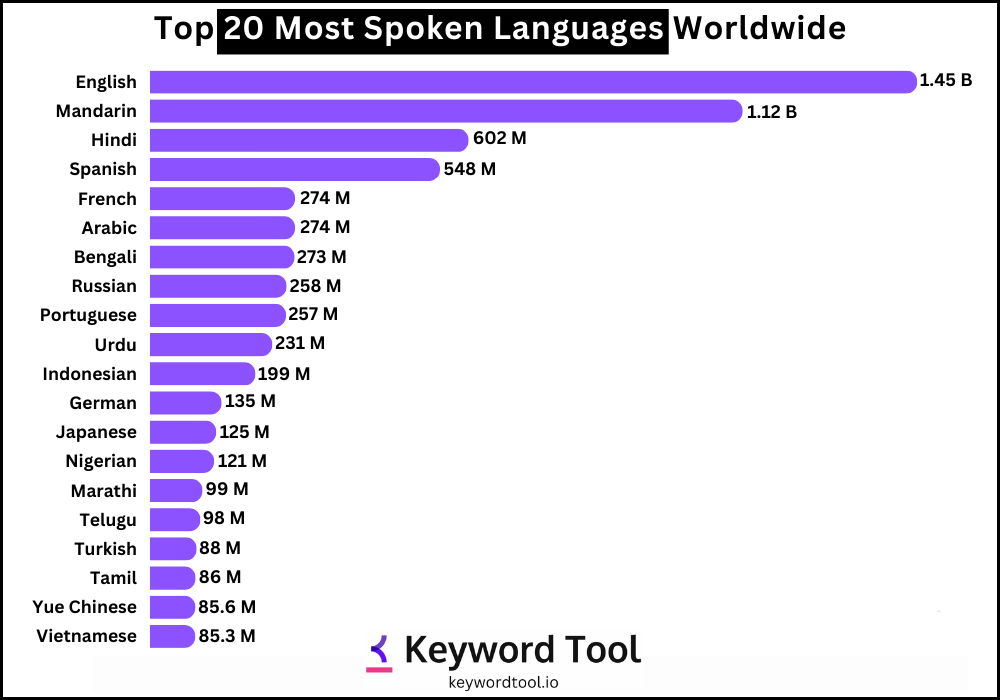
Imagine exploring a bustling market in Marrakech, where the vibrant colors of spices meld with the cacophony of voices conversing in diverse languages. Have you ever wondered which languages are most frequently spoken across the globe? This tantalizing question opens up a plethora of cultural insights and human connections, showcasing the unique tapestry of linguistic diversity. In this exploration, we will dive into the top 10 most spoken languages worldwide, uncovering not only their numeric prevalence but also their cultural significance and global influence. Ready to embark on this linguistic adventure?
1. Mandarin Chinese
Boasting over a billion native speakers, Mandarin Chinese reigns supreme as the most spoken language in the world. Its syllabic tonal nature elevates it into a realm of poetic elegance. Delving beyond mere numbers, one discovers that Mandarin is not just a form of communication—it is a gateway to an ancient civilization rich in history, philosophy, and art. The writing system, with its intricate characters, connects modern speakers to timeless literary masterpieces, offering a glimpse into the philosophical depths and cultural reflections of China.
2. Spanish
With approximately 460 million native speakers, Spanish is celebrated not only for its melodious rhythm but also for its cultural vibrancy. Spanning continents, the language acts as a thread weaving together disparate cultures across Spain, Latin America, and beyond. The proliferation of Spanish in media, literature, and music amplifies its relevance. From the powerful prose of Gabriel García Márquez to the sultry notes of Flamenco, Spanish serves as a marker of identity for millions while also being a unifying force among diverse nations.
3. English
No global journey through languages would be complete without English, the Lingua Franca of the modern era. With about 380 million native speakers and over a billion who speak it as a second language, English transcends geographical boundaries. Its role as a common tongue for science, technology, and international diplomacy underscores its unparalleled influence. English is a linguistic chameleon, absorbing elements from myriad languages, reflecting a continually evolving mosaic of global culture.
4. Hindi
Hindi, the official language of India and spoken by over 340 million people, showcases the stunning diversity of a nation characterized by its multitude of languages and dialects. The rich tapestry of Hindi literature, from the verses of Kabir to contemporary Bollywood lyrics, reveals the language’s capacity to express profound emotions and complex ideas. As India emerges as a global economic powerhouse, the significance of Hindi in international dialogue continues to grow, cultivating interest and encouraging cross-cultural exchanges.
5. Arabic
With a diverse linguistic landscape spanning across the Middle East and North Africa, Arabic claims approximately 310 million native speakers. Its deep historical roots can be traced back to the language of the Quran, making it not only a means of communication but also a profound element of religious identity for millions. The beauty of Arabic lies in its script, intricate grammar, and poetic traditions, which have left an indelible mark on global literature and philosophy.
6. Bengali
Surpassing 230 million speakers, Bengali is primarily associated with Bangladesh and the Indian state of West Bengal. Known for its rich literary tradition, Bengali holds a prominent position in the arts. Poets like Rabindranath Tagore, the first non-European Nobel laureate in literature, exemplify the language’s ability to evoke profound thoughts and emotions. The language is not merely a vessel for communication but a canvas for creativity, encapsulating a deep sense of cultural identity.
7. Portuguese
With over 220 million speakers, Portuguese is synonymous with cultural exuberance in countries like Brazil and Portugal. Emerging from the fusion of various indigenous cultures, Portuguese embodies a sense of exploration and global connections. From the rhythmic beats of Samba to the soulful notes of Fado, the language serves as a conduit for expressing the passions and histories of rich civilizations. Portuguese encompasses more than just communication; it represents a global community that thrives on diversity.
8. Russian
Russian is the most widely spoken Slavic language, with approximately 160 million native speakers. It serves not just as a means of dialogue but as a marker of prestigious literary and scientific heritage, featuring prominent figures like Leo Tolstoy and Anton Chekhov. The Cyrillic script adds an air of mystique, inviting curious learners to delve into its complexities. Russian embodies both resilience and artistic expression, functioning as a pivotal player in global cultural interchange.
9. Japanese
With about 125 million speakers, Japanese brings forth a unique amalgamation of ancient traditions and contemporary innovations. Its linguistic nuances capture respectful communication, reflecting the cultural values central to Japanese society. The language also boasts a vast array of expressions and idioms, making it an exhilarating challenge for language enthusiasts. Through its distinct writing systems—Hiragana, Katakana, and Kanji—Japanese encapsulates a world of aesthetics, philosophy, and meticulous craftsmanship.
10. Punjabi
Rounding out our linguistic list is Punjabi, spoken by around 100 million people primarily in India and Pakistan. It flourishes in vibrant cultural expressions such as music and dance, particularly through Bhangra, which captivates hearts worldwide. The Gurmukhi script, utilized predominantly in India, is a stunning visual component of Punjabi, celebrating its connections to history and spirituality. With its thriving diaspora, Punjabi continues to evolve, reinforcing cultural bonds across borders.
As we conclude this exploration of the top ten most spoken languages worldwide, we are reminded of the intrinsic value languages bring to our lives and relationships. They foster understanding and ignite curiosity, bridging gaps among diverse cultures and communities. The real challenge remains for us all: how will you incorporate learning a new language into your life? Will you whisper sweet words in Spanish, chant poetic verses in Mandarin, or perhaps groove to Punjabi beats? The world of languages awaits; your adventure is just a word away.
FAQ
What are the top 3 most spoken languages in the world?
The top three most spoken languages worldwide are Mandarin Chinese, Spanish, and English.
Which language has the most native speakers?
Mandarin Chinese has the most native speakers, with over a billion people speaking it natively.
Why is English considered a global language?
English is considered a global language because it is widely used as a common tongue for science, technology, international business, and diplomacy, with over a billion people speaking it as a second language.
Are the most spoken languages also the most influential culturally?
Many of the top spoken languages also have significant cultural influence, as they are tied to literature, music, history, and international communication.
How can learning one of these languages benefit me?
Learning a widely spoken language can enhance cross-cultural understanding, improve career opportunities, and allow access to rich literary and cultural traditions.





Leave a Reply