
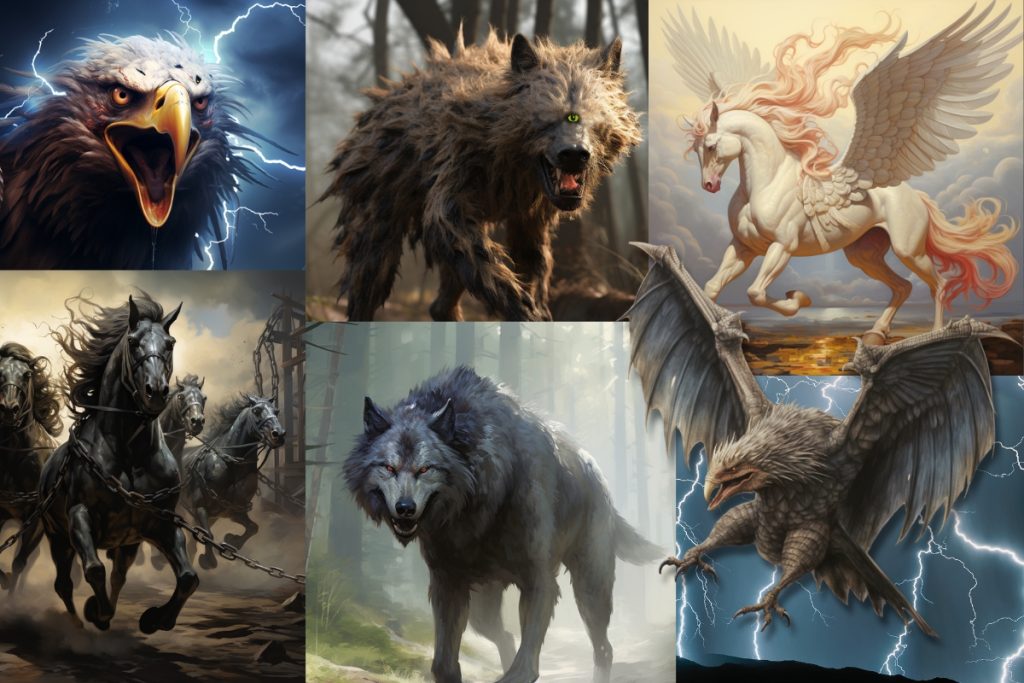
Throughout the expanse of human history, mythical beasts have interwoven themselves into the fabric of folklore, each creature embodying the collective fears, hopes, and dreams of civilizations. These legendary animals, often imbued with supernatural powers, resonate with an almost palpable intensity. They are the echoes of ancient cultures, the whispers of nature’s untamed essence, and the personifications of human struggle against adversity. Let’s journey through the myths and legends to unveil the top ten most powerful mythical beasts that have captivated minds and inspired tales.
1. Dragon
In countless cultures around the globe, the dragon reigns supreme as the epitome of power and majesty. With scales that shimmer like gemstones and eyes that glint with ancient wisdom, dragons represent not only ferocity but also guardianship. Eastern dragons, revered in Chinese tradition, symbolize luck, strength, and prosperity, often associated with water and seasonal rains. Conversely, Western dragons serve as fire-breathing antagonists, embodying chaos and destruction. This duality reveals a creature that inspires both dread and admiration, shadowy and radiant in equal measure.
2. Griffin
The griffin stands as a regal hybrid of lion and eagle, a veritable sentinel of the skies and the earth. With the body of a lion—a symbol of bravery and royalty—and the wings of an eagle—representing transcendence and divine agency—the griffin is a majestic guardian of treasures and sacred spaces. This creature captivates with its fierce protectiveness and noble grace, making it a symbol of wisdom and strength, often associated with the sun and the divine.
3. Kraken
Deep within the abyssal depths of myth, the kraken looms, a gargantuan cephalopod capable of casting terror over seafaring souls. Its massive tentacles unfurl like the shadows of forgotten gods, dragging ships into the depths below. This leviathan symbolizes humanity’s fear of the unknown, encapsulating the primal dread of the ocean’s unfathomable mysteries. In its colossal embrace lies a reminder of nature’s untamed fury, charging us with respect for the vast expanse of waters that cradle our existence.
4. Chimera
The chimera is a creature born of elemental chaos, a tale woven from the nightmares of ancient Greeks. Sporting the formidable head of a lion, a serpent for a tail, and a goat emerging from its back, this monstrous amalgam embodies discord and terror. As a harbinger of war and destruction, the chimera challenges the very essence of creation, representing the inherent conflict within the realms of mankind, prompting reflection on the duality of human nature—both beautiful and monstrous.
5. Phoenix
From the ashes arises the phoenix, a creature synonymous with rebirth, transformation, and immortality. Its vibrant plumage glimmers like fiery rubies and molten gold, a tapestry of life’s cyclical nature. The phoenix, with its ability to regenerate from its own demise, symbolizes hope and renewal amidst adversity. Its tale reminds us that from destruction springs new beginnings, an eternal truth that resonates deeply within our human experience.
6. Minotaur
A creature that embodies both man and beast, the Minotaur lurks within the labyrinth of human psyche, a presage of fate and fear. With the body of a man and the head of a bull, this legendary being represents the struggle between intellect and instinct. Cursed to dwell in an intricate maze, the Minotaur invites contemplation on the journey through one’s inner labyrinths, challenging our understanding of identity, confinement, and the beasts we each harbor within ourselves.
7. Banshee
In the damp, mist-laden air of Celtic folklore, the banshee wafts through the darkness, a ghostly herald of death. Often described with an ethereal, wailing cry that pierces the stillness, she is the personification of mourning and loss. The banshee embodies both sorrow and the anticipation of change, symbolizing the thin veil between life and death. Her presence in the folklore serves as a poignant reminder of our mortality, and the bittersweet nature of life’s ephemeral beauty.
8. Yeti
Prowling the snow-capped peaks of the Himalayas is the elusive yeti, a cryptid draped in mystery and folklore. Often called the “Abominable Snowman,” this great ape-like figure embodies the fear of the untamed wilderness. The yeti serves as a metaphor for the unknown, challenging explorers and adventurers to contemplate the limits of human knowledge. It captivates with its spectral presence, a symbol of nature’s raw power and the eternal quest for understanding amidst the vast, uncharted territories.
9. Cerberus
Guarding the gates of the underworld, Cerberus, the three-headed hound, epitomizes unwavering loyalty and fierce protection. Each of its heads serves as a sentinel, watching over the realms of the dead with a menacing glare. This formidable creature signifies the inextricable link between life and death, compelling us to confront our fears of mortality and the mysteries that lie beyond the veil. As a beacon of the afterlife’s uncertainties, Cerberus evokes the introspective journey that each souls must undertake.
10. Leviathan
The leviathan is a sprawling sea serpent that embodies the chaos of the ocean—an elemental embodiment of unfathomable power. A force to be reckoned with, this mythical creature symbolizes the monstrous aspects of nature, inspiring both dread and reverence. Its vast form, rising from the depths like a tempest, reflects humanity’s struggle against life’s tumultuous waters. By confronting the leviathan, we acknowledge the chaos within ourselves and around us, embracing the storm that often defines our existence.
Each of these mythical beasts encapsulates a tapestry of human emotion and experience, serving not only to entertain but to illuminate the shadows of our own realities. They invite us to ponder the depths of existence while reminding us that within every legend lies a profound nugget of truth. These powerful creatures will continue to roam the annals of mythology, ever captivating the human imagination, eternally urging us to explore the enigma of our own legendary narratives.








Leave a Comment