
Short Answer
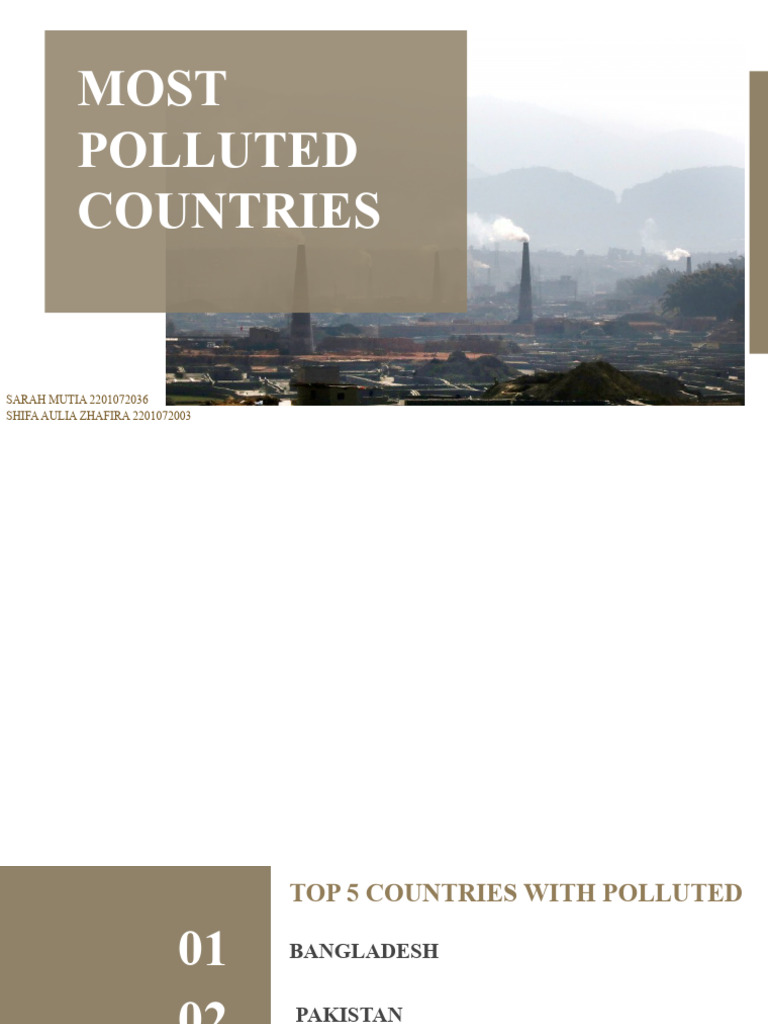
In the intricate tapestry of global environmental statistics, the notion of pollution transcends mere numbers. It serves as a stark reminder of humanity’s relentless pursuit of progress often at the expense of the natural world. The most polluting countries not only contribute disproportionately to carbon emissions but also shape the very narratives around climate change, socioeconomic disparities, and policy-making. This list explores the top 10 most polluting countries, examining the multifaceted reasons behind their positions and the implications for our planet’s future.
- 1. China
- 2. United States
- 3. India
- 4. Russia
- 5. Japan
- 6. Germany
- 7. Iran
- 8. South Korea
- 9. Indonesia
- 10. Brazil
China stands as the world’s most significant contributor to carbon dioxide emissions, accounting for approximately 28% of the global total. Rapid industrialization, extensive coal usage, and a burgeoning population burden the environment. The nation’s unprecedented economic growth has propelled reliance on fossil fuels, making the transition to cleaner energy sources both imperative and challenging. Additionally, China’s heavy manufacturing sector not only serves domestic needs but also fulfills global demands, exacerbating the problem.
The United States, historically a dominant player in pollution statistics, remains the second-largest emitter of carbon dioxide. Factors such as a high per capita emission rate, dependence on vehicles, and an expansive agricultural sector contribute to this distinction. The nation’s vast geography and diverse economy foster an intricate web of industrial activity, showcasing how lifestyle choices and energy policies directly influence environmental outcomes. As the U.S. grapples with initiatives for greener technology, the legacies of resource exploitation linger on.
India has rapidly ascended the ranks of pollution contributors due to its burgeoning population and a reliance on coal for electricity generation. As urbanization proliferates, so does the toll on air quality, with cities like Delhi often ranking among the world’s most polluted. The nation faces the dual challenge of economic development and environmental sustainability, making its pathway to reducing emissions a complex endeavor. Furthermore, India’s rich cultural dependence on agriculture also leads to significant methane emissions, primarily from livestock.
Russia’s vast landmass and heavy reliance on natural gas and oil extraction render it a formidable force in global pollution statistics. Industrial emissions from oil refineries and coal-fired plants significantly contribute to air and water pollution, exacerbated by a lack of stringent regulatory frameworks. The nation’s economic reliance on fossil fuels makes it resistant to a swift transition to renewable energies, reflecting broader geopolitical complexities that intertwine environmental challenges with national interests.
Japan, while often heralded for its advancements in technology and renewable energy, still ranks high on the list of polluting nations, primarily due to its energy policies post-Fukushima nuclear disaster. With coal remaining a substantial part of its energy mix, emissions continue to pose threats to both its population and the global climate. As Japan faces pressure to modernize its energy infrastructure, the balance between maintaining energy security and reducing environmental impact presents a compelling paradox.
Germany, the powerhouse of Europe, paradoxically finds itself among the top polluters as it navigates the transition to a more sustainable economy. Although the country has invested heavily in renewable energy within its “Energiewende” initiative, its historical reliance on coal and the gradual phase-out of nuclear energy continues to challenge its emissions footprint. The dichotomy of striving for sustainability while grappling with legacy industries reflects the complex dynamics of modern energy policy.
Iran’s economy, largely driven by oil and gas extraction, contributes significantly to its environmental footprint. The country faces unique geopolitical challenges that complicate its energy policies, alongside the pressing need for modernization of its industrial base. Environmental degradation, exacerbated by sanctions and limited access to technology, has engendered a cascade of issues that hinder both economic growth and sustainable development. The interplay of politics and pollution in Iran paints a broader picture of how such challenges can exacerbate environmental crises.
As a nation marked by rapid industrialization, South Korea has established a significant industrial sector that contributes to its pollution levels. The heavy reliance on coal, coupled with urban vehicular emissions, leads to air quality challenges that plague its major cities. In its quest for technological supremacy, South Korea faces dual pressures: to innovate while simultaneously reducing its carbon footprint. The balancing act between economic ambition and environmental stewardship embodies the broader challenges faced by many developed nations.
Indonesia has emerged as a major player in global emissions largely due to deforestation and peatland degradation. The fires ignited for agricultural expansion, particularly palm oil production, contribute to an alarming air quality crisis, with transboundary haze affecting neighboring countries. Indonesia’s challenges reflect the complex interactions between economic development and environmental preservation, illustrating the need for comprehensive solutions to safeguard its biodiversity while fostering sustainable practices.
Brazil, with its vast rainforests, faces immense pressures from agricultural expansion and illegal logging, contributing significantly to greenhouse gas emissions. The Amazon rainforest, often referred to as the “lungs of the Earth,” is under constant threat, which not only impacts local ecosystems but also global climate patterns. Efforts to balance economic development with environmental protection highlight the intricate ties between a nation’s policies and its ecological footprint, making Brazil’s case a critical point of discussion in climate advocacy.
As we reflect on the environmental challenges posed by these countries, the interplay of industrial progress, energy dependence, and regulatory environments is undeniably complex. The sheer scale of pollution with which these nations grapple serves as both a cautionary tale and a call to action. Collective global efforts geared toward sustainable practices, innovative technologies, and conscious consumerism are paramount in rewriting the narrative for future generations. Only through understanding these intricacies can we hope to forge a path toward a more sustainable and harmonious existence with the planet.
FAQ
Which country is the largest contributor to global pollution?
China is the largest contributor to global pollution, accounting for approximately 28% of global carbon dioxide emissions.
What factors contribute to the United States' pollution levels?
The United States’ pollution levels are influenced by high per capita emissions, dependence on vehicles, and a large agricultural sector.
How does deforestation in Indonesia affect global pollution?
Deforestation and peatland degradation in Indonesia, especially for palm oil production, lead to increased greenhouse gas emissions and regional air quality crises.
Why is it challenging for countries like Germany and Japan to reduce pollution?
Countries like Germany and Japan face challenges due to legacy reliance on coal, the phase-out of nuclear energy, and the need to balance energy security with sustainability.
What are some common challenges faced by the most polluting countries?
Common challenges include economic dependence on fossil fuels, industrial growth, regulatory limitations, and geopolitical issues affecting environmental policies.






Leave a Reply