
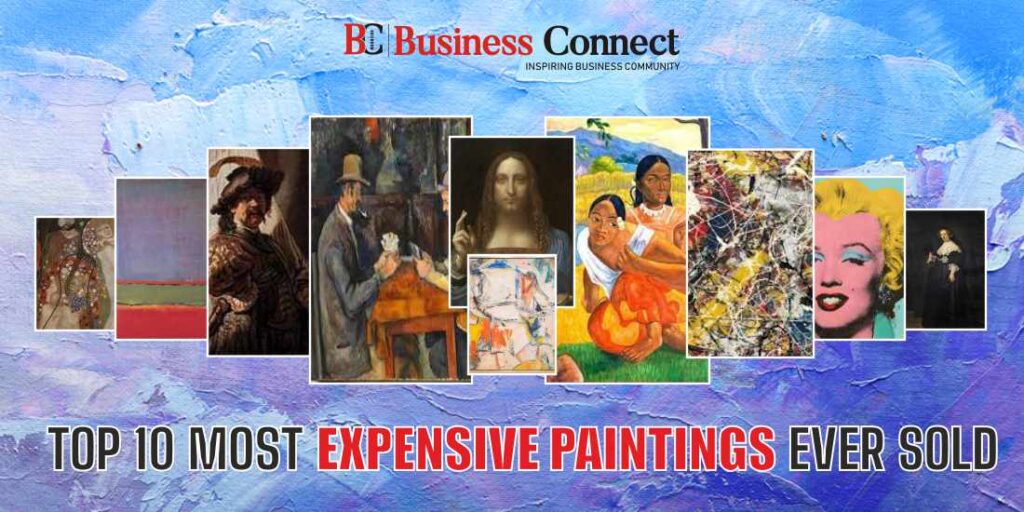
Short Answer
Art has the unparalleled power to evoke emotions, provoke thought, and, rather stunningly, topple records at auction. Imagine standing before a canvas, its brushstrokes capturing more than mere pigments and shapes; it becomes a financial phenomenon, epitomizing a blend of skill, vision, and sheer market demand. So, what makes a painting so exorbitantly valuable? Is it the artist’s reputation, the historical significance, or perhaps an elusive quality that continues to enchant collectors and investors alike? Let’s embark on a journey through the top 10 most expensive paintings ever sold, showcasing not just their monetary worth but the stories woven into their very essence.
10. No. 6 (Violet, Green and Red) by Mark Rothko – $186 million
This abstract canvas, painted in 1951, exemplifies Rothko’s profound understanding of color and emotion. It slipped into a new owner’s hands at a staggering price in 2014. The painting’s vibrant hues invite contemplation, highlighting the influence of color on the human psyche. As minimal as it might appear, its complexity speaks to the soul, asserting the intrinsic value of abstract expressionism.
9. Les Femmes d’Alger (Version ‘O’) by Pablo Picasso – $179.4 million
In 2015, this masterpiece, inspired by Delacroix’s “Women of Algiers,” stunned the art world as it shattered records with its auction price. The painting showcases Picasso’s avant-garde approach, harmonizing brightness with a labyrinth of forms. The multiplicity of feminine figures in the artwork tells a tale of both beauty and turmoil, reflecting the social dynamics of the era it represents.
8. Nu couché by Amedeo Modigliani – $170.4 million
A languid nude reclining gracefully, Modigliani’s “Nu couché” captures an ethereal tranquility that transcends time. Sold in 2015, this work exemplifies the artist’s distinctive style—elongated forms and a subtle palette. It embodies an intimate yet distant allure that appeals both to art lovers and collectors alike, making it a desired piece in the world of fine art.
7. Interchange by Willem de Kooning – $300 million
Offering a vibrant explosion of color and form, “Interchange” was created in 1955 and reflects the artist’s profound impact on modern art. Sold privately in 2015, its astronomical price ignites discussions about the valuation of modern masterpieces. The painting exudes a frenetic energy that speaks to a turbulent yet exciting epoch—an embodiment of the abstract expressionist movement that defined its time.
6. Salvator Mundi by Leonardo da Vinci – $450.3 million
This enigmatic portrait of Christ, attributed to da Vinci, broke all records when it was auctioned in 2017. Its provenance, entangled in mystery and controversy, adds layers of intrigue to an already iconic piece. The painting’s luminous quality and detailed craftsmanship underscore the artist’s genius while raising fascinating questions about authenticity in the art world.
5. When Will You Marry? by Paul Gauguin – $300 million
While shrouded in ambiguity, this captivating canvas from 1892 features Gauguin’s hallmark use of vivid colors and symbolism. Touted as an exploration of love and desire, its elaborate composition reflects the artist’s complex relationship with beauty and culture. Its sale in 2015 marks a significant point in Gauguin’s legacy, inviting viewers to consider the intersections of obsession and artistry.
4. Portrait of an Artist (Pool with Two Figures) by David Hockney – $90.3 million
In 2018, Hockney’s iconic depiction of tranquility and solitude at a poolside fetched auction values that reverberate through the art community. This painting melds naturalistic elements with modern sensibility, capturing a fleeting moment suspended in time. The juxtaposition of figures adds layers of narrative depth, compelling observers to delve into the relationships depicted and their implications for contemporary life.
3. The Card Players by Paul Cézanne – $250 million
Valued for both its artistic mastery and historical significance, “The Card Players” stands out in Cézanne’s oeuvre. This 1895 piece, sold in 2011, depicts a moment of quiet contemplation among players, showcasing Cézanne’s innovative approach to perspective and form. The work resonates with collectors seeking a blend of nostalgia and artistic legacy, and it continues to spark conversations about the intersection of art and commerce.
2. Nu couché by Amedeo Modigliani – $170.4 million
This artwork, depicting a reclining nude, showcases the artist’s distinctive elongated figures and rich colors. Though it has been sold multiple times, its latest auction price was nothing short of astonishing. Modigliani’s works often evoke a sense of intimacy, leaving a lingering impression. The limitless interpretations of the human form resonate, establishing why this piece stands among the most valuable.
1. Salvator Mundi by Leonardo da Vinci – $450.3 million
Regarded as the most expensive painting ever sold at auction, “Salvator Mundi” captures Christ holding a crystal orb, symbolizing spiritual illumination. The frenzy surrounding its auction in 2017 brought this Renaissance masterpiece, once lost, back into the spotlight. Questions of ownership, authenticity, and the painting’s future trajectory continue to fuel debates among art enthusiasts and collectors alike.
As we conclude our exploration of these artistic treasures—each steeped in historical significance and emotional resonance—it is evident that the value of art transcends monetary measures. Each of these works encapsulates a moment, a culture, or an idea, challenging the very notion of what art should be. Perhaps a challenge arises: could the next great masterpiece reside within your grasp, waiting to redefine the boundaries of creativity and value? As the art world continues to evolve, one can only speculate on what the future holds for artists, collectors, and the undiscovered gems that may one day adorn the walls of auction houses around the globe.
FAQ
What determines the value of a painting at auction?
The value of a painting is influenced by factors such as the artist’s reputation, rarity, provenance, historical significance, and current market demand.
Which painting holds the record for the highest auction price?
“Salvator Mundi” by Leonardo da Vinci holds the record, having sold for $450.3 million in 2017.
Are all the most expensive paintings sold at public auctions?
No, some high-value paintings, such as “Interchange” by Willem de Kooning, are sold privately.
Why is provenance important in art sales?
Provenance helps verify authenticity and ownership history, which can significantly affect a painting’s value and desirability.
FAQ
What determines the value of an expensive painting?
The value is influenced by factors such as the artist’s reputation, historical significance, rarity, provenance, condition, and market demand.
Why are paintings by Leonardo da Vinci so valuable?
Leonardo da Vinci’s paintings are rare, historically significant, and showcase exceptional artistic mastery, all of which contribute to their high value.
Are the prices listed for these paintings always from public auctions?
Not always; some of the highest prices were achieved through private sales, which may not be publicly disclosed but are widely reported.
How has the art market evolved regarding expensive paintings?
The art market has grown globally with increasing interest from collectors and investors, driving record-breaking auction prices and private sales.
FAQ
What is the most expensive painting ever sold?
The most expensive painting ever sold is “Salvator Mundi” by Leonardo da Vinci, which sold for $450.3 million in 2017.
What factors influence the value of an expensive painting?
Factors influencing the value include the artist’s reputation, historical significance, provenance, rarity, condition, and market demand.
Are modern paintings included in the list of most expensive paintings?
Yes, modern paintings such as “Interchange” by Willem de Kooning and “Portrait of an Artist (Pool with Two Figures)” by David Hockney are included.
Why do some paintings sell for hundreds of millions of dollars?
Such high prices reflect the painting’s cultural importance, rarity, the artist’s prominence, and sometimes the prestige associated with ownership.
FAQ
What makes a painting one of the most expensive ever sold?
Factors include the artist’s reputation, historical significance, rarity, provenance, and market demand.
Which painting currently holds the record for the highest sale price?
‘Salvator Mundi’ by Leonardo da Vinci, sold for $450.3 million in 2017.
Are all the paintings listed sold at public auctions?
No, some were sold privately, such as Willem de Kooning’s ‘Interchange’.
Why are some paintings sold multiple times?
Artworks often change ownership through private sales or auctions as collectors buy and sell to realize value or update collections.






Leave a Reply