
Short Answer
When embarking on the enigmatic journey through the world of fungi, one must tread carefully, for not all mushrooms are the culinary delights they seem to be. Among the over 10,000 known mushroom species, a concerning array possesses toxicological properties that can be perilous, even fatal to unsuspecting foragers. This article delineates the top ten most dangerous mushrooms in the world, providing an illuminating insight into their characteristics and the inherent risks associated with each.
1. Amanita phalloides (Death Cap)
The Death Cap mushroom, notorious for its lethality, accounts for the majority of mushroom poisoning incidents worldwide. This fungus is characterized by its olive-green cap, white gills, and stem flecked with patches. Ingesting even a minuscule quantity can lead to hepatic and renal failure due to potent toxins called amatoxins. Initial symptoms may be vague, mimicking gastrointestinal distress, but a dangerous lag ensues, often resulting in severe organ damage after a deceptive lull in symptoms.
2. Amanita ocreata (Destroying Angel)
Another member of the Amanita family, the Destroying Angel, is both aesthetically captivating and deadly. Dressed in a white robe, it can often be mistaken for its edible relatives. The starkly white cap and absence of color on the gills are misleading markers. The Amanita ocreata’s toxicity is akin to that of the Death Cap, making it exceptionally hazardous for those untrained in mushroom identification. Poisoning symptoms typically emerge within 6 to 12 hours following ingestion, leading to a rapid decline in health.
3. Galerina marginata (Funeral Bell)
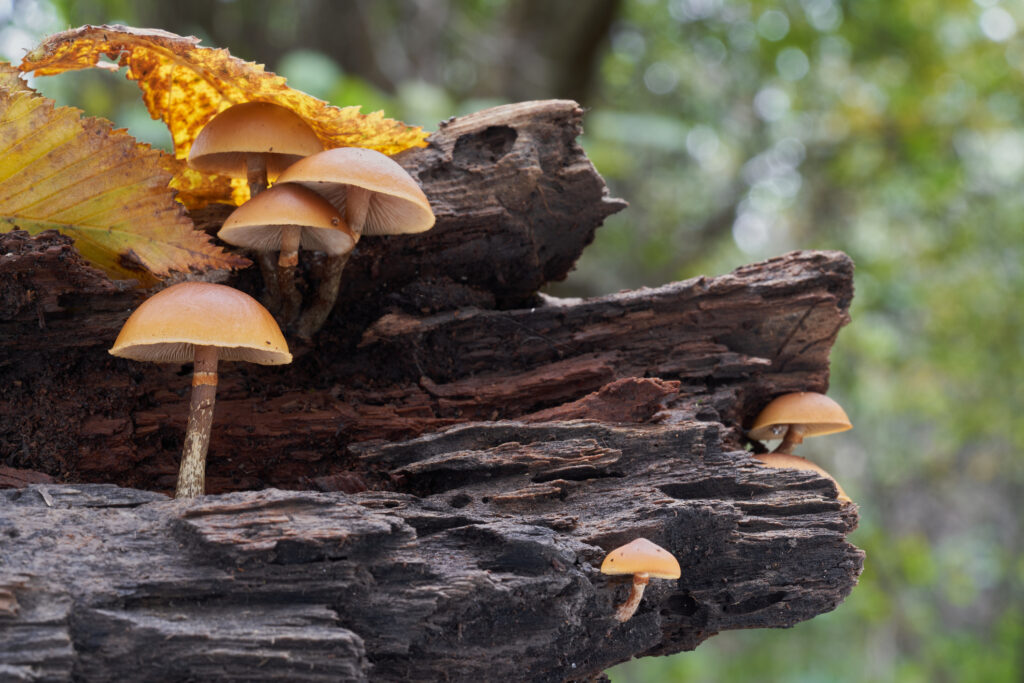
This unassuming brown mushroom, often found growing on decaying wood, harbors lethal compounds similar to those of the Amanita species. Recognized by its ringed stipe and a cap that ranges from yellow-brown to rust-colored, Galerina marginata can be deceptive for novice foragers. Symptoms of poisoning include profound gastrointestinal distress and liver failure, which can occur within 24 hours post-ingestion. Its moniker, the Funeral Bell, ominously hints at the dangers it presents.
4. Cortinarius spp. (Webcaps)
The Cortinarius species, often dubbed Webcaps, display an array of colors, from rusty red to muted browns. Their distinctive feature is the web-like veil that encases the gills during early growth stages. They contain toxins capable of inducing renal failure, with symptoms sometimes taking weeks to manifest. This delayed toxicity makes them insidious, as they might be consumed several days prior to symptom onset, leaving victims unaware of their grave decision until it is too late.
5. Letharia vulpina (Wolf Lichen)
While not a mushroom in the strictest sense, this striking lichen possesses toxic properties that have earned it a place among nature’s dangers. Often mistakenly identified due to its mushroom-like appearance, Letharia vulpina contains the potent alkaloid vulpinic acid. Ingesting the lichen can lead to severe gastrointestinal irritation and neurological disturbances, particularly when consumed by animals, prompting its historical use as a poison intended for killing wolves.
6. Boletus satanas (Devil’s Boletus)
A prominent figure in European woodlands, the Devil’s Boletus is identifiable by its grotesque appearance, boasting a greenish-yellow cap and a peculiar sponge-like underside. While not universally lethal, its consumption can result in significant gastrointestinal disturbances, including nausea and abdominal cramping. Alerts against this mushroom are often echoed, as its unpalatable flavor and adverse effects prompt many to avoid it altogether.
7. Inocybe spp. (Webcaps)
Similar to the Cortinarius, Inocybe mushrooms pose a substantial threat due to their deceptive allure. Several species in this genus contain muscarine, a toxin that can cause sweating, salivation, and respiratory complications. The mushrooms vary greatly in appearance, but their common feature includes a fibrous cap and a somewhat tapered stem. Knowledge of the subtleties distinguishing this genus from benign counterparts is instrumental in preventing poisoning incidents.
8. Omphalotus olearius (Jack-O’-Lantern Mushroom)
Infamous for its bioluminescent qualities that light up the forest floor, the Jack-O’-Lantern is visually captivating yet toxic, harboring compounds that can cause severe cramps and vomiting. Its bright orange hue and gill structure may lead to confusion with edible chanterelles, putting untrained foragers at risk. The luminescent display, while enchanting, serves as a warning of the mushroom’s unpalatability and potential gastrointestinal repercussions.
9. Clitocybe dealbata (Fool’s Funnel)
This mushroom, often growing in grassy areas, can be uniformly pale with a funnel-shaped cap. While relatively rare, its toxicity is particularly concerning due to the presence of muscarine, which can result in cholinergic syndrome—a condition marked by excessive salivation, lacrimation, and gastrointestinal distress. Those misidentifying this mushroom may encounter disastrous health outcomes, further emphasizing the criticality of precise species recognition.
10. Gyromitra esculenta (False Morel)
Peculiar in appearance, the False Morel has a lobed, irregular cap that resembles a brain. Often mistaken for the edible morel, its consumption can trigger serious symptoms ranging from nausea to neurological responses owing to the presence of gyromitrin, which is metabolized to form highly toxic compounds. The risk of confusion with its edible counterparts contributes to its notoriety, making it indispensable for mushroom enthusiasts to learn how to properly identify this hazardous fungi.
Exploring the vast and diverse realm of mushrooms unravels both the fascinating and the frightful. The allure of foraging must be tempered with knowledge and respect for the natural world. As this list illustrates, discretion is paramount, as many of these fungi masquerade as harmless yet harbor a deadly arsenal of toxins. Whether for culinary pursuits or ecological wonder, understanding the dangers these mushrooms pose should be a top priority for any nature enthusiast.
FAQ
What makes these mushrooms dangerous?
These mushrooms contain potent toxins such as amatoxins, muscarine, and gyromitrin, which can cause severe organ failure, neurological damage, or death when ingested.
How quickly do symptoms appear after ingestion?
Symptom onset varies by species, ranging from a few hours to several days, making timely diagnosis and treatment difficult in some cases.
Can these mushrooms be confused with edible varieties?
Yes, many dangerous mushrooms closely resemble edible species, increasing the risk of accidental poisoning for foragers without expert knowledge.
Are all dangerous mushrooms lethal?
Not all are lethal; some cause severe gastrointestinal distress or neurological symptoms but are rarely fatal if treated promptly.
What should one do if mushroom poisoning is suspected?
Seek immediate medical attention, as early intervention is critical to managing symptoms and preventing organ failure.





Leave a Reply