
Short Answer
As the world continues to evolve, understanding the demographic and cultural landscapes of nations is crucial, especially when examining the Islamic world. The rich tapestry of Islamic countries is not merely a reflection of their religious affiliations but also encapsulates their diverse histories, socio-political dynamics, and influence on the global stage. Here, we will explore the top ten Islamic countries by population and the concomitant influence they wield in various arenas, inviting a profound shift in perspective towards these nations.
1. Indonesia
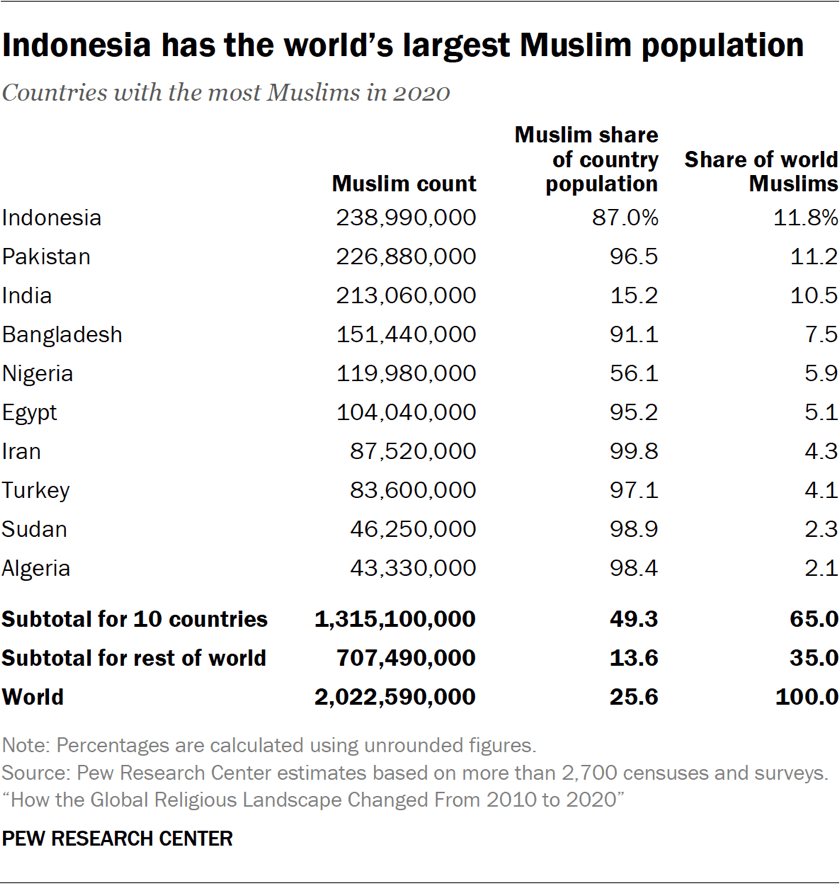
Indonesia, the largest Muslim-majority nation, boasts a staggering population of over 270 million people. This archipelagic country stands out not just for its immense size but also for its culture and traditions that intertwine Islam with indigenous practices. Indonesia’s influence is palpable in the realms of trade, culture, and diplomacy, as it plays a pivotal role in organizations like the ASEAN and the OIC. The nation is characterized by its vibrant arts, cuisine, and an array of languages, making it an intricate mosaic of Muslim life in Southeast Asia.
2. Pakistan
With a population exceeding 240 million, Pakistan ranks second among Islamic countries. Established as a homeland for Muslims in the Indian subcontinent, Pakistan’s strategic location plays a crucial role in geopolitical dynamics within South Asia and beyond. This nation, rich in history and culture, continues to influence regional stability and security, boasting a growing economy that underscores its potential as a key player in international affairs. Noteworthy is Pakistan’s role in transcultural dialogue, particularly through its artistic expressions and literary traditions.
3. India
While India is often recognized as a secular nation, it houses one of the largest Muslim populations in the world, estimated at around 200 million. This demographic reality infuses the country’s social fabric with a unique blend of Islamic and Hindu cultures. India’s influence is primarily derived from its rich historical legacy and role as a burgeoning economic powerhouse. The nation serves as a ballast in promoting interfaith dialogue, showcasing how a pluralistic society can adapt and thrive, fostering an environment of mutual respect and understanding.
4. Bangladesh
Bangladesh, with its population soaring over 160 million, is notable for its remarkable social and economic advancements since its independence in 1971. Deeply rooted in Islam, its cultural expressions are vividly portrayed through music, art, and festivals. Furthermore, Bangladesh’s resilience in the face of natural calamities reflects the indomitable spirit of its people. Its strategic position in South Asia allows it to play a key role in regional cooperation, especially concerning climate change and sustainable development.
5. Turkey
Turkey stands as a fascinating bridge between East and West, with a population of around 85 million. The country’s historical significance as the heart of the Ottoman Empire has imbued it with considerable soft power in the Islamic world. Turkey’s influence transcends borders, facilitating cultural exchanges and fostering diplomatic relations with numerous nations. With booming sectors in tourism and technology, Turkey not only exemplifies a modern Muslim country but also a nexus of rich heritage and contemporary growth.
6. Egypt
Home to over 105 million people, Egypt is considered the cultural and educational authority of the Arab world. With a history that dates back to the Pharaonic era, the Islamic culture here has thrived, influencing art, science, and philosophy throughout the centuries. Egypt’s pivotal role in the Arab League and its involvement in regional issues, particularly concerning the Israeli-Palestinian conflict, reinforces its standing as a beacon of leadership in the Islamic community, evoking a sense of unity and purpose.
7. Iran
Iran, with a population of about 85 million, is not only significant for its size but also for its unique political system and rich cultural heritage. The Islamic Republic’s distinct ideology shapes its international relations, influencing not just neighboring countries but also global diplomatic conversations. Iran’s contributions to literature, philosophy, and science throughout its long-standing history reflect its enduring global influence, crafting a narrative steeped in resilience and intellectual prowess.
8. Algeria
Boasting a population of over 44 million, Algeria is Africa’s largest nation and a bastion of Arab and Islamic culture. Its tumultuous history, marked by colonial struggles, has molded a strong national identity imbued with Islamic tenets. Algeria’s role in the African Union positions it as a critical voice in advocating for peace and stability across the continent. The country’s rich cultural expressions, particularly in music and literature, resonate across borders, elevating Algeria’s influence in the regional cultural landscape.
9. Morocco
With a thriving population of around 37 million, Morocco is renowned for its picturesque landscapes, stunning architecture, and diverse cultural tapestry. As a crucial player in the African and Arab contexts, Morocco has been instrumental in fostering inter-cultural dialogue and partnerships. Its constant evolution from a historical standpoint to a contemporary democratic framework positions it uniquely within the Islamic world, facilitating a more nuanced understanding of cross-cultural collaboration.
10. Saudi Arabia
Last but not least, Saudi Arabia is a pivotal nation with a population nearing 35 million, revered for its historical significance as the birthplace of Islam. The Kingdom wielding immense influence in the entire Islamic sphere, especially through the vast networks of pilgrimage to Mecca and Medina, elevates its stature on both spiritual and economic fronts. Furthermore, the nation’s role in global oil markets and its diplomatic initiatives significantly affect international policies and economic trends, establishing Saudi Arabia as a central player on the world stage.
In conclusion, the exploration of these ten Islamic countries unveils a profound narrative interwoven with rich histories, diverse cultures, and dynamic influences that contribute to the ever-changing global landscape. Each nation, with its unique attributes, not only shapes the Islamic worldview but also invites curiosity and appreciation for the complexities and accolades of modern Islamic societies. Understanding these elements is crucial in fostering dialogue and solidarity among nations, ultimately leading to a more harmonious global community.
FAQ
Which country has the largest Muslim population?
Indonesia holds the largest Muslim population, with over 270 million people.
Why is India included among Islamic countries in this context?
Although India is a secular country, it has one of the largest Muslim populations globally, approximately 200 million, influencing its cultural and social fabric.
What role does Saudi Arabia play in the Islamic world?
Saudi Arabia is the birthplace of Islam and wields significant religious influence through the pilgrimage sites of Mecca and Medina, as well as economic influence via global oil markets.
FAQ
Which country has the largest Muslim population?
Indonesia has the largest Muslim population, with over 270 million people.
Is India considered an Islamic country?
India is not an Islamic country but has one of the largest Muslim populations in the world, estimated around 200 million.
What factors contribute to the influence of Islamic countries globally?
Factors include population size, cultural heritage, geopolitical roles, economic strength, religious significance, and participation in international organizations.
FAQ
Which country has the largest Muslim population?
Indonesia has the largest Muslim population, with over 270 million people.
Why is Saudi Arabia influential in the Islamic world?
Saudi Arabia is influential due to its religious significance as the birthplace of Islam, hosting the holy cities of Mecca and Medina, and its economic power in global oil markets.
Does India have a large Muslim population despite being a secular country?
Yes, India houses one of the largest Muslim populations in the world, estimated at around 200 million, contributing significantly to its cultural diversity.
What roles do these Islamic countries play in international organizations?
Many Islamic countries are active in organizations such as the Organization of Islamic Cooperation (OIC), ASEAN, the Arab League, and the African Union, influencing regional and global affairs.
How do cultural aspects influence the identity of Islamic countries?
Cultural expressions like music, art, festivals, language, and historical traditions deeply shape the identity and influence of Islamic countries on both regional and global scales.
FAQ
Which country has the largest Muslim population?
Indonesia has the largest Muslim population in the world, with over 270 million people.
Why is Saudi Arabia influential in the Islamic world?
Saudi Arabia is influential due to being the birthplace of Islam and hosting the holy cities of Mecca and Medina, as well as its significant role in global oil markets and Islamic diplomacy.
Does India have a significant Muslim population despite being a secular country?
Yes, India has one of the largest Muslim populations globally, around 200 million, contributing to its diverse cultural and religious landscape.
What roles do these Islamic countries play on the global stage?
These countries influence global politics, economics, culture, and interfaith dialogue through their population sizes, historical significance, strategic positions, and cultural outputs.





Leave a Reply