
Short Answer
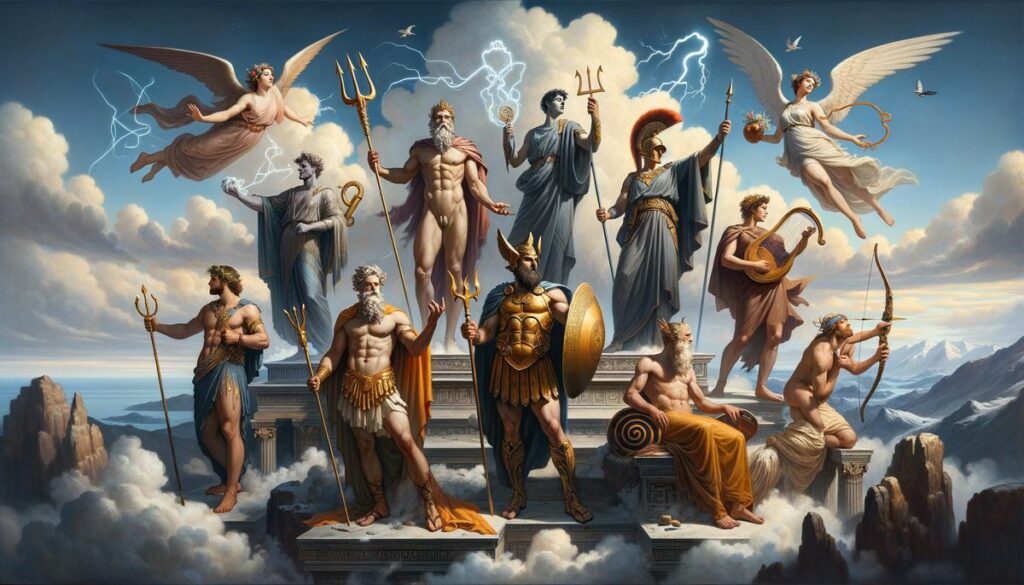
The pantheon of Greek mythology brims with gods and goddesses, each possessing unique attributes that contribute to their magnificence and might. As captivating as a symphony of celestial powers, these deities embody various aspects of the human experience, from love to war, wisdom to chaos. In this enthralling exploration, we shall chart the hierarchy of the top ten Greek gods renowned for their power, distilling their significant influence and unique allure. Prepare to delve into a world where mortality collides with the divine, and mere mortals reach for the stars.
1. Zeus: The King of the Gods
Atop the Olympus, Zeus reigns supreme, the formidable ruler of the gods. Often represented as a regal figure with a thunderbolt in hand, he commands the skies and the weather. As the archetypal patriarch, he embodies authority and justice, wielding power that can alter destinies in the blink of an eye. His capacity to govern both god and man solidifies his position at the apex of the divine hierarchy. Zeus represents order amidst chaos, a beacon of rationale in a tempest of emotions.
2. Poseidon: The Earth-Shaker
Second only to Zeus, Poseidon governs the vast realms of the oceans and seas. Often depicted bearing a trident, he is the Earth-Shaker, an emblem of both destruction and creation. Poseidon’s temperament mirrors the waters he commands—calm and serene one moment, tumultuous the next. His dominion over horses further enhances his power, symbolizing the wild, untamed aspects of nature. A force of raw energy, Poseidon inspires reverence through his dual nature of nurturing and imperiling.
3. Hades: The Lord of the Underworld
Hades, often misconceived as merely the god of the underworld, is a complex figure who serves as the guardian of the afterlife. His dominion extends beyond death to encompass wealth and the earth’s hidden treasures, making him an unsung yet potent deity. The quiet strength of Hades, residing in shadows and whispers, underscores the inevitability of mortality. His authority over souls grants him a unique, if misunderstood, prowess that shapes the destinies of both the living and the departed.
4. Athena: The Goddess of Wisdom
Athena, the embodiment of wisdom and strategic warfare, commands respect through her intelligence and cunning. Born from the forehead of Zeus, she is the paragon of rational thought and civil conduct. Her insights and foresight make her a formidable ally and a fearsome opponent, often outsmarting her rivals rather than overpowering them. With her aegis—an emblematic shield adorned with the visage of Gorgon—Athena transcends brute strength, showcasing the quintessential power of intellect and skill.
5. Apollo: The Multifaceted Deity
Encompassing the arts, prophecy, and healing, Apollo stands out as a god of duality. He personifies harmony and balance, wielding a lyre that resonates melodies of inspiration and beauty. As the god of prophecy, he possesses foresight that guides mortals towards their fates. Simultaneously a bringer of plague and a healer, Apollo’s prowess illustrates the intricate interplay between creation and destruction, making him a god who embodies the complexities of the human condition.
6. Ares: The God of War
Ares, with his fiery temperament and insatiable thirst for battle, encapsulates the brutal nature of war. Unlike Athena, who champions strategy, Ares revels in the chaos of conflict. His mere presence on the battlefield instills fear and respect in equal measure. Portrayed in armor, wielding a spear, he represents the unrestrained, primal instinct that lurks within humanity. Ares’ appeal lies in his raw and unfiltered embodiment of courage, folly, and passion.
7. Demeter: The Goddess of Agriculture
Demeter, the nurturing goddess of the harvest, commands the cyclical nature of life and death through her dominion over agriculture. Her profound connection to the earth illustrates a power rooted in sustenance and growth. As the mother of Persephone, her sorrow when separated from her daughter brings the changing of the seasons, a poignant reminder of love and loss. Demeter’s strength is innate, enveloping life with a tender yet fierce tenacity, revealing the intimate bond between creation and destruction.
8. Artemis: The Huntress
Artemis, a goddess of the hunt and wilderness, embodies independence and strength. Often depicted with a bow and arrows, she is a guardian of the natural world and a protector of women and children. Her association with the moon adds layers to her character, blending the tranquil with the fierce. Artemis captivates through her dual nature as both a ferocious hunter and a gentle caretaker, symbolizing the dynamism of femininity that transcends conventional paradigms.
9. Hephaestus: The Artisan God
Hephaestus, the god of blacksmiths and craftsmen, represents the potency found in creation and invention. Despite his physical imperfections, he conjures beauty from chaos, forging weapons for the gods and marvels for mortals. His strength lies not in brute force, but rather in ingenuity and craftsmanship. In a world often fueled by power and aggression, Hephaestus stands as a testament to the creative spirit, emphasizing that true strength can manifest in artistry and labor.
10. Hermes: The Messenger of the Gods
Lastly, Hermes, renowned as the messenger, weaves through the fabric of divinity with agility and cleverness. As the god of commerce, thieves, and travelers, he embodies the fluidity of transition between realms. His nimble demeanor and eloquence allow him to traverse boundaries, making him a vital link between mortals and gods. Through his cleverness and versatility, Hermes upholds the notion that power can often lie in wit and persuasion, challenging the conventional views of strength.
In conclusion, the Greek gods present a dazzling array of powers and characteristics, each contributing uniquely to the tapestry of mythology. From the commanding presence of Zeus to the elusive wisdom of Athena, their legacies remind us of the complexities of existence. Their stories—rich with intrigue, emotion, and conflict—serve not only as entertainment but also as profound commentary on the nature of humanity itself. The enduring allure of these deities invites us to reflect on our own lives, as we navigate our paths beneath the vast skies they inhabit.
FAQ
Who is the most powerful Greek god?
Zeus is considered the most powerful Greek god, ruling over the sky and all other gods.
What makes Poseidon a powerful deity?
Poseidon controls the oceans, seas, and horses, symbolizing both creation and destruction.
How is Athena's power different from Ares'?
Athena represents wisdom and strategic warfare, while Ares embodies the chaotic and brutal aspects of war.
Why is Hades important in Greek mythology?
Hades governs the underworld, overseeing the afterlife and the earth's hidden wealth.
What role does Hermes play among the Greek gods?
Hermes serves as the messenger of the gods and god of commerce, thieves, and travelers, known for his cleverness.






Leave a Reply