
Art has the remarkable ability to transcend time and culture, captivating the human spirit and challenging our perceptions. The realm of painting, in particular, boasts a plethora of works that have achieved iconic status, resonating across generations. These masterpieces not only reflect their creators’ genius but also encapsulate historical contexts, societal shifts, and emotional depths. Here, we delve into the top ten renowned paintings in the world, each a testament to human creativity and artistic innovation.
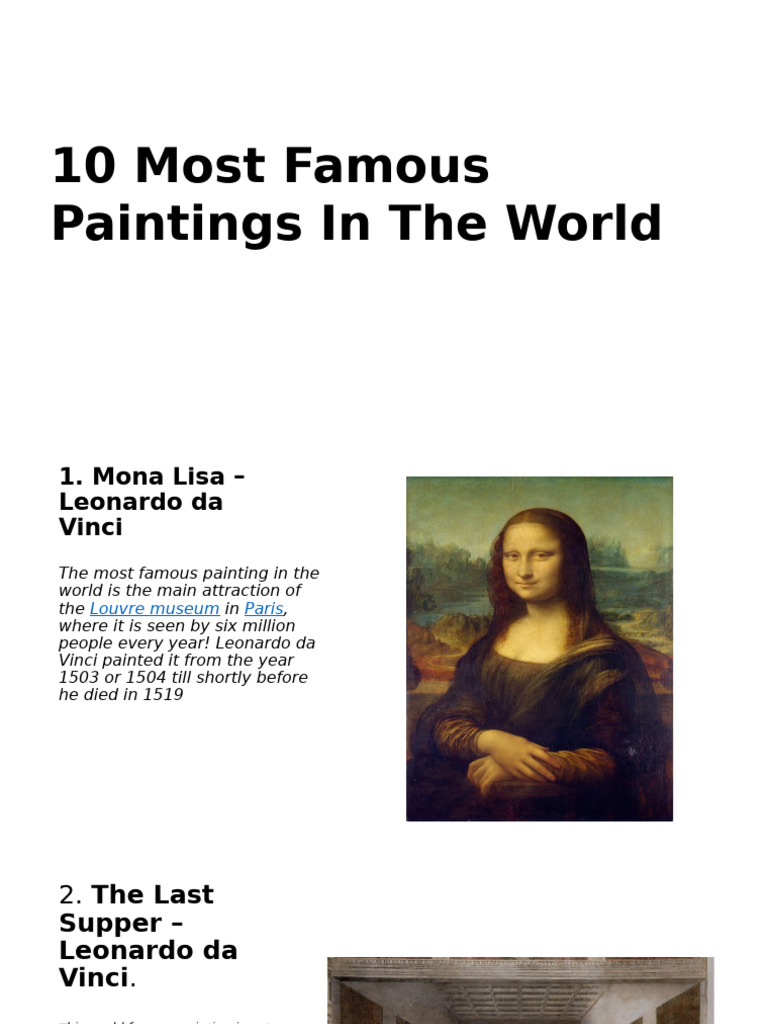
1. Mona Lisa by Leonardo da Vinci
Perhaps the most famous painting in existence, the Mona Lisa graces the walls of the Louvre in Paris. Created in the early 16th century, this enigmatic portrait depicts a woman with an alluring smile, inviting a myriad of interpretations. Da Vinci’s masterful use of sfumato imbues the artwork with a lifelike quality, while the composition and atmospheric perspective compel viewers to ponder the subject’s story. What secrets lie behind her smile?
2. The Starry Night by Vincent van Gogh
Exuding vibrant emotion and a sense of turbulence, The Starry Night is a vivid portrayal of the night sky swirling with energy. Painted in 1889, during van Gogh’s stay at an asylum, it captures his tumultuous thoughts and feelings through bold brushstrokes and an electric color palette. This masterpiece invites viewers to explore the juxtaposition of the calm village below and the chaotic cosmos above, prompting contemplation of our place in the universe.
3. The Persistence of Memory by Salvador Dalí
In an exploration of surrealism, Salvador Dalí’s The Persistence of Memory presents a dreamlike landscape where time melts like wax. Created in 1931, this striking piece disrupts conventional notions of reality and perception, evoking questions about the nature of time and existence. The soft, distorted clocks challenge viewers to reconsider their understanding of temporal constraints, beckoning them into a world where reality bends.
4. The Last Supper by Leonardo da Vinci
This monumental mural, painted in the late 15th century, captures the moment of Jesus Christ’s final meal with his disciples—a narrative brimming with tension and anticipation. Da Vinci’s exquisite attention to detail, combined with his innovative composition, creates a dynamic interaction among the figures. This visual drama invites contemplation on themes of betrayal, loyalty, and divine destiny, making it a cornerstone of religious and art historical discourse.
5. Girl with a Pearl Earring by Johannes Vermeer
Often referred to as the “Mona Lisa of the North,” Vermeer’s Girl with a Pearl Earring is a captivating study of light and color. Painted in the 17th century, this artwork contrasts the girl’s luminous skin with the dark background, drawing attention to her exotic turban and stunning earring. Her gaze, both inviting and elusive, provokes viewers to consider her identity and the unspoken narrative behind her captivating eyes.
6. The Scream by Edvard Munch
Edvard Munch’s The Scream embodies existential angst through its iconic depiction of a figure screaming against a tumultuous backdrop. Created in 1893, this expressionist work captures anguish in a way that resonates with the human condition. The swirling colors and distorted forms echo the chaos of the mind, inspiring viewers to confront their own fears and anxieties—what lies beneath the surface of our emotions?
7. Guernica by Pablo Picasso
A monumental anti-war piece, Picasso’s Guernica delivers a visceral response to the atrocities of the Spanish Civil War. Completed in 1937, this black and white mural resonates with raw emotion as it depicts suffering and chaos through fragmented forms and stark contrasts. Each figure—glistening with despair—tells a story of trauma and loss, evoking empathy for the victims of violence and the plight of humanity.
8. The Birth of Venus by Sandro Botticelli
Emerging from the Renaissance, Botticelli’s The Birth of Venus presents an ethereal scene of divine beauty and love. Painted in the mid-1480s, this work portrays the goddess Venus emerging from the sea, surrounded by a flurry of mythological figures. The vibrant colors and flowing lines convey a sense of movement, inviting viewers to bask in the beauty of femininity and the interplay between nature and mythology.
9. American Gothic by Grant Wood
This iconic 1930 painting epitomizes American regionalism, depicting a stoic farmer and his daughter against the backdrop of a quintessential Midwestern Gothic house. The intense gaze of the subjects conveys resilience and fortitude, delving into themes of rural life and American values during the Great Depression. Wood’s meticulous details and careful composition invite viewers to examine the subtleties of character and culture.
10. The Night Watch by Rembrandt van Rijn
Renowned for its dramatic use of light and shadow, Rembrandt’s The Night Watch immerses viewers in a bustling scene of a militia company preparing for action. Created in 1642, this ensemble portrait brims with movement and intrigue, as figures emerge from the darkness, each with a story to tell. The painting’s dynamic composition challenges the static portrayal of group portraits, evoking the vivacity of life itself.
In conclusion, these ten masterpieces not only capture the essence of artistic brilliance but also serve as windows into the collective human experience. They challenge our perceptions of beauty, emotion, and existence, inviting us to engage in deep reflection. Through each brushstroke and hue, they remind us of the power of art to provoke thought, inspire wonder, and forge connections across the vast tapestry of time.







Leave a Comment