
Short Answer
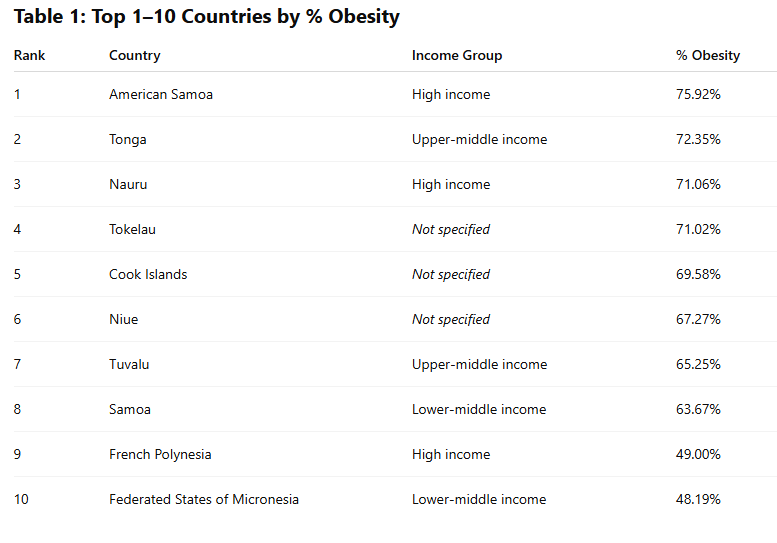
Obesity rates around the globe are like an expanding shadow, quietly stretching over populations and reshaping the health landscape of nations. This pervasive issue is not confined to a single region but spans continents, reflecting complex factors—from lifestyle and diet to economic and cultural changes. Here is a rundown of the top 10 countries where obesity rates soar the highest, serving as a stark mirror to some of the world’s most pressing public health challenges.
1. Nauru
Often described as the “obesity capital” of the world, Nauru wears its crown with a staggering obesity rate surpassing 60%. This tiny island nation’s battle with weight ties closely to a shift from traditional diets to processed, imported foods. The metaphorical scales tip heavily here, illustrating how globalization impacts even the most remote corners.
2. Cook Islands
The Cook Islands take second place, with a significant portion of the population classified as obese. This South Pacific paradise illustrates the paradox of island life, where food abundance contrasts with nutritional scarcity—turning idyllic beaches into battlegrounds against rising waistlines.
3. Palau
Another Pacific Island nation, Palau grapples with an obesity rate near 55%. The lure of American fast food and sedentary lifestyles has woven a complex web of health challenges, as the country’s natural beauty clashes with increasing health concerns.
4. Marshall Islands
With over half its citizens obese, the Marshall Islands paints a vivid picture of how imported processed foods and reduced physical activity contribute to a mounting crisis. It’s a stark example of a population caught between tradition and modernity.
5. Tuvalu
Tuvalu’s obesity rate hovers around the 50% mark, illustrating how even small island nations are not immune. The country represents a fragile ecosystem where limited resources meet an alarming rise in weight-related health issues.
6. Tonga
Tonga’s obesity levels reach into the high 40% range, stemming from shifts in diet and activity patterns. This Polynesian society faces weight gain as a somber tide, sweeping through generations with serious implications for future wellbeing.
7. Niue
Niue, a lesser-known gem in the Pacific, struggles with obesity rates approaching 45%. It highlights how geographical isolation does not guarantee immunity, as economic and lifestyle factors reshape its population’s health profile.
8. Samoa
Samoa comes in with an obesity percentage near 45%, reflecting a cultural and nutritional transition. The nation stands as a vivid illustration of how traditional food customs have been replaced or supplemented by calorie-dense alternatives.
9. Kuwait
Kuwait enters the list as a Middle Eastern powerhouse of obesity, with around 42% of adults affected. Rapid urbanization, affluence, and a preference for convenience foods play roles in this growing challenge, revealing a societal double-edged sword of prosperity.
10. United States
The United States ranks in the top ten with an obesity rate around 40%, a testament to its complex relationship with food, technology, and lifestyle. As much as the country champions sports and fitness, it also faces an ongoing war against its expanding girth, making this a frontline issue in public health discourse.
FAQ
What causes high obesity rates in island nations like Nauru and the Cook Islands?
These nations experience high obesity rates due to a shift from traditional diets to processed foods, limited physical activity, and economic changes influenced by globalization.
Are obesity rates increasing globally?
Yes, obesity rates have been rising globally due to changes in diet, lifestyle, and urbanization, leading to significant public health concerns.
How can countries reduce obesity rates?
Effective strategies include promoting healthy eating habits, increasing physical activity, public health education, and implementing policies to reduce consumption of unhealthy processed foods.






Leave a Reply