
Short Answer
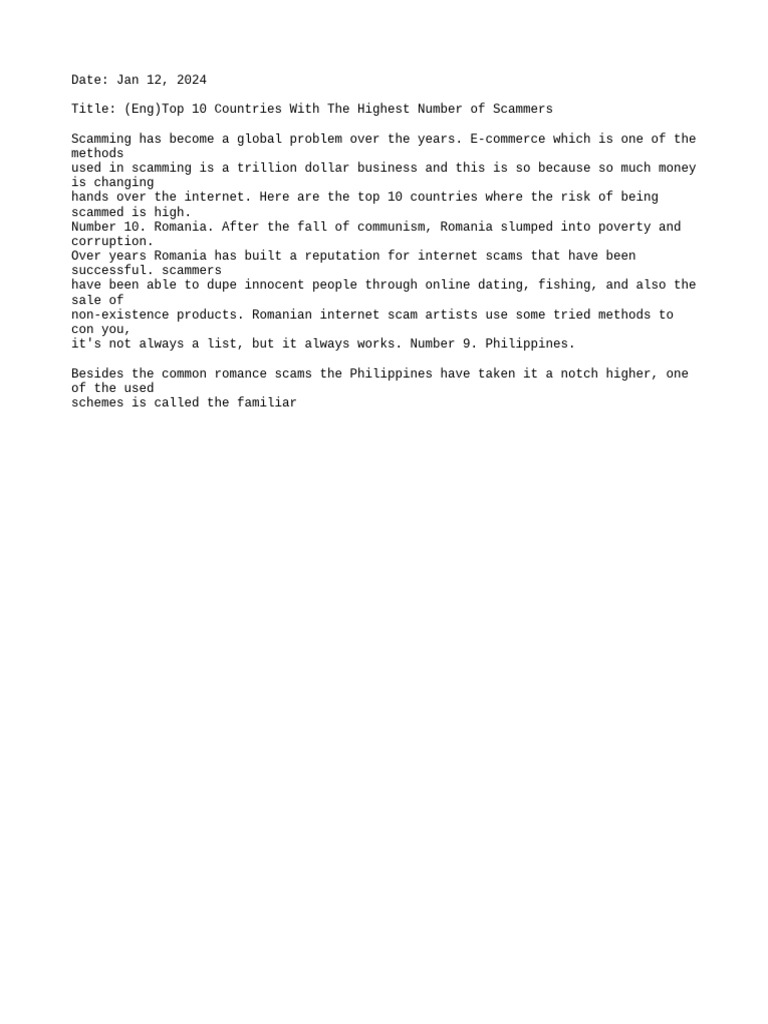
In an increasingly digital era, the internet has become a breeding ground for malfeasance, with certain nations emerging as focal points for online scams. From cutting-edge phishing schemes to relentless advance-fee fraud, the landscape of online deception is as diverse as it is pervasive. This article delves into the top ten countries notorious for their online scamming activities, shedding light on the unique methods employed by cybercriminals in different regions, as well as the socio-economic factors that contribute to the thriving of these illicit practices.
1. Nigeria
Nigeria stands at the forefront of online scams, particularly infamous for the “419 scam,” named after the section of the Nigerian Criminal Code that deals with fraud. This scheme typically involves scammers posing as wealthy individuals seeking assistance to transfer large sums of money out of the country, offering victims a handsome reward for their cooperation. The prevalence of such scams can be attributed to economic instability, where individuals may resort to underhanded tactics as a means of survival.
2. Indonesia
With its burgeoning internet user base and relatively lax regulatory environment, Indonesia has become a hotspot for various online scams, including e-commerce fraud and identity theft. Scammers often create fake e-commerce websites that lure unsuspecting consumers with enticing deals, only to deliver counterfeit goods or nothing at all. The rapid growth of online shopping in the country has, unfortunately, facilitated the rise of these fraudulent activities.
3. Russia
Russia has garnered notoriety for sophisticated cybercrime operations, including the development and deployment of malware designed to steal sensitive personal information. Russian cybercriminals often operate in well-organized groups, pooling resources and expertise to execute large-scale data breaches against corporations and individuals alike. The country’s complicated geopolitical landscape has also created an environment where cybercrime can flourish with minimal repercussions.
4. India
India is another nation where online scams proliferate, largely due to its extensive technological infrastructure and a vast pool of young, tech-savvy individuals. Scams like the tech support con, where fraudsters pose as IT professionals offering unsolicited assistance, have become alarmingly common. Victims are often duped into providing remote access to their devices, exposing confidential information to malicious actors.
5. Philippines
The Philippines has emerged as a hub for various online scam activities, including romance scams and investment fraud. Scammers commonly exploit social media platforms to cultivate relationships with unsuspecting victims, manipulating emotions to elicit financial support. The country’s booming call center industry has also been co-opted by scammers who employ local speakers to conduct deceitful operations, further entrenching online fraud within the socio-economic framework.
6. China
In China, online scams largely take the form of e-commerce fraud and Ponzi schemes. Thanks to the explosive growth of online marketplaces, scammers can easily set up fake listings to sell non-existent products. The complex interplay of stringent government regulations aimed at curbing fraud can sometimes paradoxically facilitate its occurrence, as these same regulations can make it challenging for victims to seek legal recourse.
7. United States
While the United States is often seen as a technological powerhouse, it is also home to various online scams, including investment fraud and phishing attacks. The sheer number of internet users creates a vast pool of potential victims, making the U.S. an attractive target for scammers. Identity theft remains a significant issue, with criminals employing sophisticated methods to steal personal information, and often selling this data in dark web markets.
8. South Africa
In South Africa, the digital landscape is similarly fraught with scams ranging from lottery fraud to online dating scams. Scammers often create elaborate stories designed to defraud victims out of their money, exploiting local hardships and leveraging trust. The economic challenges faced by many South Africans may leave individuals more vulnerable to falling prey to such scams.
9. Ghana
Ghana is frequently associated with various online scams, specifically the advance-fee fraud that has unfortunately branded the nation’s reputation. Scammers often pose as government officials or international business magnates seeking assistance, promising to reward individuals for their help. The country’s reliance on a developing economy can sometimes drive individuals toward such illicit means in search of financial stability.
10. Brazil
Brazil is witnessing a rising incidence of online fraud, notably through telecommunications scams. Scammers employ tactics such as SIM swapping and vishing (voice phishing) to gain unauthorized access to personal accounts. As mobile technology proliferates and financial services become more digitized, the nation’s criminals adapt quickly, devising cunning schemes to exploit the unsuspecting populace.
In conclusion, online scams are an insidious and growing threat that transcends borders. Each country on this list displays a distinctive array of scam types, driven by local socio-economic factors, internet penetration levels, and regulatory environments. As the digital world continues to evolve, so too will the methodologies employed by cybercriminals. Vigilance, education, and a robust understanding of the typologies of online scams can empower individuals to safeguard themselves against these pervasive threats. Recognizing the signs and staying informed are crucial steps in combatting the ever-evolving landscape of online fraud.
FAQ
What are the top countries involved in online scams?
The article lists Nigeria, Indonesia, Russia, India, Philippines, China, United States, South Africa, Ghana, and Brazil as top countries known for various online scams.
What types of scams are most common globally?
Common scams include phishing, advance-fee fraud, identity theft, e-commerce fraud, romance scams, and investment fraud.
How do socio-economic factors influence online scam prevalence?
Economic hardship, lack of regulation, and rapid tech adoption can create environments where online scams thrive.
How can I recognize and avoid online scams?
Be cautious of unsolicited requests for money or personal information, verify sources, avoid clicking suspicious links, and use security software.





Leave a Reply