
Short Answer
In a world that seems to shrink more each day, where do you think the busiest airports and largest bridges converge to embody the spirit of connectivity and human ingenuity? As air traffic soars and infrastructure visions materialize, our planet reveals awe-inspiring thoroughfares that serve as gateways to the globe’s bustling metropolises and architectural marvels. Join us as we embark on a journey through the top 10 busiest airports and largest bridges in the world today, and perhaps consider: can you name them all? Challenge yourself to explore these monumental feats!
1. Hartsfield-Jackson Atlanta International Airport (ATL)
Often hailed as the world’s busiest airport, Atlanta’s Hartsfield-Jackson accommodates over 107 million passengers annually. This sprawling hub in the southeastern United States operates around the clock, making it a critical nexus for domestic and international travel. With its signature efficiency and extensive flight options, ATL serves as a vital transit point for countless travelers passing through.
2. Beijing Capital International Airport (PEK)
Beijing Capital International Airport, nestled just outside China’s vibrant capital, consistently ranks among the world’s top airports. With over 100 million passengers crossing its threshold, PEK boasts state-of-the-art facilities, making it an exemplar of modern aviation. Its three terminals, notably featuring impressive architecture, strive to provide a seamless travel experience, symbolizing China’s rise as a global powerhouse.
3. Los Angeles International Airport (LAX)
Known for its iconic architecture and celebrity sightings, LAX is a sprawling complex that plays host to around 88 million travelers each year. This gateway to the Americas serves as a significant hub for international flights, particularly to and from Asia and the Pacific. LAX is constantly evolving, with ongoing renovations aimed at improving passenger experiences and enhancing the airport’s capacity.
4. Dubai International Airport (DXB)
As a hallmark of luxury and cutting-edge amenities, Dubai International Airport epitomizes the allure of global travel. With an annual passenger count exceeding 89 million, DXB serves as the primary hub for Emirates Airlines. Its terminals are adorned with upscale shops and gourmet dining options, appealing to a cosmopolitan clientele. Moreover, the airport is known for its remarkable on-time performance and commitment to customer satisfaction.
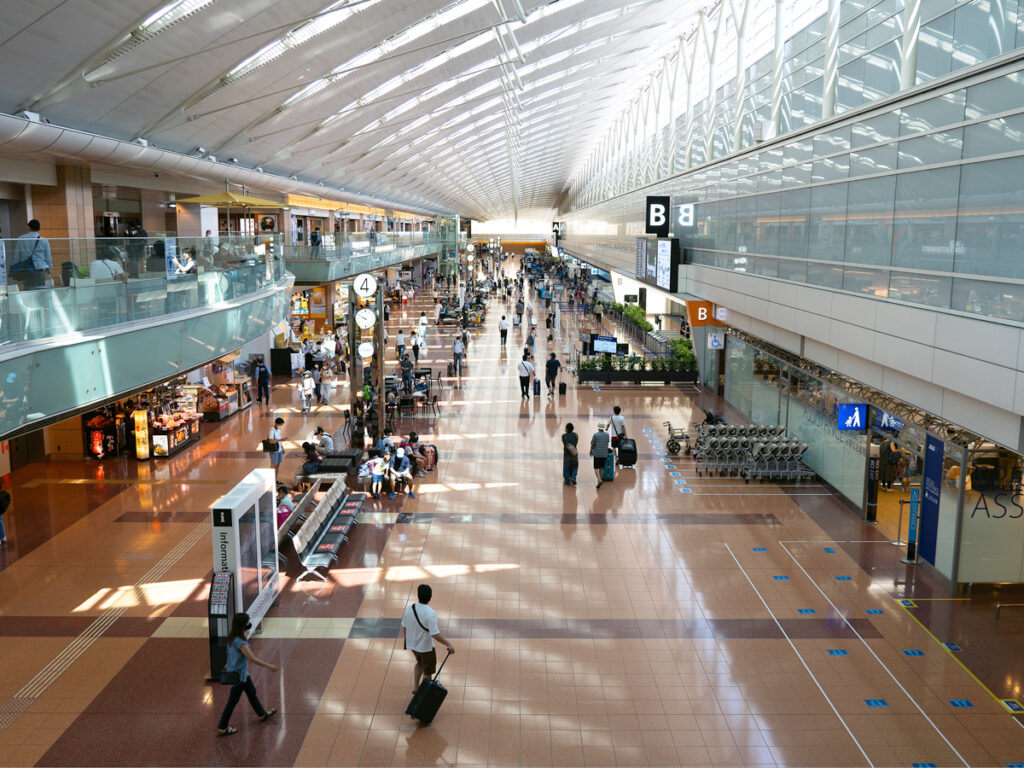
5. Tokyo Haneda Airport (HND)
Tokyo Haneda Airport, located close to the heart of the bustling metropolis, overwhelmingly caters to domestic flights, welcoming around 87 million annual passengers. Its proximity to central Tokyo makes it a preferred choice for travelers, offering quick access to the city’s famed attractions. Haneda continues to modernize while retaining traditional Japanese hospitality, ensuring a distinctive travel experience.
6. O’Hare International Airport (ORD)
Chicago’s O’Hare International Airport, famous for its weather-related delays, nonetheless ranks high with over 83 million passengers yearly. The airport is a pivotal hub for both domestic and international flights, facilitating connections to various regions of the globe. O’Hare is continuously expanding its facilities and improving its efficiency, demonstrating an unwavering commitment to serving the needs of modern travelers.
7. London Heathrow Airport (LHR)
Heathrow, as one of Europe’s busiest airports, caters to approximately 80 million passengers each year. Nestled just outside London, this airport stands as the primary hub for British Airways. Its five terminals are a blend of historical significance and modernity, reflecting British culture while offering world-class services. Passengers can enjoy an array of dining options and shopping experiences before embarking on their adventures.
8. Hong Kong International Airport (HKG)
With an annual footfall of approximately 75 million, Hong Kong International Airport serves as a key gateway to Asia. Commended for its efficiency and customer care, HKG has been recognized as one of the best airports worldwide. The airport’s design features a stunning terminal, cutting-edge technology, and a range of amenities that make air travel a pleasure.
9. Shanghai Pudong International Airport (PVG)
Pudong Airport embodies China’s rapid modernization with its annual passenger traffic surpassing 76 million. As a major international gateway, PVG is essential for connecting Asia to the world, especially with its extensive assortment of global routes. The airport pays homage to Shanghai’s dynamic skyline with its modern design and offers a plethora of amenities to ensure a seamless travel experience.
10. Amsterdam Airport Schiphol (AMS)
Amsterdam Schiphol rounds out our list, welcoming around 71 million passengers annually. Known for its innovation in passenger experience, Schiphol offers unique features such as a library and an art gallery within the terminal. This airport, serving as a vital hub for KLM Royal Dutch Airlines, illustrates the intersection of efficiency and comfort in the landscape of global travel.
The Biggest Bridges in the World
Bridges not only connect lands but also serve as remarkable achievements in engineering. Aside from bustling airports, the world is adorned with colossal bridges that symbolize human accomplishment. Let’s explore the 10 largest bridges that span across nations and landscapes, redefining what it means to traverse our globe.
1. Danyang–Kunshan Grand Bridge, China
Clocking in at a staggering 164.8 kilometers (102.4 miles), this bridge is the longest in the world! This feat of engineering supports the Beijing-Shanghai High-Speed Railway, showcasing not only innovative design but also China’s rapid development in infrastructure.
2. Changhu Bridge, China
This extraordinary bridge is not far behind its counterpart, stretching 117.7 kilometers (73 miles) across Jiangsu province, serving a major railway connection with similar advancements and efficiency.
3. Tianjin Grand Bridge, China
A close third, the Tianjin Grand Bridge spans 113 kilometers (70 miles), reinforcing the intricacies of China’s growing rail network while marveling at its impeccable construction.
4. Cangde Grand Bridge, China
With a length of 105 kilometers (65 miles), this bridge showcases stunning engineering prowess while enabling rail travel across rugged terrains, contributing significantly to connectivity.
5. Hangzhou Bay Bridge, China
As one of the longest sea bridges in the world, the Hangzhou Bay Bridge stretches about 36 kilometers (22 miles). Connecting the cities of Ningbo and Shanghai, it’s emblematic of modern design intersecting with practicality.
6. Jiaozhou Bay Bridge, China
This remarkable marine bridge spans 41 kilometers (25 miles) and is known for its stunning views and driving experience, forming a crucial transport link while enhancing tourism opportunities.
7. San Francisco-Oakland Bay Bridge, USA
Connecting San Francisco and Oakland, this iconic bridge is a marvel of engineering at over 7 kilometers (4.5 miles) in length, offering breathtaking views of the Bay Area while facilitating daily commutes.
8. Istanbul’s Yavuz Sultan Selim Bridge, Turkey
This modern marvel stands at 2.164 kilometers (1.342 miles) long and is one of the longest suspension bridges in the world, enhancing connectivity over the Bosphorus Strait.
9. Russell B. Long Bridge, USA
Stretching 4.5 kilometers (2.8 miles), this essential bridge links New Orleans to its neighboring areas, highlighting the United States’ adeptness in bridge construction.
10. Aloha Tower, USA
Ultimately, while not a bridge per se, Aloha Tower stands tall, symbolizing maritime history and connectivity, welcoming ships and travelers alike to the shores of Hawaii.
As our exploration of the world’s busiest airports and the most substantial bridges concludes, one thing remains clear: these infrastructures are more than physical connections between locations; they embody human ambition, creativity, and the desire to bridge distances both geographical and cultural. In a world where innovation knows no bounds, these airports and bridges astound, inviting us to ponder how we can navigate a more connected future. So, can you recall all the features of each airport and bridge discussed? Accept the challenge and let your wanderlust inspire your next journey!
FAQ
Which is the busiest airport in the world?
Hartsfield-Jackson Atlanta International Airport is currently the busiest airport, accommodating over 107 million passengers annually.
What is the longest bridge in the world?
The Danyang–Kunshan Grand Bridge in China is the longest bridge in the world, stretching 164.8 kilometers (102.4 miles).
Why are airports and bridges important for global connectivity?
Airports and bridges serve as critical infrastructure enabling efficient movement of people and goods, fostering economic growth and cultural exchange worldwide.





Leave a Reply