
Short Answer
The ocean, a vast and enigmatic realm, has long harbored creatures of gargantuan proportions, particularly sharks. These splendid predators have intrigued humankind for eons, and their sheer size often evokes a sense of awe and wonder. The tales of the ocean’s biggest sharks are not merely legends; they are tangible entities that have roamed the waters of our planet. Let us plunge into the depths of this marine world to unveil the top ten largest sharks ever discovered, each a marvel of nature in its own right.
1. Whaleshark (Rhincodon typus)
The whaleshark reigns supreme as the largest fish in the ocean and can reach lengths of up to 60 feet (18 meters) or more. These gentle giants are characterized by their distinctive pattern of white spots and stripes on a dark background. Primarily filter feeders, they consume plankton and small fish by swimming with their mouths wide open. Encountering a whaleshark is a bucket-list experience for divers, offering a glimpse of a creature that has existed for more than 60 million years.
2. Megalodon (Carcharocles megalodon)
Perhaps the most infamous of all prehistoric sharks, the Megalodon dominated the oceans approximately 23 to 3.6 million years ago. Estimates suggest this massive predator could grow up to 82 feet (25 meters) long. Its enormous serrated teeth, some measuring over 7 inches, evoke both fear and fascination. As the ultimate apex predator, Megalodon preyed upon whales, seals, and other large marine animals, leaving an indelible mark on evolutionary history.
3. Basking Shark (Cetorhinus maximus)
The basking shark, the second-largest fish in the ocean, can reach lengths of 40 feet (12 meters). With its large, gaping mouth designed to filter-feed on plankton, the basking shark is often mistaken for a lumbering leviathan. Found in temperate waters worldwide, these sharks migrate in search of blooms of plankton. Despite their size, basking sharks are harmless to humans and contribute to the delicate balance of marine ecosystems.
4. Great White Shark (Carcharodon carcharias)
The great white shark, characterized by its conical snout and powerful build, can exceed lengths of 20 feet (6 meters). Known for their predatory prowess, these sharks are often depicted in popular culture as fearsome hunters. In reality, they play a crucial role in maintaining the health of oceanic ecosystems by regulating the populations of marine animals. Their formidable presence is both majestic and terrifying, evoking curiosity among scientists and ocean enthusiasts alike.
5. Tiger Shark (Galeocerdo cuvier)
Tiger sharks are known for their distinctive striped patterns, which fade as they mature. These robust sharks can grow up to 16 feet (4.8 meters) long and are infamous for their opportunistic feeding habits. They are known to consume a wide variety of prey, often digesting non-food items. This adaptability has allowed them to thrive in diverse habitats, making them a fascinating subject of study among marine biologists.
6. Greenland Shark (Somniosus microcephalus)
Residing in the frigid waters of the Arctic and North Atlantic, the Greenland shark can reach lengths of up to 24 feet (7.3 meters). What’s astonishing about this shark is its longevity; recent studies suggest that they may live for over 400 years, making them one of the longest-living vertebrates on Earth. Their slow metabolism and mysterious reproductive cycles pique scientific interest, inviting research to unravel their secrets.
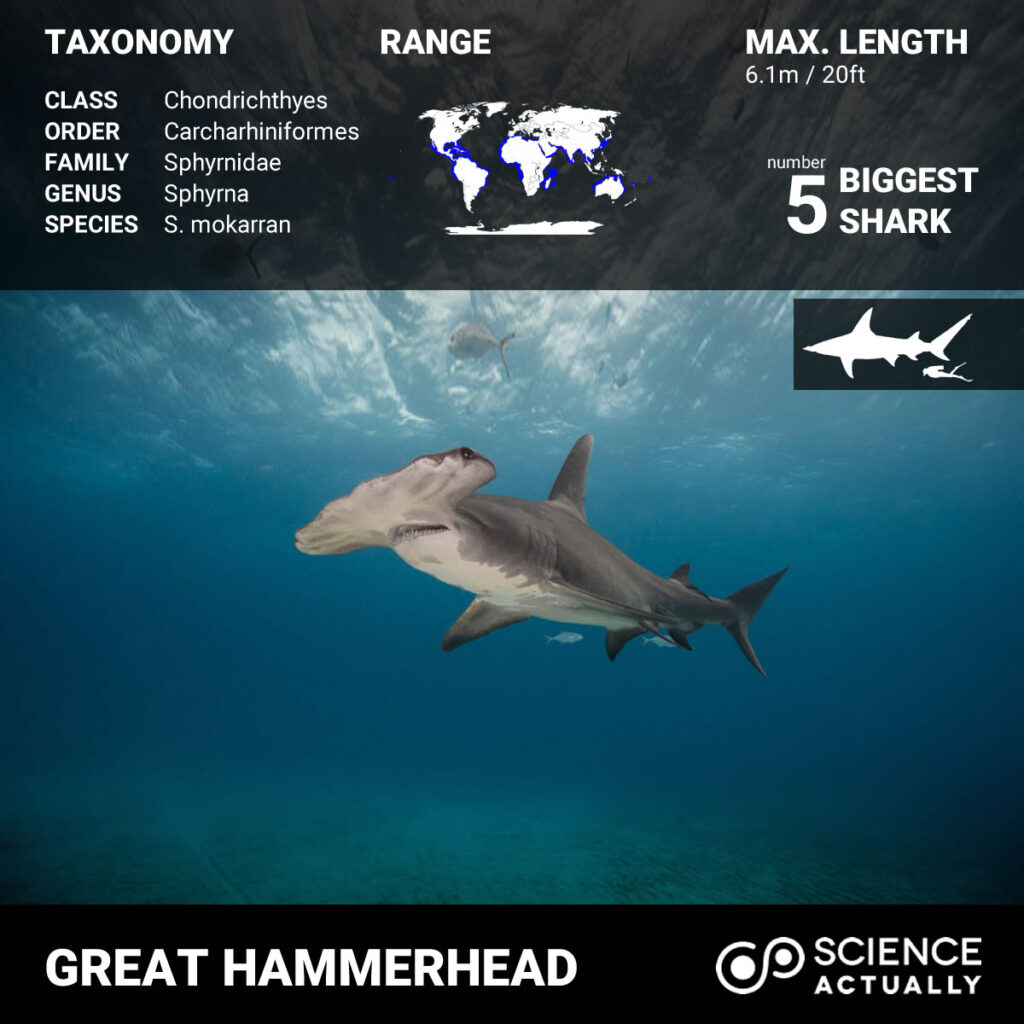
7. Hammerhead Shark (Sphyrna spp.)
Renowned for their unique head shape, hammerhead sharks encompass several species, with the great hammerhead (Sphyrna mokarran) being the largest. Reaching lengths of up to 20 feet (6 meters), these sharks exhibit fascinating social behavior and are known to form schools. Their distinctive cephalofoil provides enhanced sensory perception, showcasing the evolutionary adaptation that has allowed them to thrive in diverse marine environments.
8. Mako Shark (Isurus spp.)
Mako sharks, particularly the shortfin mako, are among the fastest sharks in the ocean, capable of swimming up to 45 mph (72 km/h). These streamlined predators can reach lengths of around 13 feet (4 meters). Their agility and sleek bodies make them formidable hunters. Mako sharks are a marvel of nature’s engineering, embodying the perfect blend of speed and power.
9. Thresher Shark (Alopias spp.)
The thresher shark, identifiable by its extraordinarily long tail, can grow up to 20 feet (6 meters). Their tails, which can be nearly as long as their bodies, are used to stun prey fish, making them adept hunters. Remarkably acrobatic, thresher sharks can leap out of the water, creating breathtaking spectacles for those fortunate enough to witness their grace under the waves.
10. Nurse Shark (Ginglymostoma cirratum)
While not as large as the previously mentioned giants, reaching sizes of up to 14 feet (4.3 meters), the nurse shark still stands out in the marine world. Known for their docile nature, nurse sharks are often seen resting on the ocean floor during the day. Their distinctive barbels and ability to suction-feed give them a unique edge in their hunting behaviors, leading to a fascinating ecological niche.
Discovering the incredible diversity and size of sharks illuminates not only the grandeur of these majestic creatures but also the complexities of our ocean ecosystem. Each species, from the gentle giants to the formidable predators, plays a vital role in maintaining the balance of marine life. As we continue to explore the mysteries of the deep, we must also champion the conservation efforts necessary to protect these magnificent sharks and their habitats for generations to come. In doing so, we not only preserve the legacy of these incredible species but also enhance our understanding of the intricate tapestry that is the marine world.
FAQ
Which shark is considered the largest fish in the ocean?
The whale shark is the largest fish in the ocean, reaching lengths of up to 60 feet.
What was the Megalodon?
Megalodon was a prehistoric shark species that lived millions of years ago and could grow up to 82 feet long.
Are basking sharks dangerous to humans?
No, basking sharks are filter feeders and harmless to humans.
How do thresher sharks hunt?
Thresher sharks use their long tails to stun prey fish before capturing them.





Leave a Reply