
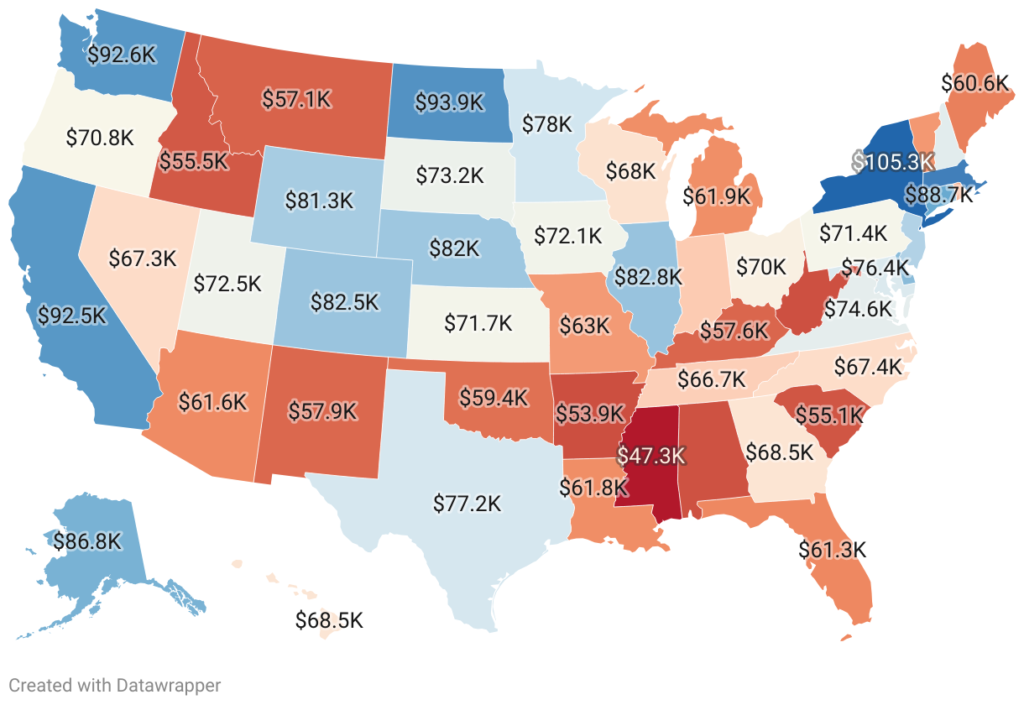
Short Answer
Ever pondered which states in the USA hold the title of being the richest? It’s a captivating question that often invites a playful challenge: what factors contribute to the affluence of these states? Is it merely the sum of wealth, or does it encompass a broader narrative of opportunity, innovation, and economic strategy? In this exploration, we delve deep into the nuances that differentiate the wealthiest states in the United States, examining facets like median household income, economic diversity, and industry presence. Let’s embark on this enlightening journey to uncover the richest states and the underlying factors that propel them to the zenith of prosperity.
First and foremost, when discussing the wealth of states, the most prominent metric is typically the median household income. A higher median income denotes not only wealth but also offers insights into the cost of living, job opportunities, and overall economic health of a region. The richest states are generally characterized by robust economies that foster growth and innovation. Yet, wealth doesn’t solely spring from affluence; it’s also the outcome of diverse economic foundations that drive prosperity.
To begin with this fascinating discourse, it is vital to highlight some of the richest states in the nation. Here’s a list that not only names them but also showcases the distinguishing features that amplify their wealth:
- Maryland: With a staggering median household income leading the nation, Maryland boasts a well-educated workforce and proximity to numerous federal agencies and defense contractors. The state’s economy thrives on technology, biotechnology, and a burgeoning services sector, making it a hub for innovation and research.
- New Jersey: Known for its diverse economy, New Jersey excels in pharmaceuticals, finance, and telecommunications. Its robust transportation infrastructure enhances trade and commerce, while proximity to New York City adds to its socio-economic appeal, creating a wealthy atmosphere for residents.
- Massachusetts: Renowned for its educational institutions such as Harvard and MIT, Massachusetts integrates academia with industry, fostering groundbreaking advancements. The state’s economy is underscored by biotechnology, information technology, and a strong health care sector, all contributing to its impressive wealth.
- Hawaii: While its cost of living is among the highest, Hawaii captures the essence of wealth through its tourism and agriculture. The tropical paradise draws millions annually, and despite geographical constraints, it has cultivated an economy reliant on its natural beauty and agricultural exports.
- Connecticut: A stronghold for finance and insurance industries, Connecticut showcases unique aspects of wealth distribution. The state thrives on a high concentration of affluent individuals, while its historical significance and cultural institutions augment its economic stature.
As we dissect the factors correlating with wealth, it becomes evident that geographical advantages play a significant role. States such as California and New York, often associated with immense wealth, flourish due to their sheer size and economic diversity. Silicon Valley in California, for instance, represents not just an industry but an entire culture of entrepreneurship and innovation. The allure of New York’s financial district continues to captivate myriad industries, translating into economic prosperity.
Moreover, the richness of a state is not solely determined by income figures; it also encompasses quality of life indicators. Education, health care quality, infrastructure, and cultural opportunities contribute to the overall affluence. States investing heavily in education often witness higher income levels and lower unemployment rates, creating a virtuous cycle of prosperity. For example, Massachusetts stands as a testament to how educational excellence can directly transform into economic success, fueling high-paying jobs and attracting global talent.
Turning our attention toward geographic diversity, it’s intriguing to note that certain states, while rich, exhibit stark contrasts. For instance, Alaska’s wealth largely stems from natural resources, particularly oil. Yet, the cost of living can be exceptionally high, resulting in a unique economic landscape where wealth is not evenly distributed. In contrast, urban states like New Jersey and Maryland boast a more balanced wealth distribution, enhancing access to opportunities for a greater percentage of their populations.
As we navigate through the intricacies of wealth distribution, it’s also essential to consider the tax systems within these affluent states. States with lower taxes tend to attract businesses and individuals seeking economic benefits, while states with progressive tax structures often invest in public services that enhance overall societal welfare. This juxtaposition presents an intriguing challenge: Do lower taxes lead to greater wealth, or do robust public services pave the way for a richer populace? This question invites further contemplation as we consider the implications of governance on economic prosperity.
In conclusion, the richest states in the USA are not merely defined by their median household income but by a multitude of factors that interplay to create environments ripe for prosperity. From educational investments to geographical advantages, each state tells a unique story of affluence. The tapestry of America’s wealth is woven from diverse economic threads, providing a rich landscape for exploration. As we ponder this topic, perhaps we can set a personal challenge: to consider how these insights into wealth can inspire us to cultivate prosperity in our own communities, regardless of geographical borders. After all, wealth is not just a statistic; it’s a narrative waiting to be written.
FAQ
Which states are considered the richest in the USA?
Maryland, New Jersey, Massachusetts, Hawaii, and Connecticut are among the richest states in the USA based on median household income and economic factors.
What factors contribute to a state's wealth?
Key factors include median household income, economic diversity, industry presence, education quality, healthcare, infrastructure, tax policies, and geographical advantages.
How does education impact state wealth?
States with strong educational institutions tend to have higher income levels and attract global talent, which supports economic growth and prosperity.
Do tax policies affect the wealth of states?
Yes, states with lower taxes may attract more businesses and individuals, while states with progressive taxes often invest more in public services, both influencing economic prosperity.




Leave a Reply