
Short Answer
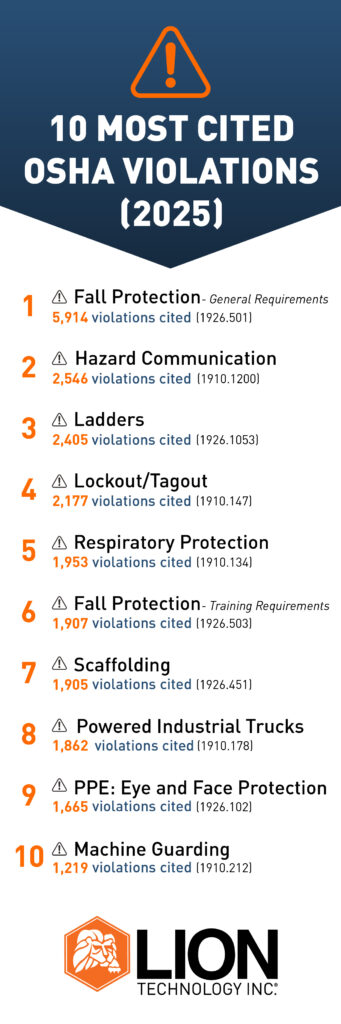
Are workplaces getting safer, or are some hazards just too persistent to shake? As OSHA continues to monitor and enforce safety standards, the patterns in violations from 2022 through early 2025 reveal both recurring challenges and emerging risks. How are industries adapting, and which violations remain stubbornly prevalent? Here’s a definitive list of OSHA’s Top 10 violations with an eye on recent trends and implications.
1. Fall Protection – General Requirements
Year after year, fall protection remains the most cited violation. Despite advancements in safety equipment and training, many workplaces continue to struggle with preventing falls from heights. The challenge lies in consistently implementing guardrails, safety nets, or personal fall arrest systems. Construction sites dominate this category, but the trend is shifting towards raising awareness in manufacturing and warehousing operations.
2. Hazard Communication
Communicating the dangers associated with hazardous chemicals is critical, yet many employers neglect proper labeling, safety data sheets, or employee training. The evolving chemical landscape, with new compounds and mixtures introduced regularly, demands continuous updates and vigilance. Recent trends point to digital tools becoming a solution, but implementation is uneven.
3. Respiratory Protection
Respiratory hazards gained renewed attention, especially in settings involving dust, fumes, or airborne pathogens. The pandemic accelerated focus on respiratory device usage, yet fit-testing and proper maintenance remain common gaps. The challenge now is balancing compliance without hampering workflow efficiency.
4. Ladders
Ladder violations persist, often due to improper setup, use, or maintenance. From unsecured bases to using faulty equipment, workplaces often underestimate the risks associated with these everyday tools. Trends suggest a push toward increased training and integrating alternative access solutions like aerial lifts.
5. Powered Industrial Trucks
Forklift violations continue to be a major concern, stemming from operator training deficiencies, maintenance issues, and unsafe operating practices. Warehousing and manufacturing sectors are particularly affected. The increasing automation of material handling tasks could modify these trends in upcoming years.
6. Scaffolding
Scaffolding violations remain high in construction, often involving lack of fall protection, improper assembly, or inadequate inspections. Seasonal rushes and staffing shortages sometimes exacerbate these issues. Innovations like modular scaffolding systems aim to mitigate risk, but widespread adoption is slow.
7. Fall Protection – Training Requirements
Even when equipment is provided, insufficient training on fall hazards is a frequent violation. Employers failing to adequately educate workers on identifying and avoiding fall risks contribute to persistent injury rates. Augmented reality training tools are an emerging trend hoping to bridge this gap.
8. Machine Guarding
Machines without proper guarding expose workers to severe injury risks. Despite clear standards, employers sometimes neglect guard installations or maintenance. The rise in automated and robotic machinery introduces new guarding complexities that OSHA is beginning to address more explicitly.
9. Eye and Face Protection
Eye injuries are common in workplaces involving flying particles, chemical splashes, or radiation. Violations often point to missing or inadequate personal protective equipment. Trends highlight a gradual increase in employer investment in user-friendly, comfortable eyewear to improve compliance.
10. Electrical – Wiring Methods
Unsafe electrical wiring and installations cause fires and electrocutions. Non-compliance with NEC (National Electrical Code) regulations remains a frequent violation. The growing integration of smart devices and IoT systems in workplaces demands updated inspection routines to catch emerging electrical hazards.
Do these trends hint at a static problem, or are we on the cusp of real change? OSHA’s ongoing efforts and advances in technology provide hope, but the persistent nature of these violations serves as a reminder: safety isn’t a one-time fix, it’s a continuous commitment.
FAQ
What are the top 10 OSHA violations from 2022 to 2025?
They include fall protection, hazard communication, respiratory protection, ladder safety, powered industrial trucks, scaffolding, fall protection training, machine guarding, eye and face protection, and electrical wiring methods.
Which industry sectors see the highest OSHA violations?
Construction, manufacturing, and warehousing sectors are the most affected due to the nature of their work environments.
How has the COVID-19 pandemic influenced OSHA violations?
The pandemic increased focus on respiratory protection, emphasizing proper device usage, fit testing, and maintenance.
What role does technology play in reducing OSHA violations?
Technology such as digital hazard communication, augmented reality training, modular scaffolding, and automation is helping improve safety compliance.
Why is continuous safety commitment important?
Because workplace hazards evolve and persistent violations indicate that safety requires ongoing attention and adaptation rather than a one-time fix.






Leave a Reply