
Short Answer
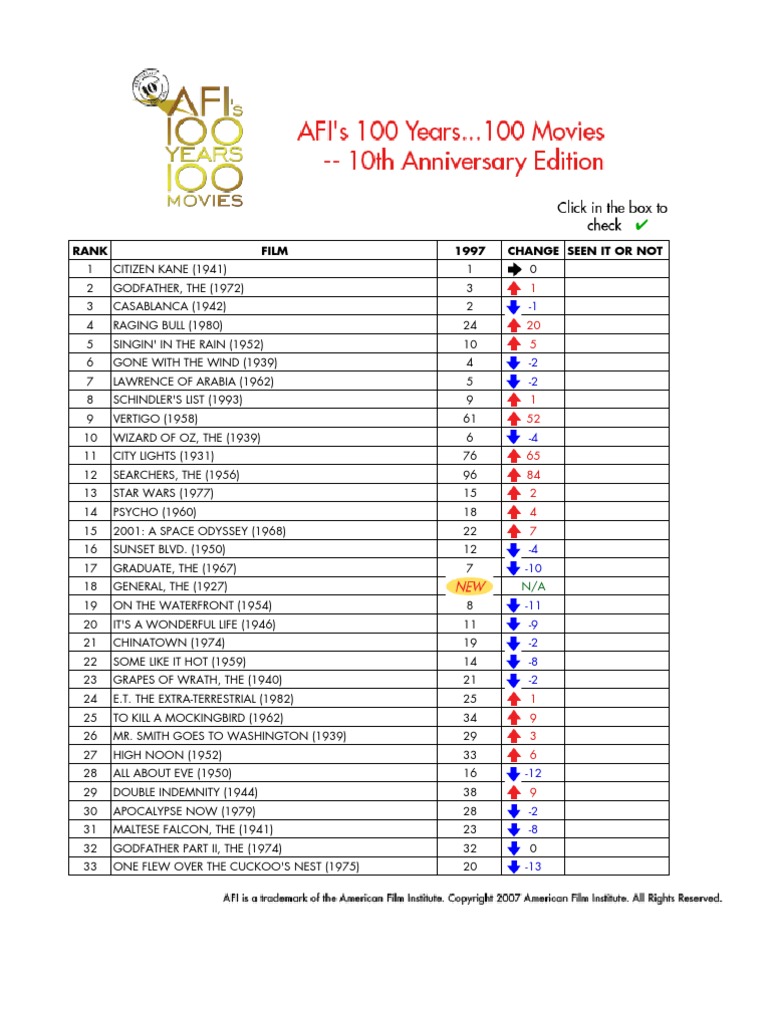
Can a list of just 10 films truly capture the essence of cinema and its ever-evolving art form? The American Film Institute’s Top 10 Movies list attempts exactly that challenge—curating films that not only shaped the industry but also transformed how audiences experience storytelling. From timeless classics to groundbreaking innovations, these movies have become cultural landmarks. Let’s take a closer look at each one and consider what makes them undeniably iconic.
1. Citizen Kane (1941)
Often regarded as the pinnacle of cinematic innovation, “Citizen Kane” revolutionized narrative structure and cinematography. Its deep focus shots, nonlinear storytelling, and complex protagonist etched a new standard for filmmaking. Orson Welles’ masterpiece remains a benchmark that directors aspire to surpass.
2. The Godfather (1972)
This crime saga set a new bar for character-driven storytelling and cinematic atmosphere. Francis Ford Coppola’s adaptation of Mario Puzo’s novel features unparalleled performances, intricate family dynamics, and a haunting score that define the gangster genre.
3. Casablanca (1942)
A timeless romance set against the backdrop of war, “Casablanca” is lauded for its sharp dialogue, unforgettable characters, and moral complexity. It encapsulates the golden age of Hollywood while posing questions about love and sacrifice during turbulent times.
4. Raging Bull (1980)
Martin Scorsese’s biographical drama about boxer Jake LaMotta explores raw human emotion and self-destruction. Its unflinching black-and-white cinematography and intense performances highlight the physical and psychological battles within.
5. Singin’ in the Rain (1952)
This joyous musical celebrates the transition from silent films to talkies with infectious energy and charm. Its iconic dance sequences and satirical take on Hollywood history have made it a perennial favorite, reminding viewers of cinema’s ability to entertain and innovate simultaneously.
6. Gone with the Wind (1939)
An epic historical romance that tackles the American South during the Civil War, “Gone with the Wind” impressed audiences with its scale, melodrama, and pioneering color cinematography. The film’s narrative and visual grandeur continue to spark discussion on cultural representation.
7. Lawrence of Arabia (1962)
David Lean’s sweeping desert epic is celebrated for its breathtaking landscapes and complex exploration of identity and power. Its grand scope and striking imagery set it apart as a technical marvel and a profound character study.
8. The Wizard of Oz (1939)
Blending fantasy and musical genres, this film introduced audiences to a magical world filled with unforgettable songs and characters. Its use of Technicolor and imaginative storytelling helped redefine family cinema and escapism.
9. On the Waterfront (1954)
Featuring Marlon Brando in one of his defining roles, this gritty drama on corruption and conscience captured post-war America’s social tensions. Its naturalistic style and memorable lines underscore the power of performance in elevating storytelling.
10. Vertigo (1958)
Alfred Hitchcock’s psychological thriller challenges perceptions of reality and obsession. Through innovative camera techniques and a haunting score, “Vertigo” delves into human fragility, influencing countless films and genres thereafter.
FAQ
What is the AFI Top 10 Movies list?
The AFI Top 10 Movies list is a curated selection by the American Film Institute highlighting ten films considered to have defined and shaped the art of cinema.
Why are these movies considered iconic?
These movies are iconic due to their groundbreaking storytelling techniques, cultural impact, technical innovations, and lasting influence on filmmakers and audiences.
Who created the AFI Top 10 Movies list?
The list was created by the American Film Institute, an organization dedicated to preserving and honoring the heritage of American film.
Are these movies still relevant today?
Yes, these films continue to be studied, referenced, and celebrated for their artistic achievements and influence on modern cinema.



Leave a Reply