
Short Answer
Leonardo da Vinci, a luminary of the Renaissance, indelibly altered the trajectory of art with an arsenal of innovative techniques and profound insights into the human condition. His paintings are akin to portals, inviting viewers to traverse not only the realms of aesthetic beauty but also the intricate labyrinth of human emotion and intellect. The following list delves into ten of his masterpieces that transformed the art world, eternally etching his name into the annals of history.
1. The Last Supper
Perhaps the most iconic representation of the final meal shared between Jesus and his disciples, “The Last Supper” transcends mere religious narrative. It captures a moment of palpable tension, employing an exquisite interplay of light and shadow—chiaroscuro—that breathes life into the painted figures. Each disciple’s reaction to Jesus’ ominous proclamation of betrayal is rendered with dramatic precision, revealing not only their individual emotional states but also the complexities of human relationships. Da Vinci’s pioneering composition guides the viewer’s gaze with an almost magnetic pull toward the central figure of Christ, whose serene countenance juxtaposes the chaos surrounding him, painting a divine harmony amidst turmoil.
2. Mona Lisa
The enigmatic smile of the “Mona Lisa” has bewitched art appreciators for centuries. This masterpiece epitomizes the perfect synthesis of beauty and mystery, a delicate mask that hints at untold depths. Da Vinci’s use of sfumato—a technique that creates soft transitions between colors and tones—imbues Lisa’s visage with an ethereal quality, making her appear almost alive. Her gaze, seemingly following the viewer, engages the onlooker in a silent dialogue, stirring curiosity about her thoughts and emotions. This painting not only revolutionized portraiture through its lifelike representation but also ignited discussions around identity and introspection, echoing through time like an unresolved riddle.
3. Vitruvian Man
Although technically a drawing rather than a painting, the “Vitruvian Man” symbolizes the confluence of art and science, embodying the Renaissance ideal of humanism. This iconic sketch showcases not only the anatomical precision derived from meticulous studies but also suggests a deeper philosophical inquiry into the relationship between man and the cosmos. The graceful proportions of the human figure, set within a square and a circle, evoke a sense of harmony that resonates with Pythagorean concepts of beauty. Thus, this work transcends traditional representations of the body, inviting contemplation on the sublime interconnectedness of nature, geometry, and humanity.
4. The Baptism of Christ
Painted in conjunction with his master, Andrea del Verrocchio, “The Baptism of Christ” heralds da Vinci’s nascent genius. The work is distinguished by its masterful rendering of water, as it seems to ripple with a life of its own, reflecting both divine illumination and the poignancy of the moment. The ethereal angel, draped in delicate robes, embodies grace, drawing the viewer’s eye with an almost magnetic charm. This early depiction of da Vinci’s trademark chiaroscuro and atmospheric perspective serves not only as a stepping stone in his technical evolution but also as a glimpse into the lush emotional resonance he would continue to explore throughout his career.
5. Annunciation
“Annunciation,” depicting the moment of the angel Gabriel’s announcement to the Virgin Mary, is a striking amalgamation of the sacred and the mundane. Da Vinci’s meticulous attention to architectural elements—setting the heavenly event against a realistic backdrop of nature—imbues the scene with tranquility and balance. The graceful postures and the fluidity of lines create an ethereal atmosphere, intermingling celestial and earthly realms. Through this sensitive portrayal of divine intervention, da Vinci invites viewers to witness the delicate moment when the spiritual meets the corporeal, pushing the boundaries of narrative in visual art.
6. Lady with an Ermine
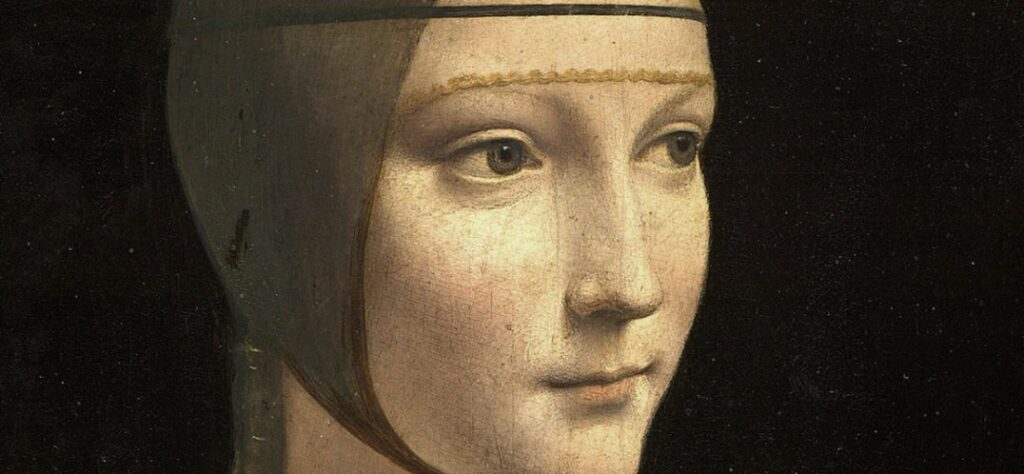
This portrait of Cecilia Gallerani, adorned with an ermine, encapsulates an exquisite interplay of elegance and intrigue. The use of rich textures and complex symbolism—where the ermine may represent purity or chastity—betrays da Vinci’s keen psychological insight. The directness of her gaze, combined with the dynamic pose, portrays not just a likeness but a vivid personality. This painting broke away from conventional portraiture norms, setting a precedent for portraying subjects with inherent depth and individuality, illuminating the subtleties of character that would dominate future character studies in art.
7. The Virgin of the Rocks
In “The Virgin of the Rocks,” da Vinci transforms the Holy Family’s narrative into a complex tableau that intertwines nature and spirituality. The rocky landscape serves as a backdrop to an emotional interaction among Mary, Jesus, and the angel. Using atmospheric perspective, da Vinci enriches the composition with depth, drawing a stark contrast between the serene figures and the tumultuous, rugged landscape. This sublime harmony exemplifies the artist’s deft hand in merging harmonious naturalism with spiritual symbolism, influencing generations of artists seeking to encapsulate the essence of the human experience within their compositions.
8. The Adoration of the Magi
This unfinished painting reveals da Vinci’s defiance of traditional composition; it eschews the calming symmetry often found in religious art for a wild, chaotic scene that conveys dynamic energy. Here, the Magi, kneeling before the Holy Child, express a variety of emotions, a demonstration of the artist’s deft understanding of psychology and narrative. Each figure is intricately connected, suggesting a web of destinies intersecting at this moment of divine revelation. The raw energy pulsating through the canvas hints at the untamed vitality that characterizes da Vinci’s approach, marking a definitive departure from more static depictions in previous works.
9. Ginevra de’ Benci
In “Ginevra de’ Benci,” da Vinci crafts a portrait that is as much about the subject’s inner life as it is about her outer beauty. Set against a backdrop of lush foliage, Ginevra’s contemplative expression draws viewers into her introspective world. The use of botanicals as symbolic elements—such as the juniper, representing love and virtue—represents a novel shift toward integrating personal narrative with symbolism. Through this portrait, da Vinci delves into the nuances of human psychology, foreshadowing the emotional depth that would characterize modern portraiture.
10. The Last Judgment
This mural, painted after da Vinci’s death, showcases the profound impact of his artistic legacy. Although not solely his work, its vibrant dynamic forms and emotive content illustrate the seismic shift in representing divine narratives. Da Vinci’s influence on composition and the human figure permeates this work, showcasing the revolution he spearheaded in the portrayal of human emotions and interactions even beyond his lifetime. The theatricality and drama of “The Last Judgment” echo da Vinci’s ethos, merging human experience with celestial grandeur, thereby extending the reach of his artistic vision.
Each of these masterpieces by Leonardo da Vinci not only redefined painting techniques but also enriched the narrative of human existence, prompting viewers to reconsider the subtle complexities of life and art. His contributions linger in the air like the brushstrokes of a genius, inspiring the countless generations that followed in his wake.






Leave a Reply