
Short Answer
In the tapestry of American society, languages weave a rich and complex narrative. The United States, renowned for its diversity, is home to an array of linguistic communities. As a melting pot of cultures, it’s no surprise that numerous languages flourish alongside English. This article delves into the top 10 most spoken languages in the U.S., shedding light on their significance and prevalence.
1. English
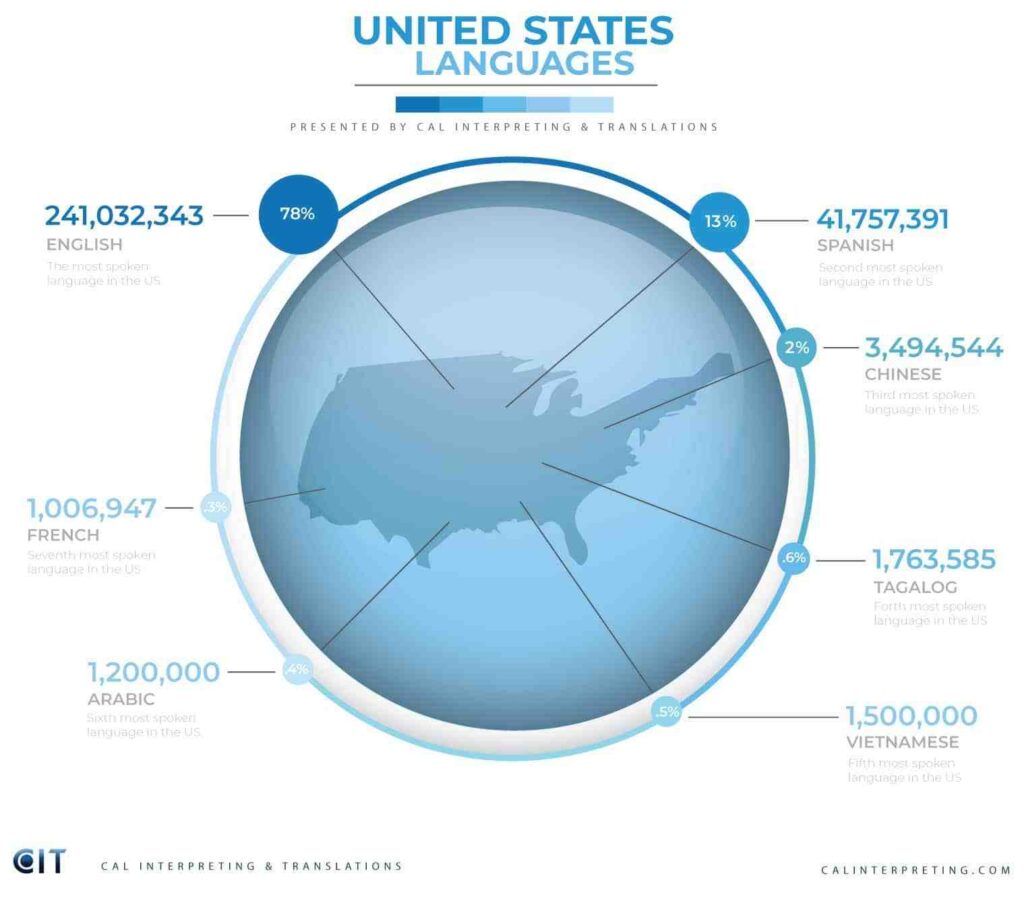
Unquestionably the most spoken language in the United States, English serves as the predominant lingua franca. Nearly 80% of the American populace primarily communicates in English. Its roots trace back to the early colonial period, and it has evolved through historical influences, including immigration and globalization. English embodies various dialects and regional accents, reflecting the diverse backgrounds of its speakers. From the crisp intonations of New England to the lyrical lilt of Southern English, this language showcases the rich cultural heritage of the nation.
2. Spanish
Spanish stands as the second most spoken language in the U.S., with approximately 13% of the population speaking it at home. The prevalence of Spanish arises from the extensive immigration from Latin American countries and the historical presence of Hispanic communities. From California to Florida, Spanish is an intrinsic part of urban and rural life alike. This language carries with it the traditions and histories of countless communities, enriching the American cultural landscape. Whether through music, cuisine, or everyday conversation, the influence of Spanish is unmistakable.
3. Chinese
Chinese, particularly Mandarin and Cantonese, ranks third among the most spoken languages in the U.S. An estimated 3% of the population speaks Chinese at home. The substantial Chinese-American community has been instrumental in disseminating this language across various regions, especially in urban centers like San Francisco and New York City. Chinese culture, known for its profound philosophical traditions and culinary delights, has integrated seamlessly into American life. The growing popularity of Chinese language learning reflects a burgeoning interest in engaging with a rich heritage that extends far beyond U.S. borders.
4. Tagalog
Tagalog, the national language of the Philippines, has found a significant foothold in the United States. Approximately 1.6 million Americans communicate in Tagalog, largely attributable to the increasing number of Filipino immigrants. Tagalog’s rhythm and expressiveness echo the cultural vibrancy of the Filipino community. As families continue to uphold their linguistic traditions, Tagalog serves both as a means of communication and a bonding agent, fostering connections to home and history while navigating life in the U.S.
5. Vietnamese
Vietnamese ranks as the fifth most spoken language, with over 1.5 million speakers in the U.S. The influx of Vietnamese refugees following the Vietnam War has left an indelible mark on American demographics. Vietnamese culture, characterized by its robust culinary practices and festive traditions, continues to thrive in American society. Communities often come alive with the vibrant sounds of Vietnamese market chatter, and the language serves as a bridge connecting generations, ensuring traditions are passed down.
6. French
French holds a distinctive place in the linguistics of the U.S., with approximately 1.2 million speakers. It is particularly prominent in Louisiana, where Creole and Cajun languages reflect a fascinating fusion of French with local dialects. The linguistic legacy of French colonial history in North America is palpable, as it intertwines with the nation’s foundation. French culture, including its artistic and culinary influences, continues to enrich American life, from enchanting bistros to film festivals celebrating francophone cinema.
7. Arabic
Arabic has emerged as a significant language in the United States, with around 1.2 million speakers. This increase is primarily driven by immigration from various Arab countries and a rising interest in Arabic culture and Islamic studies. Arabic dialects vary widely, reflecting the linguistic diversity across the different Arabic-speaking nations. This language not only serves communication but also fosters a deeper understanding of an intricate cultural and historical tapestry that spans centuries.
8. Urdu
With approximately 1.1 million speakers, Urdu has become a vital part of America’s multilingual fabric, largely due to the immigration of South Asian communities. Urdu’s poetic heritage and rich literary traditions resonate profoundly among speakers. This language accentuates the importance of family and community ties, often serving as a medium for storytelling and cultural exchange, thereby preserving the legacy of South Asian heritage within American society.
9. Persian
Pervasively, Persian (Farsi) is estimated to be spoken by around 1 million individuals in the U.S. This language underscores the cultural richness of the Iranian diaspora. From poetry to philosophy, Persian literature has an esteemed place in history, and its speakers contribute vibrantly to the arts and humanities. The Persian language encapsulates centuries of cultural narratives, and it continues to flourish among immigrant communities, creating spaces for intergenerational dialogue.
10. Haitian Creole
Finally, Haitian Creole, predominantly spoken among Haitian-Americans, rounds out the list with approximately 1 million speakers. This language, a synthesis of French, African languages, and indigenous elements, embodies a unique cultural identity. The resilience of the Haitian community is reflected through the continued use of Creole, ensuring the preservation of traditions, folklore, and community ties, particularly in states like Florida and New York.
The linguistic landscape of the United States is a testament to its multicultural essence. Each of these languages enriches the dialogue within American society, fostering connection and understanding among diverse communities. As globalization continues to shape cultural dynamics, the importance of multilingualism remains paramount. Encouraging language diversity not only enhances communication but also nurtures the intricate relationships that define the American experience.
FAQ
What is the most spoken language in the United States?
English is the most spoken language in the United States, with nearly 80% of the population using it as their primary mode of communication.
Which languages are the top 5 most spoken in the US?
The top five most spoken languages in the US are English, Spanish, Chinese, Tagalog, and Vietnamese.
How does immigration influence language diversity in the US?
Immigration has introduced numerous languages to the US, enriching its linguistic landscape as immigrant communities maintain their native tongues alongside English.
Why is multilingualism important in the US?
Multilingualism fosters cultural understanding, preserves heritage, and enhances communication within the diverse American population.





Leave a Reply