
Short Answer
Have you ever wondered which snake holds the title for the most venomous in the world? It might be a surprising fact that, despite their often fearsome reputations, not all of the world’s snakes are created equal when it comes to their venom potency. Venom can vary greatly among species, and some of the most venomous snakes can be found in the most unexpected of places. In this exploration of the top ten most venomous snakes ever discovered, we venture into the mysterious world of serpents, all while posing a playful challenge: can you guess which one is the most lethal? Let’s shed light on some of the sinister representatives of the snake family.
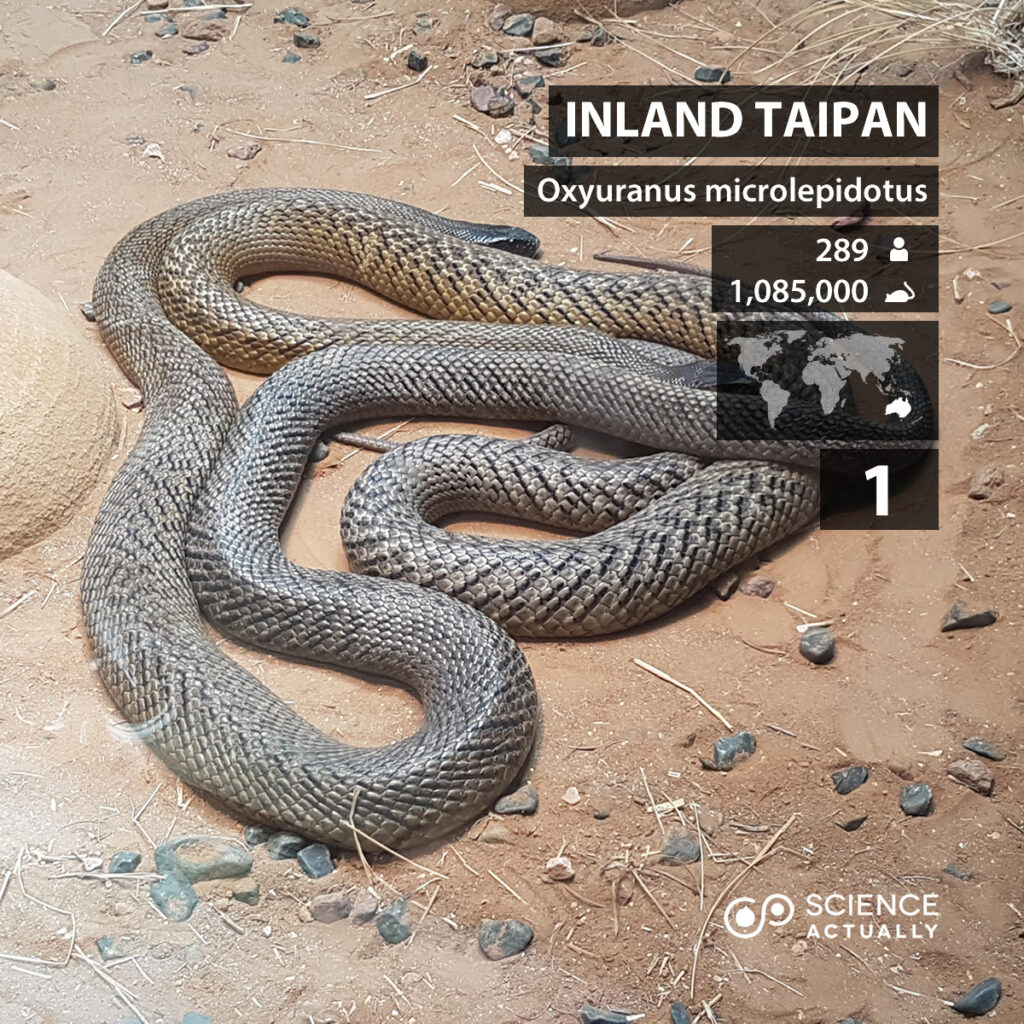
1. Inland Taipan
Regarded as the most venomous snake on Earth, the Inland Taipan (Oxyuranus microlepidotus) possesses a venom that is estimated to be 50 times more potent than that of the Indian cobra. Found primarily in the arid regions of Australia, its venom can cause death in a matter of minutes if untreated. Its fangs can puncture through the skin with remarkable ease, delivering a potent cocktail of neurotoxins and procoagulants that disrupt blood clotting and paralyze the nervous system. Despite its lethal capability, this snake is generally reclusive and tends to avoid human interaction.
2. Eastern Brown Snake
Naturally aggressive and highly venomous, the Eastern Brown Snake (Pseudonaja textilis) is responsible for more mortalities in Australia than any other snake species. Its venom contains potent neurotoxins and coagulants, making it a formidable adversary. These snakes are often found in urban areas, where they can come into contact with humans, prompted by their relentless hunt for small mammals. Their slender bodies and remarkable speed allow them to strike quickly, delivering venom before the potential victim even has a chance to react.
3. Black Mamba
The Black Mamba (Dendroaspis polylepis) stands out not only for its extraordinary speed— being capable of moving up to 12 miles per hour—but also for its deadly venom. Found primarily in sub-Saharan Africa, this snake’s neurotoxic venom can cause death within hours if untreated. With a distinctive gray to olive coloration, its name is derived from the inky black interior of its mouth, a warning signal to predators. Despite its fearsome capabilities, the Black Mamba is often misunderstood, exhibiting behavior more inclined towards evasion than aggression.
4. King Cobra
The majestic King Cobra (Ophiophagus hannah) may be the world’s longest venomous snake, measuring up to 18 feet. Found in diverse habitats across Southeast Asia, it carries a potent neurotoxic venom that can deliver a lethal dose in a single bite. However, its reputation is somewhat mitigated by its somewhat reserved nature; these snakes tend to avoid confrontation, preferring to escape when threatened. Yet, if cornered, they can display an impressive hood and strike with alarming precision, making them both beautiful and dangerous.
5. Many-Banded Krait
The Many-Banded Krait (Bungarus multicinctus) holds an infamous reputation in Southeast Asia, where its venom is laden with potent neurotoxins that can lead to respiratory failure. Often found in rice paddies and forests, it exhibits a striking black and yellow striped pattern, making it discernible yet beautiful. Despite its stunning appearance, the Many-Banded Krait is responsible for a significant number of snakebites in its habitat, mainly occurring during the nocturnal hunting of small prey.
6. Fer-de-Lance
High on the list of venomous snakes, the Fer-de-Lance (Bothrops asper) poses immense risk in Central and South America. Known for its aggressive nature, this pit viper can deliver a venomous bite that leads to tissue destruction and, if untreated, potentially death. Its cryptic coloration allows it to blend seamlessly into the leaf litter of its habitat, making it an unassuming threat as it lies in wait for unsuspecting animals and humans alike.
7. Tiger Snake
The Tiger Snake (Notechis scutatus), native to Australia, boasts a venom that can cause paralysis and has a high mortality rate if antivenom is not administered. Known for its bold pattern, which mimics that of a tiger, this snake’s behavior is often aggressive, especially when it feels threatened. While capable of delivering a swift and venomous bite, the Tiger Snake also plays a crucial role in its ecosystem by controlling rodent populations.
8. Puff Adder
The Puff Adder (Bitis arietans) is a highly dangerous snake endemic to Africa. It relies on its excellent camouflage among leaves and rocks to ambush unsuspecting prey. Its venom is cytotoxic, leading to severe tissue damage and extensive local necrosis. Known for its characteristic “puffing” behavior when threatened, this snake is responsible for a considerable number of snakebite incidents on the continent, highlighting its lethal nature.
9. Gaboon Viper
The Gaboon Viper (Bitis gabonica) could be considered a paradox due to its beautiful appearance and immense size—measuring up to 6 feet long. Its venom is one of the most potent of any viper species and can cause significant hemorrhaging upon envenomation. This snake possesses the largest fangs of any snake, capable of delivering a staggering amount of venom with each bite. Found in the rainforests of Central and West Africa, the Gaboon Viper is generally docile unless provoked.
10. Saw-Scaled Viper
Lastly, we have the Saw-Scaled Viper (Echis occellatus), notorious for its deceptive nature and alarmingly powerful venom, which can cause severe coagulopathy. Thriving in arid and semi-arid regions of Africa and the Middle East, this snake can be identified by the distinctive serrated scales on its body, contributing to its unique warning hiss. It is often involved in a significant proportion of snakebite incidents due to its aggressive temperament and proximity to human habitation.
As we conclude our exploration of the top ten most venomous snakes in the world, it’s crucial to recognize that while these creatures possess incredible biological mechanisms for defense and predation, many are misunderstood and play essential roles in their ecosystems. Their existence reminds us of the delicate balance of nature and the need for respect in our encounters with wildlife. Do you have any newfound admiration for these snakes, or do they still send shivers down your spine? Either way, awareness is the first step towards coexistence.
FAQ
Which snake is considered the most venomous in the world?
The Inland Taipan is regarded as the most venomous snake on Earth, with venom estimated to be 50 times more potent than that of the Indian cobra.
Are all venomous snakes aggressive towards humans?
No, many venomous snakes such as the Inland Taipan and Black Mamba tend to avoid human interaction and are not aggressive unless provoked.
What are the common effects of venom from these snakes?
Venom effects vary but can include neurotoxicity causing paralysis, coagulopathy leading to blood clotting problems, and cytotoxicity causing tissue damage.
Where are the most venomous snakes typically found?
Venomous snakes are found worldwide, with many of the deadliest species living in Australia, Africa, Southeast Asia, and Central and South America.
What should I do if bitten by a venomous snake?
Seek immediate medical attention; antivenom administration is critical to treatment and can save lives.





Leave a Reply