
Short Answer
In the grand tapestry of music, certain instruments stand as towering peaks, challenging even the most diligent musicians with their complexity and demand for technical virtuosity. The world of music boasts a myriad of instruments, each with its unique charm, but some demand more dedication, finesse, and even acrobatics than others. The following list unveils the top ten hardest instruments to play, inviting you to explore their intricate mechanics and the sublime satisfaction they bestow upon those who dare to master them.
1. Violin
The violin is much like a tempestuous mistress, alluring yet capricious. Its enigma lies in the subtleties of tone production and intonation. Unlike the piano, where one can visually locate notes, the violin’s fingerboard is an expansive void of infinite possibilities. Achieving perfect pitch requires painstaking practice, as players must develop impeccable muscle memory and a keen ear. Masterful violinists bring the instrument to life with rich vibratos and soaring melodies, but beginners often struggle with the instrument’s demanding bowing techniques and shifting positions.
2. French Horn
Consider the French horn a labyrinthine puzzle, where precision and breath control converge in a delicate dance. With its tightly coiled tubing and hauntingly rich timbres, this brass instrument poses a unique challenge. The French horn, often deemed the most treacherous brass instrument, requires players to master the embouchure, or the way one shapes the mouth to produce sound. Furthermore, navigating its extensive range while maintaining clarity and articulation adds to the complexity. Each note calls for a different level of intensity and air support, rendering it a true test of a musician’s mettle.
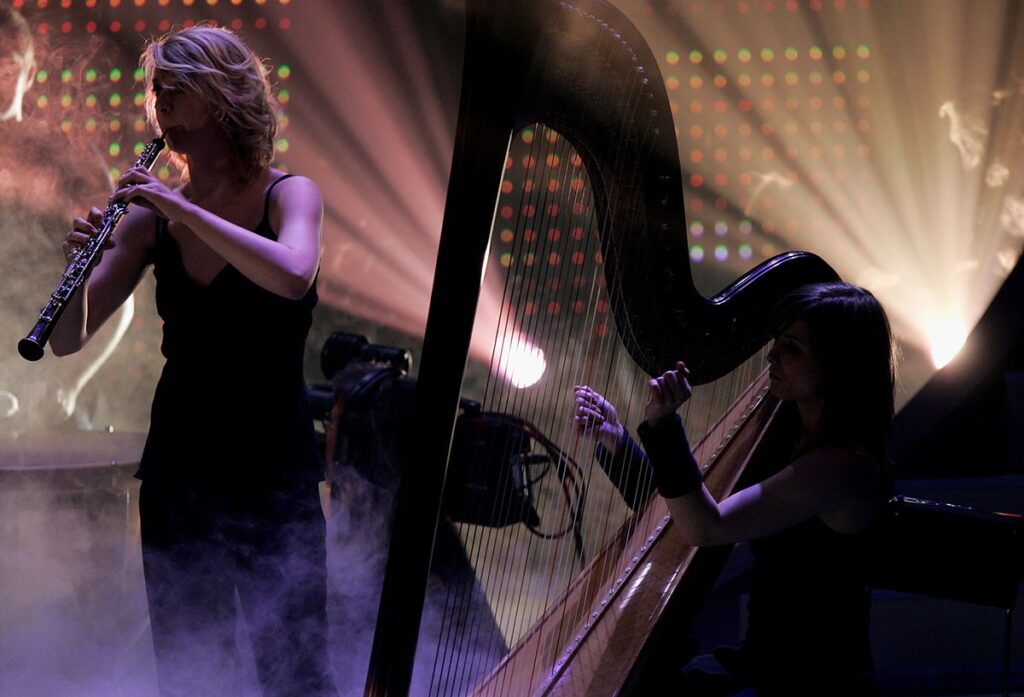
3. Oboe
The oboe stands as the quintessential embodiment of musical paradox—both hauntingly beautiful and notoriously difficult. This double-reed instrument demands not only a cerebral approach but also a tenacious commitment to mastering its unique reeds. The oboe’s piercing tone can evoke profound emotions, yet commanding such expressiveness involves grappling with intricate fingerings and breath control. The oboe’s sensitivity to temperature and humidity also complicates the journey, as these environmental factors can alter pitch and tuning, making it a constant adventure for its players.
4. Classical Guitar
The classical guitar is akin to a poet’s endless quest for the perfect word—each string a canvas awaiting the stroke of a master’s fingers. While the instrument may seem more accessible than its orchestral counterparts, the intricacies of fingerpicking and the ability to express complex harmonies create a steep learning curve. Players must dedicate themselves to techniques like rasgueado and arpeggio, which require not only dexterity but also a deep understanding of music theory. The simultaneous independence of the fingers can liken one’s experience to conducting a symphony where each part must harmonize flawlessly.
5. Bagpipes
With a sound instantly evocative of moors and misty landscapes, the bagpipes possess an aura of mystique rivaled by few. This instrument challenges would-be players with its paradoxical approach to breath control and finger coordination. The act of maintaining air pressure is a delicate balance, as players inflate the bag while simultaneously fingering the chanters. Each note resonates with a distinctive timbre that can easily fall into disarray if not executed with precision. Those who embark on this piping journey often find themselves entangled in a tapestry of tradition, culture, and unparalleled camaraderie.
6. Harp
The harp shimmers like a celestial body within the musical universe, embodying elegance and complexity. This instrument requires a sophisticated interplay of finger dexterity and mental acuity. Each string, when plucked, resonates in pure harmony, yet players must navigate an extensive range of chords and arpeggios that can baffle even seasoned musicians. The harp’s intricate pedal system adds a further layer of sophistication, demanding quick reflexes and a thorough understanding of music theory. Crafting melodies on the harp is much like painting on an expansive canvas—each pluck a brushstroke that contributes to a grandiose tableau.
7. Euphonium
The euphonium—a brass instrument that glides effortlessly between mellow and robust timbres—calls for refined breath control and muscular precision. Often overshadowed by its trumpet and trombone brethren, the euphonium reveals its complexity in the throes of performance. Players must master its extensive range while managing the delicate embouchure necessary for achieving its warm, lush sound. Each note requires a balance of air support and finesse, making the euphonium both a rewarding and formidable challenge for the ambitious musician.
8. Tuba
The tuba, often relegated to the background, is much like a hidden gem in an ornate jewelry box. While it forms the foundation of orchestral soundscapes, the path to mastering this colossal brass instrument is strewn with obstacles. Players must contend with its immense size, formidable embouchure requirements, and the intricacies of producing a clear, resonant tone across its diverse range. The physicality involved in playing the tuba, combined with its need for breath control, transforms each performance into an awe-inspiring feat of endurance.
9. Piano
While many may question the inclusion of the piano in this list, its profound complexity warrants acknowledgment. The majestic piano is a veritable universe of sound where the intertwining of both hands creates lush landscapes of harmony and melody. The requirement for simultaneous coordination of both hands to achieve intricate compositions is akin to juggling flaming torches while riding a unicycle. Hammering the keys involves not merely brute force but an understanding of dynamics, phrasing, and timing—transforming each performance into a carefully crafted narrative.
10. Theremin
The theremin exists as an otherworldly marvel within the realm of music, where touch is an alien concept. This electronic instrument is played without physical contact, requiring one to control pitch and volume through the mere proximity of hands to two antennae. Mastery of the theremin is thus an exercise in intuitive understanding of spatial dynamics and an acute sense of musicality. The ethereal sounds it produces can evoke emotions ranging from sheer joy to haunting nostalgia, making it an extraordinary challenge that transcends traditional musicianship.
In the end, the arduous journey of learning a challenging instrument offers rewards far beyond musical proficiency. With each note, players not only sculpt sound but also hone resilience, discipline, and passion. The allure of these ten instruments lies in their intricate demands, each offering a unique symphony of struggle and triumph. Whether you are drawn to the alluring tones of the violin or the ethereal whispers of the theremin, embarking on the path of mastery creates a transformative experience, inviting you to explore the profound depths of musical expression.
FAQ
Which instrument is considered the hardest to play?
The article lists the violin, French horn, oboe, classical guitar, bagpipes, harp, euphonium, tuba, piano, and theremin as some of the hardest instruments to play, each with unique challenges.
Why are some instruments harder to learn than others?
Instruments vary in difficulty based on factors like technical skill required, breath control, finger dexterity, tuning sensitivity, and the complexity of mastering their unique mechanics.
Does mastering a difficult instrument offer benefits beyond music?
Yes, learning challenging instruments fosters resilience, discipline, and passion, contributing to personal growth beyond musical proficiency.






Leave a Reply