
Short Answer
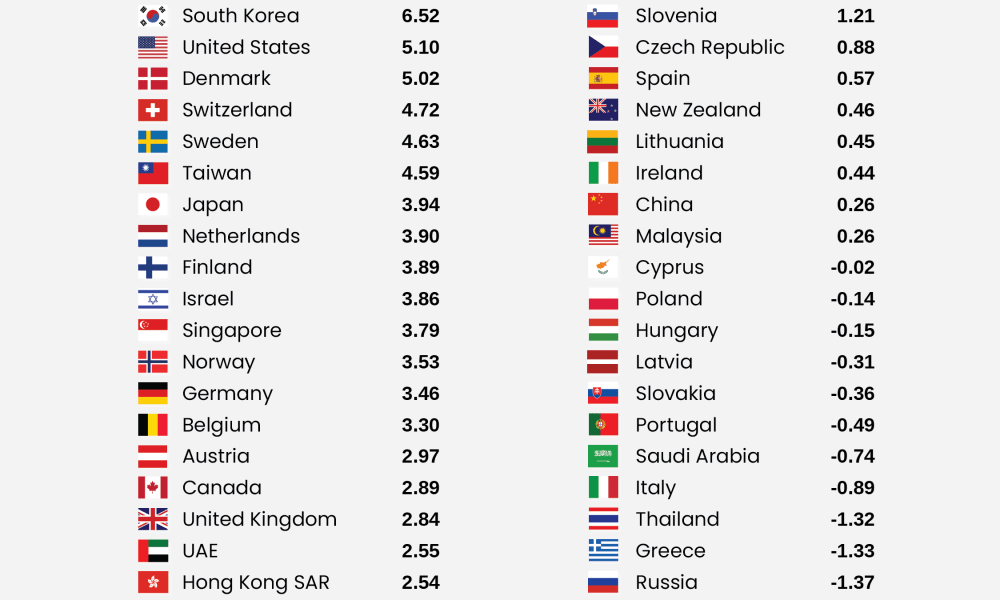
In an age defined by rapid technological advancement, the interplay between innovation and national progress has never been more pronounced. As we traverse the globe, certain countries emerge not merely as leaders but as paradigm-shifters in the realm of technology. This article delves into the top ten most advanced countries in technology, unraveling the intricate web of attributes that propel them ahead in this incessantly evolving landscape.
1. United States
At the zenith of technological prowess stands the United States, a behemoth characterized by its fertile ecosystem for innovation. Silicon Valley, a microcosm of technological advancement, is the crucible for start-ups and established giants alike. With a robust framework of venture capital, world-class universities, and a culture that celebrates risk-taking, the U.S. continues to birth groundbreaking advancements, particularly in artificial intelligence, biotechnology, and information technology.
2. China
China’s meteoric rise in technology has reshaped global dynamics, capturing attention through its relentless ambition and extensive government backing. From its pioneering strides in e-commerce to the formidable advancements in telecommunications spearheaded by companies like Huawei, China’s technological landscape is characterized by rapid scalability. The state’s investment in artificial intelligence and renewable energy technologies demonstrates a forward-thinking approach that hints at a deeper quest for global leadership.
3. Japan
Japan, often the epitome of innovation, skillfully marries tradition with cutting-edge technology. Renowned for its advancements in robotics and electronics, the country boasts some of the most sophisticated automated systems in the world. The cultural reverence for precision engineering and design plays a pivotal role in Japan’s technological narrative, allowing it to retain a competitive edge in manufacturing and innovation, particularly in industries such as automotive and high-tech electronics.
4. South Korea
South Korea stands as a testament to the power of strategic governmental planning in technological advancement. Through the establishment of the “Korea ICT Strategy” and generous investments in research and development, the nation has cultivated a landscape ripe for tech giants like Samsung and LG. The nation’s prowess in semiconductor technology and mobile telecommunications illustrates not only its advanced infrastructure but also a cultural inclination toward embracing new technology, fostering an environment where innovation flourishes.
5. Germany
Germany, often revered as the engine of Europe, integrates technology with industrial efficiency. The emphasis on the “Industry 4.0” initiative signifies a robust framework for integrating the Internet of Things (IoT) into traditional manufacturing processes. With a focus on sustainability and automation, the country has established itself as a leader in engineering and manufacturing, continually pushing the boundaries of what is achievable within the industrial sector.
6. Sweden
Sweden’s reputation as a hotbed for technological innovation belies its modest size. The nation has an indomitable spirit of entrepreneurship, heavily supporting start-ups and availing widespread access to education. Companies like Spotify and Skype have originated from this Scandinavian haven, signaling a culture that not only embraces technology but strives to redefine how it is integrated into everyday life. Its focus on sustainability further accentuates its advancement in technology that aligns with environmental consciousness.
7. Singapore
Singled out as a bustling technological hub in Southeast Asia, Singapore has been meticulous in crafting a pro-business environment supported by a strong legal framework and advanced infrastructure. The Smart Nation initiative encapsulates the city-state’s ambitions to harness digital technologies for enhancing urban living and governance. With significant strides in fintech and smart city technologies, Singapore embodies a forward-thinking approach to urban challenges through technological solutions.
8. Finland
Finland has gained recognition not only for its educational prowess but also for its robust tech ecosystem. The nation’s commitment to research and development is evident in its innovative approaches to sustainable technology and telecommunications. Finnish companies excel in mobile technology, led by Nokia’s pioneering advancements in mobile communications during its heyday. The emphasis on collaboration within the community fosters an environment where groundbreaking ideas can flourish.
9. Israel
Israel’s reputation as the “Start-Up Nation” has been well-earned through its dynamic entrepreneurial culture and military technology initiatives. A significant portion of the population is actively engaged in research and development, driving advancements in cybersecurity, agricultural technologies, and medical innovations. The culture promotes agility and rapid iteration, allowing Israel to remain on the cutting edge of technological development, often serving as a model for other nations seeking to replicate its success.
10. Netherlands
The Netherlands is fast emerging as a center of technological innovation, bolstered by its strategic geographical position and a highly educated workforce. Renowned for advancements in agriculture technology, known as agri-tech, and logistics, the country is pushing the envelope in sustainability-focused technologies. Dutch innovation is characterized by an emphasis on collaboration across sectors, ensuring a holistic approach to technological advancement that resonates globally.
In conclusion, the technological landscape is a complex tapestry woven from the threads of culture, investment, education, and government policy. The countries highlighted herein not only stand as titans of technology but also serve as fascinating case studies in how diverse elements contribute to their success. By examining their unique trajectories, one can glean insights into the deeper motivations that propel nations toward technological supremacy, ultimately shaping the future of the global community.
FAQ
Which countries are considered the leaders in technological innovation?
The leaders include the United States, China, Japan, South Korea, Germany, Sweden, Singapore, Finland, Israel, and the Netherlands.
What role does education play in technological advancement?
Education fosters a skilled workforce and research capabilities necessary for innovation and technological growth.
How do companies like Silicon Valley tech giants influence global technology?
They drive innovation, create new technologies, and set trends that influence global markets and development.






Leave a Reply