
Short Answer
Throughout the annals of paleontological discovery, the realm of dinosaurs has captivated imaginations, instilling awe alongside trepidation. These ancient titans occupied the Earth for millions of years, evolving into a plethora of species that exhibited a remarkable range of sizes, shapes, and predatory prowess. In the relentless hierarchy of the prehistoric world, some dinosaurs emerged as apex haunters, wielding unparalleled ferocity. The following examination delineates the top ten deadliest dinosaurs ever uncovered, a list that not only chronicles their formidable features but also casts light on the ecological dynamics of their era.
1. Tyrannosaurus Rex
The illustrious Tyrannosaurus rex reigns supreme as the quintessential predator of the late Cretaceous period. With an impressive skeletal structure, T. rex possessed a skull exceeding four feet in length, housing serrated teeth that could deliver a bone-crushing bite force estimated at over 12,000 pounds. Coupled with a formidable sense of smell, this brute could detect carrion from several miles away, tracking down prey that ranged from large herbivores to fellow carnivores. Its sheer size, coupled with acute predatory instincts, solidifies T. rex’s status as the most infamous dinosaur.
2. Spinosaurus
Taking the crown as possibly the largest known carnivorous dinosaur, Spinosaurus dwarfed its counterparts at lengths reaching over 50 feet. Its distinct sail-like structure was not only a striking physical characteristic but might have functioned as a thermal regulator. With adaptations that suggest a semi-aquatic lifestyle, Spinosaurus preyed upon fish and other marine organisms, using its elongated jaws and conical teeth—ideal for grasping slippery prey. This perturbing feature grants it an enigmatic allure as one of the deadliest aquatic predators.
3. Giganotosaurus
Hailing from the late Cretaceous of South America, Giganotosaurus was no less formidable. Rivaling the T. rex in size, this colossal theropod measured around 40 feet long. With powerful hind limbs and a robust build, Giganotosaurus adopted a predatory style that likely engaged in hunting large sauropods. The evolutionary adaptations of Giganotosaurus, including sharp claws and impressive agility, mark it as one of the apex predators of its time.
4. Allosaurus
A prominent carnivore of the late Jurassic period, Allosaurus served as a springboard for understanding predatory adaptations. Measuring roughly 28 feet in length, its anatomy included strong limb structures and sharp, sickle-like claws. Allosaurus was a versatile hunter, often employing pack behavior during hunts. Its capacity for strategic predation, especially targeting the weaker individuals of herds, underscores its lethal prowess. The sophisticated predatory tactics displayed by Allosaurus would echo throughout the lineage of theropods.
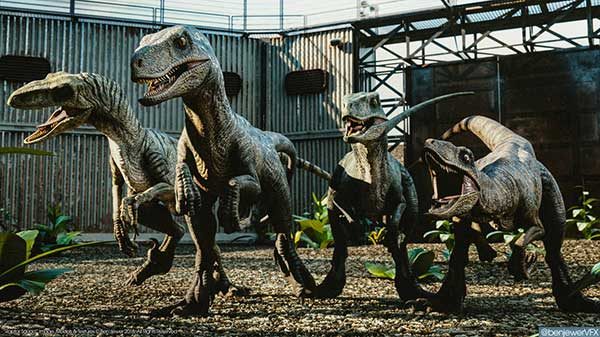
5. Velociraptor
Despite its diminutive size, Velociraptor represents a paradox in the dinosaur world. Measuring only about 6.5 feet in length, it possessed exceptional intelligence and agility. Armed with a distinctive sickle-shaped claw on each foot, Velociraptor was not merely reliant on brute strength; it displayed calculated hunting methods, potentially hunting in packs. Its cunning, lethal speed, and acute senses made it a menacing predator, a striking reminder that deadliness isn’t synonymous with size.
6. Ceratosaurus
A true marvel of Jurassic wildlife, Ceratosaurus boasted distinctive lateral horns atop its skull, attributed to mating displays rather than combat. However, this dinosaur was no pacifist; measuring up to 20 feet long, its jaws housed sharp teeth that enabled it to tackle a wide range of prey. With adaptations that may suggest omnivorous behaviors, Ceratosaurus’s ecological niche was as versatile as it was deadly.
7. Carcharodontosaurus
This colossal predator from Africa measured upwards of 40 feet in length and exhibited traits akin to both Spinosaurus and Giganotosaurus. Carcharodontosaurus wielded formidable teeth and was likely an apex predator in its environment. With a strong jaw and robust limbs for ambush predation, it capitalized on hunting herbivorous dinosaurs, exploiting every advantage in its hunting repertoire.
8. Utahraptor
Possessing a blend of Velociraptor’s agility and sheer size, Utahraptor represented a significant leap in predatory evolution. Its fossilized remains indicate a body length of up to 23 feet, underscored by powerful claws and intelligence reminiscent of larger theropods. This dinosaur likely exhibited pack behavior, showcasing organized strategies in the pursuit of prey, which accentuates its rank among the deadliest.
9. Ankylosaurus
While primarily recognized for its defensive adaptations, Ankylosaurus possessed lethal features that merit its inclusion on this list. Its club-like tail was capable of delivering a devastating blow, dissuading even the most ambitious predators. Equipped with protective armor, Ankylosaurus represented a paradox; its strength and protective adaptations underscore the concept of lethal effectiveness through defense.
10. Daspletosaurus
As a close relative of T. rex, Daspletosaurus commanded respect in its late Cretaceous environment. Measuring over 30 feet, its skeletal structure bore the hallmarks of a refined predator. With a combination of powerful limbs, acute vision, and a formidable bite, Daspletosaurus integrated brute force with hunting sophistication, showcasing its lethal capabilities among contemporaries.
In conclusion, the myriad of dinosaur species that once traversed the Earth unveils a tapestry of evolutionary complexity. These ten deadly dinosaurs not only exemplify the ferocity present in prehistoric ecosystems but also provide an intriguing glimpse into the delicate interplay of survival, adaptation, and predation. As researchers continue to uncover fossils and data, the legacy of these remarkable creatures endures, compelling us to ponder the intricacies of life millions of years ago.
FAQ
What was the largest carnivorous dinosaur?
Spinosaurus is considered the largest carnivorous dinosaur, measuring over 50 feet long.
How did Ankylosaurus defend itself?
Ankylosaurus used its heavily armored body and a club-like tail to deliver powerful defensive blows.
Did Velociraptors hunt in groups?
Fossil evidence suggests Velociraptors may have hunted in packs, increasing their effectiveness despite their small size.




Leave a Reply