
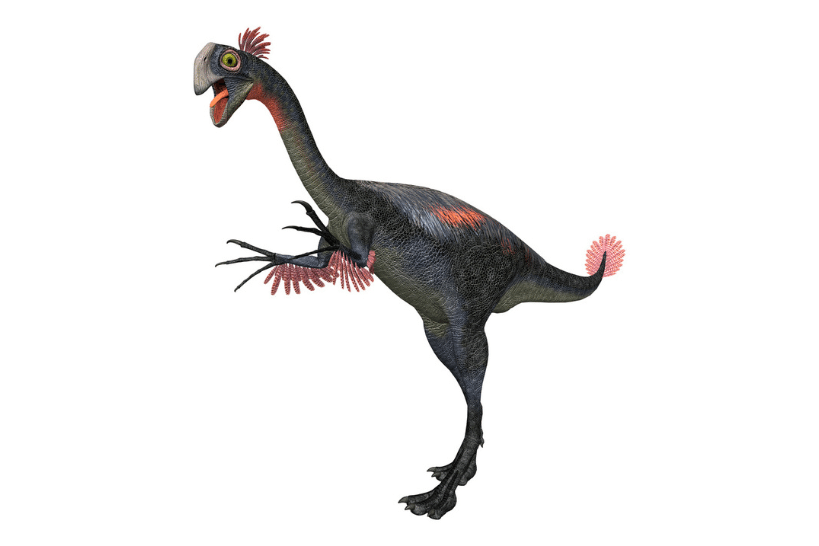
Dinosaurs, the magnificent creatures that roamed our planet millions of years ago, continue to captivate our imagination. Among the myriad species that existed, some stand out not just for their size or ferocity but for their peculiar characteristics that defy rational explanation. The strangeness of these dinosaurs often invites deeper contemplation about evolution, adaptation, and the mysteries of prehistoric life. Here, we delve into the top ten strangest dinosaurs ever discovered, unveiling their peculiar traits and the underlying reasons for our perpetual fascination with these enigmatic beings.
1. Therizinosaurus
Possessing an unusual body structure, the Therizinosaurus is renowned for its elongated claws, which could reach lengths of up to three feet. These claws were not intended for combat but were likely used for foraging and defoliating plants. Its bizarre mix of characteristics—being herbivorous yet having a bird-like beak and claws reminiscent of a giant sloth—illustrates the wondrous ways evolution can manifest in unexpected forms, prompting questions about ecological niches and dietary adaptations.
2. Stegoceras
This dome-headed dinosaur belonged to the ceratopsians, but its strikingly thick skull features and peculiar bone structure make it an oddity among its kind. The dome, thought to be an adaptation for head-butting, signifies a fascinating aspect of social behavior in dinosaurs. The evolutionary benefits of such unique physical traits offer tantalizing insights into social dynamics, signaling perhaps that prehistoric creatures adopted behaviors akin to modern-day animals.
3. Ankylosaurus
A walking fortress, the Ankylosaurus is a prime example of evolutionary ingenuity. Its body was encased in armor plating, complete with spikes and a club-like tail presumably used for defense. This adaptation raises compelling questions regarding the survival strategies of herbivores in a world teeming with predators. The Ankylosaurus’s unique form embodies nature’s resilience and creativity in developing protective strategies against instinctual threats, highlighting the complex interplay between predator and prey.
4. Corythosaurus
This distinctive hadrosaur is notable for its elaborate, helmet-like crest, which was likely instrumental in communication through sound production. The Corythosaurus exemplifies how physical attributes can facilitate social interaction, echoing the importance of vocalization in the dinosaur kingdom. The striking design of this crest appears almost comical, yet it serves as an emblem of the evolutionary paths that prioritized social hierarchy and mating displays.
5. Hesperornis
With a body adapted for aquatic life, Hesperornis is a link between dinosaurs and birds. This flightless species exhibited a unique blend of features, including a torpedo-like shape and powerful legs for swimming. The fascination with Hesperornis lies in its transitional characteristics, prompting reflections on the evolutionary journey from dinosaur to bird. Such adaptations challenge our perceptions of functional morphology, revealing the gradual shifts that characterized avian evolution.
6. Ouranosaurus
A marvel of adaptability, the Ouranosaurus is best known for its sail-like structure along its back, reminiscent of modern-day sailfish. This dorsal sail may have served numerous functions, from thermoregulation to mate attraction. The eclectic appearance of the Ouranosaurus exemplifies the enigmatic relationship between physical form and ecological adaptation in prehistoric environments, prompting discussions on how environmental factors influenced the morphology of species.
7. Gigantoraptor
With its enormous size yet bird-like characteristics, the Gigantoraptor defies classification. Unlike many other theropods, this creature had feathers and a beak, suggesting it occupies a unique position in the evolutionary tree. Its grandeur invites intriguing speculation regarding the evolution of flight and the development of size among theropods. The contrast between its enormous stature and its avian features unveils the diverse pathways through which evolution can shape life forms within the same lineage.
8. Shunosaurus
The Shunosaurus is notable for its small size relative to other sauropods, combined with a unique tail club reminiscent of that of the Ankylosaurus. This duality hints at a potential evolutionary advantage, either as a defensive mechanism or for intraspecific competition. The odd juxtaposition of features raises questions about survival strategies in a diverse ecosystem, suggesting that even minor species adopted robust adaptations for protection and dominance.
9. Plesiosaurus
Often associated with the legends of sea monsters, Plesiosaurus showcases an extraordinary combination of long neck, sturdy body, and flippers. Contrary to being a traditional dinosaur, it represents the diverse evolutionary experimentation that occurred during the Mesozoic era. Its striking morphology invites conjecture about predation, locomotion, and habitat occupation in ancient marine environments, emphasizing the complexity of marine life parallels to terrestrial adaptations.
10. Dreadnoughtus
This colossal titanosaur stands out not just for its immense size but also for its remarkable weight distribution. Dreadnoughtus was built with structural adaptations enabling it to support its gigantic form, challenging traditional notions of what large dinosaurs could accomplish. The existence of such a behemoth prompts profound reflections on the dynamics of resource allocation and ecological balance, cementing its status as a subject of fascination for paleontologists and enthusiasts alike.
The exploration of these ten strange dinosaurs reveals profound insights into the enigmatic world of prehistoric life. Their unique adaptations and peculiarities not only spark curiosity but also compel us to ponder our own existence in the face of nature’s endless creativity. The strangeness of these ancient creatures reflects the boundless possibilities of evolution, serving as a reminder that the natural world is a vast tapestry woven with serendipitous oddities and extraordinary marvels.






Leave a Comment