
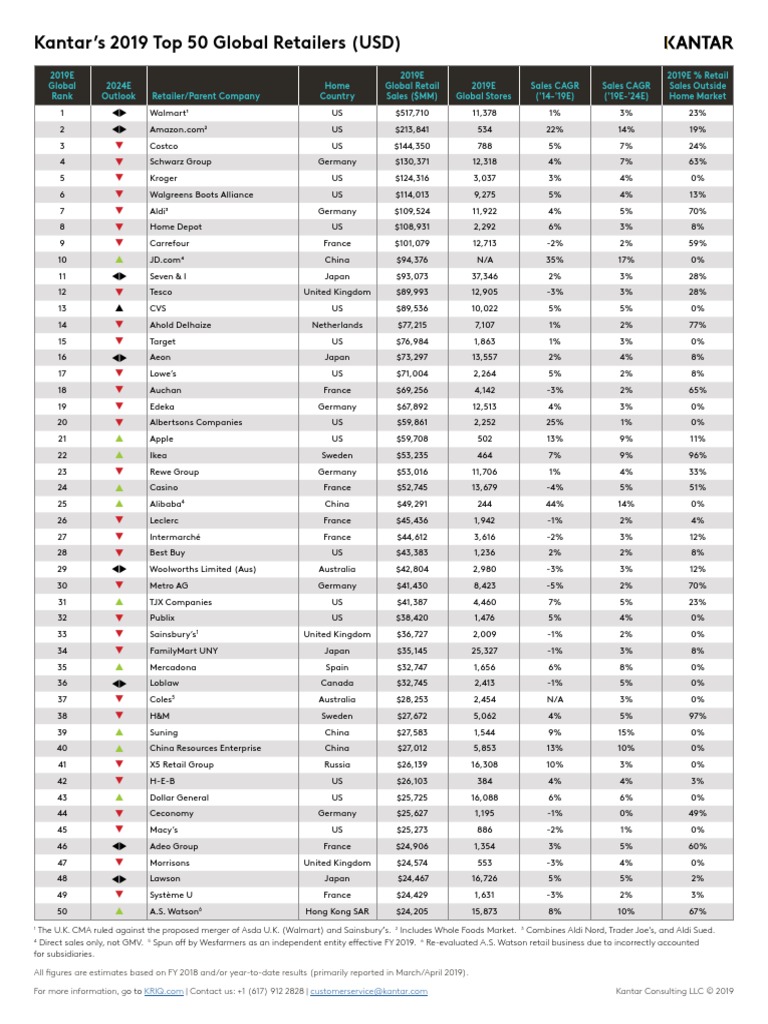
The global retail landscape has undergone radical transformations in recent years, with the advent of e-commerce, shifting consumer expectations, and technological advancements reshaping purchasing behaviors. As businesses vie for consumer attention and loyalty, a handful of retail giants have emerged as formidable forces, dominating the market with unparalleled strategies and expansive global reach. These pioneers promise a shift in perspective about retailing, blending tradition with innovation and demonstrating resilience amidst challenges. Here, we present a curated selection of the top ten retailers that not only dominate the global market but also inspire curiosity about the future of shopping.
1. Walmart
With its colossal footprint spanning the globe, Walmart reigns supreme as the world’s largest retailer. Known for its commitment to low prices and a broad product selection, Walmart utilizes a meticulous supply chain system that enhances efficiency and drives down costs. The company’s relentless focus on inventory management and data analytics has transformed how retail operates, revealing profound insights into consumer behavior. Additionally, Walmart’s growing e-commerce capabilities, including the acquisition of Flipkart, reflect its adaptability in the digital age, challenging competitors to innovate or risk obsolescence.
2. Amazon
Amazon has revolutionized the retail sector by introducing an expansive online marketplace that offers consumers convenience unmatched by traditional brick-and-mortar stores. With its Prime membership, the company has cultivated a loyal customer base, delivering not just products but also an array of digital services. The integration of artificial intelligence in personalizing shopping experiences has set Amazon apart, compelling other retailers to harness technology for enhanced customer engagement. Moreover, its bold innovations, such as cashier-less stores, foreshadow a tantalizing future where shopping is further simplified.
3. Alibaba
Alibaba’s meteoric rise within the e-commerce universe is a testament to its groundbreaking business model, which connects millions of sellers and buyers across the globe. The company’s proficiency in providing a platform for small businesses to thrive in the digital marketplace has democratized opportunities for entrepreneurs. Through robust technologies, including big data and cloud computing, Alibaba continuously refines its operations and customer experience. Furthermore, its integration of online and offline retail exemplifies a trend that highlights the synergy between digital convenience and physical touchpoints.
4. Costco
Considered a bastion of the membership warehouse model, Costco has distinguished itself through its unique approach of offering bulk goods at remarkably competitive prices. Its formula hinges on limited selections rather than extensive inventories, ensuring a streamlined shopping experience. Costco’s commitment to quality, value, and ethical sourcing resonates with modern consumers increasingly inclined toward corporate responsibility. The company’s blend of physical warehouses and a budding online presence symbolizes an astute understanding of consumer demands for both immediacy and value.
5. Schwarz Group (Lidl and Kaufland)
The Schwarz Group, encompassing both Lidl and Kaufland, exemplifies the efficiency-driven grocery retailer. Known for its no-frills approach and private-label product offerings, the group has introduced European consumers to a shopping experience centered on economy without sacrificing quality. As the group expands its footprint beyond Europe, its focus on sustainability and minimalistic design challenges conventional grocery retailing, urging competitors to rethink their operational strategies. The Schwarz Group’s ascent is a compelling narrative of adaptation to changing consumer preferences).
6. The Home Depot
In the realm of home improvement, The Home Depot holds a dominant position by fusing expert knowledge with an extensive product assortment. The retailer caters to both the DIY enthusiast and professional contractors, ensuring a comprehensive shopping experience. Emphasizing customer service, Home Depot invests in training associates to enhance product knowledge, thereby enriching buyer interaction. Its innovative omnichannel strategy, including buy-online-pick-up-in-store options, illustrates a forward-thinking approach to traditional retail, illustrating a keen responsiveness to evolving consumer preferences.
7. Target
Target has ingeniously navigated the complexities of modern retail through an appealing blend of affordability and style. This department store giant prioritizes a unique brand identity that resonates with consumers looking for fashionable yet budget-friendly options. Target’s adept utilization of digital platforms to enhance customer engagement, coupled with its localized shopping experiences, sets it apart from competitors. By fostering partnerships with popular brands and designers, Target continues to attract a diverse clientele fascinated by the allure of exclusivity.
8. Aldi
Aldi has gained significant traction in the grocery sector with its disruptive approach to discount retailing. Emphasizing simplicity, efficiency, and sustainability, Aldi delivers high-quality products while minimizing prices through an innovative supply chain model. The limited selection of private-label items not only enhances cost efficiency but also builds brand loyalty. As Aldi expands its footprint in various markets, its commitment to environmental sustainability positions it favorably amid growing consumer consciousness about corporate ecological impact.
9. Inditex (Zara)
Inditex, the parent company of Zara, has established a significant presence in the global fashion industry with its fast-fashion model. By fostering a rapid product turnover and aligning collection offerings with current trends, Zara captivates fashion-conscious consumers. The retailer’s embrace of technology in inventory management and customer feedback systems has transformed the retail supply chain, enabling instantaneous responses to market demands. Inditex’s omnichannel pursuits signify a holistic understanding of modern consumerism, marrying digital engagement with traditional retail.
10. Nike
Nike dominates the athletic apparel market, not only through innovative products but also via astute branding strategies that resonate with consumers’ lifestyles. The company leverages cutting-edge technology in manufacturing and marketing, captivating a Generation Z audience eager for authenticity and social justice advocacy. Nike’s adept use of data analytics to drive personalized marketing and enhance customer experience positions it at the forefront of retail innovation. As the brand continues to redefine fitness culture, its cultural penetration paints a vivid picture of retail’s future.
Each of these retailers embodies a unique narrative that intersects tradition with innovation, adaptability with strategic foresight. Their captivating approaches not only dominate the global market but also offer a glimpse into the evolving dynamics of retailing in an age defined by rapid technological advancement and shifting consumer preferences. As these giants continue to shape the retail landscape, they prompt a “what next?” curiosity that will undoubtedly influence upcoming generations of consumers and entrepreneurs alike. In a world where shopping transcends mere transactions, the future of retail holds promises that are as intriguing as they are transformative.








Leave a Comment