
In the grand tapestry of life on Earth, every thread weaves a story — each organism a unique entity with its own role in the intricate web of ecosystems. However, as humanity stretches its tendrils further into the natural world, certain species find themselves precariously perched on the precipice of oblivion. The following list illuminates ten of the rarest species on our planet, each one a whispered secret of evolution, now in dire need of our collective guardianship.
1. Amur Leopard (Panthera pardus orientalis)
Once a ghostly wraith flitting through the temperate forests of the Russian Far East and Northeast China, the Amur leopard now teeters on the brink of extinction, with fewer than 100 individuals remaining in the wild. With its stunning rosette patterns akin to an artist’s canvas, this elusive feline is not merely a symbol of strength; it represents a fragile balance of biodiversity. Habitat loss, poaching, and prey depletion fuel its decline, casting a shadow on this majestic creature’s survival.
2. Vaquita (Phocoena sinus)
Imagine a whisper beneath the waves, so faint it barely registers in the vast ocean symphony — that’s the Vaquita, the world’s smallest and most endangered porpoise. With only about 30 individuals left, this mirthful mammal inhabits the Gulf of California, a diminutive niche of paradise now threatened by illegal fishing practices and gillnets. The Vaquita acts as a harbinger of the marine ecosystem, with its demise signaling a further unraveling of aquatic life.
3. Javan Rhino (Rhinoceros sondaicus)
Imagine a remnant from a prehistoric era, the Javan rhino cloaks itself in mystery. Once roving across Southeast Asia, today it is confined to Ujung Kulon National Park in Indonesia, with an estimated 80 individuals left. This rare colossus, with its solitary demeanor and rugged skin, faces the dual threats of habitat fragmentation and poaching. Its existence is a haunting reminder of our responsibilities toward conservation.
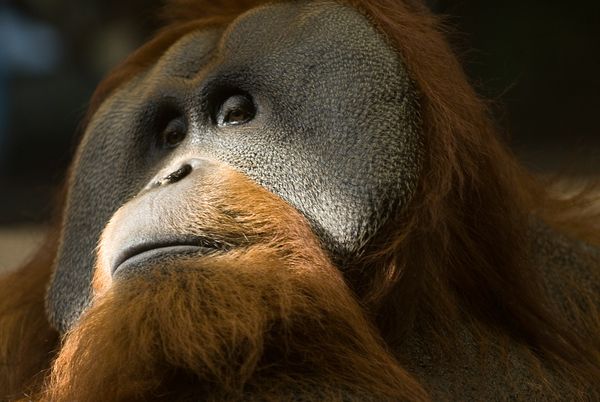
4. Sumatra Orangutan (Pongo abelii)
The orange-haired guardian of the rainforests, the Sumatra orangutan embodies the essence of the wild. With fewer than 14,000 individuals inhabiting the island of Sumatra, their habitats are being razed for palm oil plantations and logging. Known for their intelligence and dexterity, these primates are not just magnificent beings; they symbolize the intricate connections among species that sustain our planet. The loss of the orangutan would be the loss of a chapter in humanity’s own evolutionary tale.
5. Northern White Rhinoceros (Ceratotherium simum cottoni)
Straddling the divide between hope and despair, the Northern white rhinoceros now exists only in a handful of individuals, all under protection and effectively incapable of natural reproduction. Once roamed the plains of Africa, it served as a testament to the grandeur of megafauna. The plight of this regal creature, surrounded by armed guards in Ol Pejeta Conservancy, underscores a profound truth: extinction lurks in the shadows if we do not act.
6. Kakapo (Strigops habroptilus)
With a plump body and a delightful personality, the Kakapo, a nocturnal parrot of New Zealand, is an example of unadulterated uniqueness. Once vibrant across the islands, its population dwindled to a mere 200 individuals. This flightless marvel — a feathered embodiment of whimsy — now finds refuge on predator-free islands, yet the road to recovery is fraught with challenges. Conservation efforts are akin to nurturing a fragile ember, necessitating relentless dedication and ingenuity.
7. Sumatran Tiger (Panthera tigris sumatrae)
The Sumatran tiger, a stark tapestry of stripes, is the last of its kind in Indonesia. With an estimated population of around 400, this awe-inspiring predator faces relentless threats from deforestation and illegal hunting. Each tiger embodies the ferocity of the wilderness — their roars a clarion call for preservation. Safeguarding their existence means safeguarding an entire ecosystem teeming with life.
8. Saola (Pseudoryx nghetinhensis)
Known as the “Asian unicorn,” the Saola eludes both the eyes and hearts of onlookers, residing in the dense Annamite Range of Vietnam and Laos. First discovered in 1992, fewer than 100 remain, making them an enigma shrouded in mystery. As habitat loss and hunting threaten this elusive species, the Saola serves as a phantom of the wilderness, reminding us of the treasures that await our discovery and protection.
9. Pygmy Three-Toed Sloth (Bradypus pygmaeus)
This diminutive delight, found solely on the islet of Escudo de Veraguas in Panama, is one of nature’s gentle oddities. With an estimated population of fewer than 250, the pygmy three-toed sloth hangs precariously onto its existence amid habitat destruction and climate change. It is a living testament to evolution’s whimsy, encapsulating the fragility of life itself, resting on the delicate branches of Caribbean mangroves.
10. Ethiopian Wolf (Canis simensis)
Last but not least, the Ethiopian wolf roams the high-altitude plateaus of Ethiopia, a shadow of its former self with less than 500 individuals remaining. This striking carnivore is not merely a wolf; it is an emblem of the country’s unique wildlife heritage, its howls piercing the silence of the alpine moors. As they face threats from habitat loss and disease, protecting the Ethiopian wolf symbolizes hope for conserving biodiversity in one of the planet’s most vulnerable regions.
As these rare species cling to the edges of existence, their stories remind us of the intricate symphony of nature, where each note plays a crucial role. The loss of any single thread threatens to unravel the entire fabric of biodiversity, urging us to take action. To foster hope, we must engage in the preservation of these remarkable beings — those silent witnesses of time who deserve a chance to whisper their stories for generations to come.






Leave a Comment