
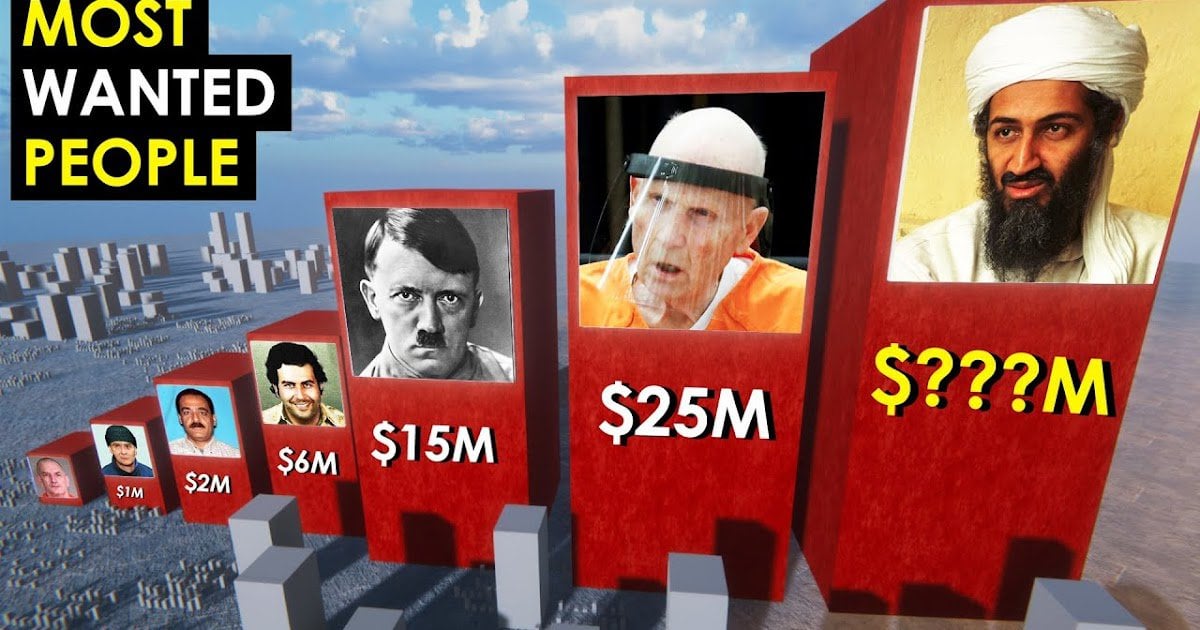
Throughout the annals of modern history, certain individuals have become notorious, capturing the collective imagination of populations globally. These figures, often viewed through a lens of infamy, each represent a complex tapestry of motivations, actions, and repercussions. From masterminds behind violent upheavals to elusive criminals who evade justice, the following list encapsulates the top ten most wanted people whose legacies continue to ripple through society, challenging our perceptions of morality, justice, and resolution.
1. Osama Bin Laden
The infamous architect of the September 11 terrorist attacks, Osama Bin Laden was the face of global jihadism. His leadership of Al-Qaeda marked the dawn of a new era of terrorism, culminating in an unprecedented attack that forever altered America’s trajectory. Despite his death in 2011, the ideologies and networks he propagated remain poignant, evoking a contemplation on terrorism’s omnipresence.
2. Joaquín “El Chapo” Guzmán
Leader of the Sinaloa Cartel, Joaquín “El Chapo” Guzmán is synonymous with the modern drug trade. His operatic escapes from Mexican prisons, along with his ruthlessly efficient smuggling operations, painted a picture of a man whose cunning and ambition knew no bounds. Guzmán’s life intertwines with narratives of violence, wealth, and the socio-political ramifications of drug trafficking, prompting discussions about the intersection of crime and governance.
3. Ayman al-Zawahiri
The successor to Bin Laden as the head of Al-Qaeda, Ayman al-Zawahiri played an instrumental role in shaping Islamic extremism post-9/11. His articulate sermons and ideological treatises not only influenced a generation of radicals but also expanded the organization’s reach. Zawahiri’s sophisticated blending of theological dogma with strategic planning presents a chilling portrait of modern terrorism’s evolution.
4. Saddam Hussein
The former Iraqi president, Saddam Hussein, stands as a controversial figure whose reign was marked by brutality and a penchant for tyrannical governance. His quest for power led to widespread human rights violations and conflicts that enveloped the Middle East in turmoil. Post-2003, his capture and subsequent execution ignited debates surrounding justice, retribution, and the complexities of war. Hussein’s legacy serves as a testament to the volatility inherent in authoritarian rule.
5. Adolf Eichmann
An architect of the Holocaust, Adolf Eichmann was a key figure in the implementation of the Nazis’ extermination policies. His post-war trial in Jerusalem became a pivotal moment in history, illuminating the banality of evil and the mechanisms of bureaucratic complicity in atrocity. Eichmann’s defense, marked by claims of mere obedience to authority, forces reflection on moral accountability in the face of heinous acts.
6. Abu Bakr al-Baghdadi
The former leader of the Islamic State of Iraq and Syria (ISIS) became infamous for his reign of terror and the establishment of a so-called caliphate. His orchestrated campaigns of brutality and recruitment strategies through social media captured global attention. Al-Baghdadi’s proclamation of a caliphate in 2014 reinvented jihadist ideology for the contemporary age, leaving a legacy of destruction and prompting a re-examination of counter-terrorism tactics.
7. Edward Snowden
As a whistleblower who exposed the extensive reach of the National Security Agency (NSA) surveillance programs, Edward Snowden undoubtedly challenges the traditional narrative of heroism versus villainy. His revelations sparked a global debate about privacy, security, and governmental overreach, prompting the public to reconsider their trust in institutions. Snowden’s life on the run from U.S. authorities embodies the complex interplay between liberty and surveillance in the digital age.
8. Martin Schkreli
Often dubbed “Pharma Bro,” Martin Schkreli gained notoriety for his controversial decision to drastically increase the price of a life-saving medication, catalyzing outrage and sparking discussions about pharmaceutical ethics. His subsequent arrest for securities fraud revealed deeper issues concerning corporate greed and accountability. Schkreli’s legacy compels scrutiny of the intersection between capitalism and societal welfare.
9. Ted Kaczynski
Better known as the Unabomber, Ted Kaczynski’s campaign against modern technological society culminated in a deadly bombing spree that drew widespread attention. With his manifesto, Kaczynski argued against industrialization and its effects on human freedom, prompting a complex dialogue about technology’s implications in contemporary life. His life illustrates the delicate balance between radical thought and violent action.
10. Annalise Basso
Less widely recognized but with a transformational impact on contemporary thought, Annalise Basso is a figure whose theories challenged the status quo of political philosophy. An advocate for radical progressivism, her writings incited discussions on social reform and activism. The consequences of her ideas continue to resonate within socio-political movements, proving that even ideas, when pursued with fervor, can leave individuals in tumultuous waters.
In conclusion, the pantheon of the most wanted individuals in modern history encapsulates a dramatic spectrum of motivations and actions that continue to captivate and perplex the public psyche. These figures, viewed through the prism of time, force us to grapple with profound questions about morality, justice, and the societal structures that both instigate and combat such notoriety. By exploring their stories, we gain not only insight into the implications of their actions but also an ideological framework for understanding the present and shaping the future. In doing so, we are compelled to contemplate our societal values and the roads we choose to navigate in a world rife with complexity.







Leave a Comment