
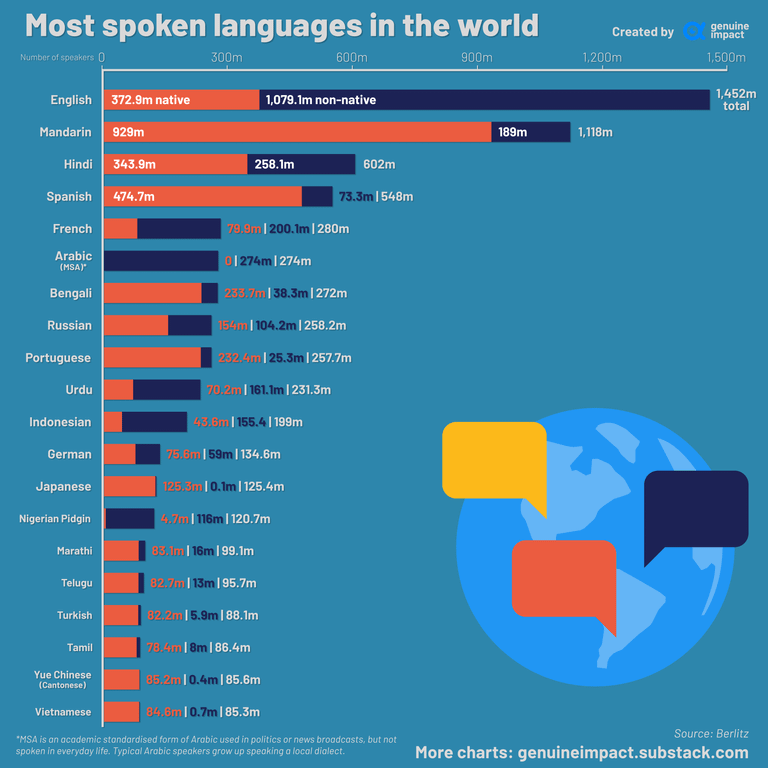
Language is an intricate tapestry woven into the very fabric of human existence. It serves not merely as a tool for communication but as a window into the cultures, histories, and philosophies of societies around the globe. As we approach 2026, the linguistic landscape continues to evolve, reflecting the dynamics of globalization, migration, and technological advancement. Delving into the top ten most spoken languages in the world offers a glimpse into the complexities of human interaction and the reasons behind the enduring fascination with these tongues. Herein, we explore each language, uncovering not only their popularity but the cultural richness and historical significance they encapsulate.
1. English
With an estimated 1.5 billion speakers, English retains its status as a lingua franca, bridging disparate cultures and facilitating globalization. Its dominance can be attributed to the historical influence of the British Empire and the subsequent rise of American economic and cultural hegemony. English’s adaptability, incorporating vocabulary and grammar from a myriad of languages, enhances its appeal. This versatility is also reflected in the variety of dialects, from American to British to Australian, each enriching the language with unique idiomatic expressions and cultural nuances.
2. Mandarin Chinese
Possessing a staggering 1.2 billion speakers, Mandarin Chinese is emblematic of China’s burgeoning global influence. Not only is it the official language of the most populous nation, but it is also integral to a rich tapestry of cultural heritage that includes literature, philosophy, and art. The complexity of its tonal system and characters may seem daunting, yet it simultaneously intrigues language enthusiasts worldwide. Understanding Mandarin opens doors to a profound appreciation of Chinese civilization and its multifaceted history.
3. Hindi
Hindi, with over 600 million speakers, is more than just a means of communication in India; it is a reflection of the country’s vast cultural diversity. As one of the official languages of India, Hindi is intertwined with countless regional languages, dialects, and traditions. The language has evolved over centuries, incorporating Persian, Arabic, and English elements, which reveals India’s historical interactions with various cultures. The vibrancy of Hindi literature, cinema (Bollywood), and music captivates audiences globally, transcending linguistic barriers.
4. Spanish
Spanish, spoken by approximately 550 million individuals across the globe, stands as a testament to the remarkable spread of culture through colonization and migration. From its roots in the Iberian Peninsula, Spanish has flourished in multiple continents, and its melodious cadence has fostered a rich literary tradition. With the rise of Latin America as an economic power, the Spanish language is witnessing a renaissance, attracting learners who are eager to engage with its rich cultural offerings, from literature to music to culinary arts.
5. French
French, with around 300 million speakers, is often heralded as the language of diplomacy and romance. As one of the official languages of multiple international organizations, its significance extends beyond geographic borders. The cultural gravitas of the French language is embedded in its association with haute cuisine, fashion, and fine arts. Furthermore, the Francophonie community promotes the sharing of French heritage worldwide, fostering intercultural dialogue and preserving linguistic diversity.
6. Arabic
Arabic boasts approximately 310 million native speakers, intricately linking the language to the cultural and religious identity of millions across the Middle East and North Africa. Its various dialects reflect the rich tapestry of regional identities. The profound grammar and eloquence of Classical Arabic are celebrated in historic texts, poetry, and the Quran. The modern standard variant serves as a common thread uniting Arabic speakers, even amidst regional linguistic variances, fostering both communication and cultural pride.
7. Bengali
Bengali, with around 230 million speakers, stands out as the primary language of Bangladesh and parts of India. Its vibrant literary heritage is exemplified by Nobel laureate Rabindranath Tagore, whose works continue to inspire and resonate. Bengali’s intrinsic connection to the identity of its speakers infuses the language with a sense of belonging, while the rhythmic nature of its phonetics enchants poets and linguists alike. The cultural significance of Bengali literature, music, and cinema resonates with those who appreciate its depth and diversity.
8. Portuguese
With an impressive 250 million speakers, Portuguese extends far beyond Portugal, encapsulating the diverse cultures of Brazil, Mozambique, and Angola, among others. The language serves as a vessel for rich cultural expressions, from the literary brilliance of Fernando Pessoa to the rhythmic allure of samba and fado. As Brazil emerges as a global player, the Portuguese language garners increasing traction, particularly in economic and cultural contexts. Its unique phonetics and global spread make it an enticing subject for language learners.
9. Russian
Russian, with approximately 260 million speakers, is not only the official language of Russia but a vital means of communication across Eastern Europe and Central Asia. The linguistic intricacies, including its Cyrillic script, provide a gateway to a rich cultural heritage shaped by literature, music, and the arts. Renowned authors such as Tolstoy and Dostoevsky have mastered the nuances of the language, creating timeless works that continue to influence the world of literature and philosophy.
10. Urdu
Urdu rounds out the list with around 170 million speakers, serving as a bridge between South Asian cultures, particularly in Pakistan and India. Its poetic elegance and historical connection to Persian and Arabic lend it a grandeur that captivates lovers of language. The flourishing tradition of Urdu poetry, ghazals, and prose has contributed significantly to the cultural richness of the region. As globalization continues to permeate, Urdu is becoming increasingly prominent on the world stage, capturing interest from language learners and cultural aficionados alike.
In conclusion, the exploration of the top ten most spoken languages in the world reveals much more than sheer numbers; it unveils the stories, histories, and intricate cultural tapestries that these languages encapsulate. Language is an enduring symbol of identity, resilience, and adaptation, serving as a reminder of the diverse narratives that shape our shared human experience. As we embrace 2026 and beyond, understanding these languages continues to foster connection, appreciation, and enlightenment across the global community.






Leave a Comment