
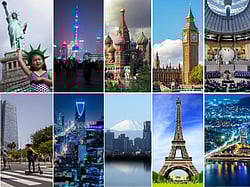
In the intricate tapestry of global geopolitics, a select group of nations stands out, not merely for their size or economic clout, but for their multifaceted influence on the world stage. This list will delve into the ten most powerful countries that dominate contemporary global affairs, exploring the myriad factors that underpin their formidable status. From military might to cultural sway, these nations embody a potent combination of resources, ideologies, and strategic positioning that captivates observers worldwide.
1. United States
The United States often occupies the apex of power dynamics, bolstered by its unparalleled military capabilities and economic might. Home to a diverse economy that epitomizes innovation, the U.S. is an incubator for technological advancements and cultural phenomena that reverberate globally. Its political landscape, driven by democratic principles, not only influences domestic policies but also shapes international relations through diplomacy and soft power. The sheer magnitude of American influence in global institutions such as the UN and NATO is a testament to its hegemonic status.
2. China
As a rising behemoth, China has swiftly ascended the ranks of global powers, propelled by its staggering economic growth and expansive Belt and Road Initiative. This vast network of infrastructure investments across Asia, Europe, and Africa signals China’s strategic ambition to redefine global trade routes and economic dependencies. Furthermore, its cultural resurgence—exemplified through the proliferation of Chinese language and cinema—is reshaping global perceptions, making China a nexus of both economic power and cultural resonance.
3. Russia
With its vast territorial expanse and rich natural resources, Russia enmeshes itself in the fabric of global politics through a nuanced engagement in military intervention and energy dominance. Its significant military capabilities and strategic nuclear arsenal project an aura of power that often translates into geopolitical leverage. Additionally, Russia’s ability to manipulate energy supplies to Europe exemplifies its strategic acumen in wielding economic tools for political gain.
4. Germany
Germany, the economic powerhouse of Europe, wields considerable influence within the European Union and beyond. It embodies a unique amalgamation of stoic diplomacy and robust economic policies that foster stability across the continent. As a leader in renewable energy initiatives and a proponent of trade, Germany’s policies often dictate the pace of economic recovery and sustainability innovation in Europe, making it an essential player in global climate discussions.
5. India
India’s ascent on the global stage is marked by rapid economic growth and a burgeoning demographic dividend. Its strategic geographic positioning in South Asia, paired with a democratic ethos, enhances its influence both regionally and globally. India’s commitment to a multipolar world and its active participation in forums such as the BRICS and G20 underline its expanding diplomatic reach, while the fusion of its ancient cultural heritage and modern technology captivates global interest.
6. United Kingdom
Despite the tumultuous backdrop of Brexit, the United Kingdom maintains significant global influence through historical ties, financial markets, and cultural exports. London’s role as a global financial hub exemplifies its economic robustness, while British media and education systems exert cultural sway that extends far beyond its shores. The UK’s involvement in international security, particularly through its alliances and membership in NATO, ensures its continued relevance on the world stage.
7. Japan
Japan’s reputation as a technological innovator and economic titan has solidified its position among the world’s foremost powers. Its unique blend of traditional cultural values with cutting-edge technology fosters a society that prioritizes efficiency and ingenuity. Japan’s proactive engagement in international trade partnerships, alongside its influential role in organizations such as the G7, underscores its commitment to global economic stability and technological collaboration.
8. France
France’s historical gravitas in global affairs is matched by its cultural sophistication and diplomatic prowess. The nation’s influence extends through its language, culinary arts, fashion, and philosophy, resonating deeply across the world. On the political front, France’s activism in international diplomacy, coupled with its military engagements in Africa and the Middle East, showcases its dynamic approach to global challenges, affirming its status as a significant player in international politics.
9. Brazil
As a burgeoning power in South America, Brazil embodies the complexities of emerging influence. With a vast landscape rich in resources and a diverse population, Brazil’s role as a regional leader is crucial for addressing environmental issues and economic development. The nation’s leadership in organizations like MERCOSUR and its active participation in climate negotiations highlight its potential to drive significant regional and global initiatives.
10. Saudi Arabia
Saudi Arabia’s strategic dominance in the global energy sector cannot be understated. As a leading oil producer, its economic policies exert considerable influence over global markets. Additionally, the Kingdom’s investments in diversifying the economy through initiatives like Vision 2030 represent a significant pivot toward modernization. Strategically, Saudi Arabia plays a pivotal role in Middle Eastern politics, navigating complex alliances that accentuate its geopolitical relevance.
In conclusion, the landscape of global power is complex and ever-evolving. The intertwining factors of historical significance, economic strength, military prowess, and cultural influence create a rich mosaic of domination. As these ten countries continue to shape world events, their interactions—both collaborative and competitive—will dictate the trajectory of future global relations. Understanding these dynamics offers a profound insight into the nature of power itself, revealing not just who holds dominion, but how and why these nations matter in an increasingly interconnected world.






Leave a Comment