
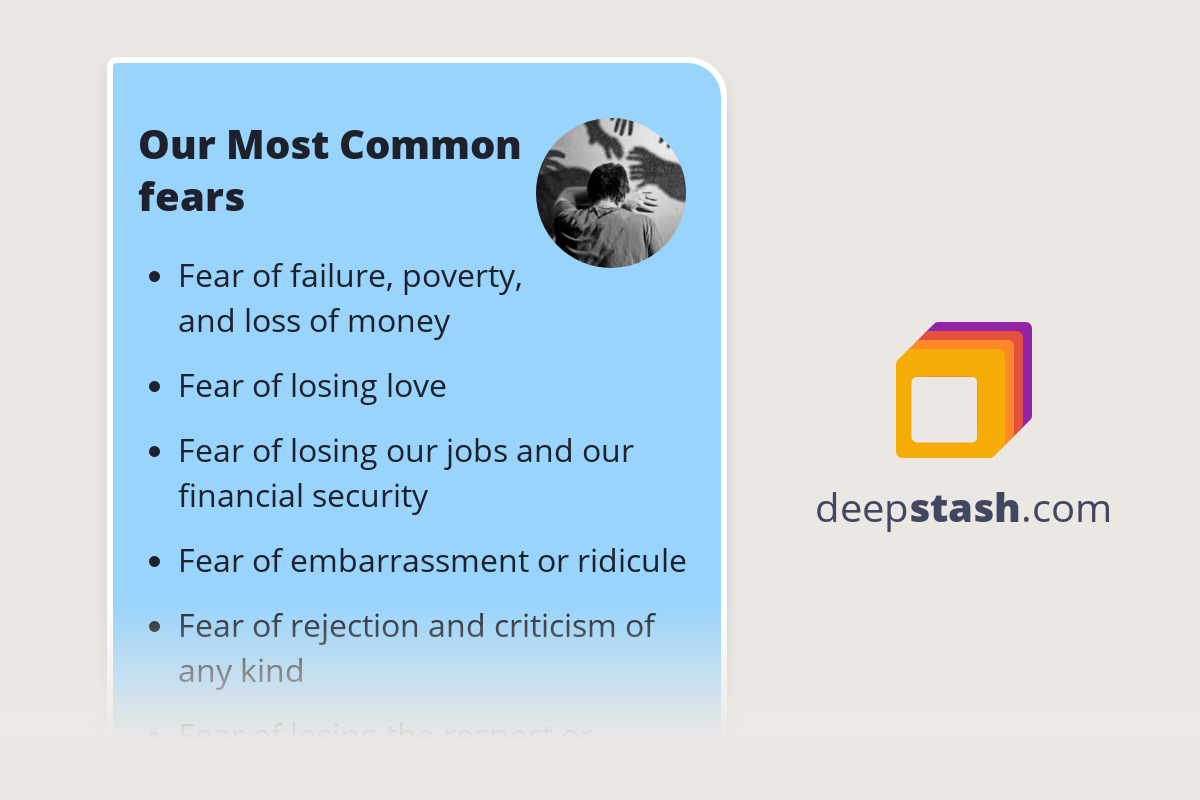
The human experience is a tapestry woven with a multitude of emotions, colors, and feelings. At its core lies a complex phenomenon: fear. It is a primal instinct that signals danger, but it also serves as a crucible for personal growth. Understanding the most common fears that plague humanity unravels the threads of our vulnerabilities and illuminates the universal nature of our psyche. Herein lies an exploration of the top 10 most common fears, revealing not just the fears themselves, but the deeper reflections they invite.
1. **Fear of Heights (Acrophobia)**
Acrophobia, or the fear of heights, is a chronic condition that affects many individuals. This fear often manifests in physical symptoms such as dizziness and panic attacks when confronted with situations like standing on a high-rise building or looking over a cliff. The profound connection between acrophobia and our innate survival instincts is hard to ignore; it echoes a subconscious recognition of our vulnerability. High places present a risk of falling, a threat that elicits a visceral response, indicating how the mind grapples with the potential for peril.
2. **Fear of Public Speaking (Glossophobia)**
Glossophobia is the dread of speaking in public, and it ranks as one of the most prevalent fears in society. Rooted in social anxiety, this fear often emerges from the desire to avoid judgment, embarrassment, or the potential for ridicule. The stage, while exhilarating for some, becomes a battleground for others, evoking feelings of inadequacy. The deeper connotation here reflects our human yearning for acceptance and belonging—a reminder that the spotlight can often feel more isolating than liberating.
3. **Fear of Spiders (Arachnophobia)**
Arachnophobia, the irrational fear of spiders, is entrenched in our evolutionary history. Many cultures imbue spiders with ominous symbolism, leading to a pervasive belief that they are harbingers of danger. The association may stem from their unpredictable movements and the potential for venomous bites, igniting a primal dread that causes one to recoil. Beyond mere discomfort, this fear underscores the ambivalence humans feel towards the natural world—a paradox of curiosity and aversion.
4. **Fear of Enclosed Spaces (Claustrophobia)**
Claustrophobia, the anxiety felt in confined spaces, is another persistent fear. Elevators, crowded rooms, or even tight clothing can trigger overwhelming panic. The essence of claustrophobia speaks to our need for freedom and autonomy. The mere thought of being trapped evokes feelings of helplessness, revealing a deep-seated desire for control over one’s environment. Such fears are not just the product of personal experiences but are often reflective of societal pressures that inhibit personal liberties.
5. **Fear of Death (Thanatophobia)**
Thanatophobia, the fear of one’s own mortality, transcends individual experiences to tap into a collective existential dread. The awareness of death conjures profound reflections on the fleeting nature of life, driving people to grapple with their legacy and unfulfilled dreams. This existential angst can lead individuals to question the meaning of their existence. At its core, this fear is a testament to the human spirit’s struggle for significance in an ephemeral world.
6. **Fear of Failure (Atelophobia)**
Atelophobia, the paralyzing fear of not being good enough or failing, resonates deeply within a society that often equates success with self-worth. This fear can lead to procrastination, self-sabotage, or even avoidance of important opportunities. It serves as a poignant reminder of the cultural rat race and the pressures to conform to defined standards of success. The desperation to avoid failure often overshadows the potential gains, thus stymieing personal and professional growth.
7. **Fear of Rejection (Social Anxiety)**
Social anxiety, which includes a pervasive fear of rejection or disapproval, can inhibit individuals from forming meaningful connections. This fear emerges from the intrinsic need for validation and acceptance—echoing the desire for belonging in an often judgmental society. The specter of rejection looms large, illustrating the stark dichotomy between vulnerability and the human craving for companionship. As individuals navigate social landscapes fraught with potential criticism, this fear underscores the perils of interpersonal relationships.
8. **Fear of the Unknown (Xenophobia)**
Xenophobia, or the fear of the unfamiliar, extends beyond cultural or social boundaries and delves into an existential fear of change and unpredictability. The unknown can be intimidating; the lack of control and predictability fuels anxiety. This fear often leads to resistance to new experiences, shrouding life in comfort zones. The underlying tenacity of xenophobia compels reflection on how humanity responds to change—both personally and collectively—prompting a discussion on the nature of progress.
9. **Fear of Losing Control (Paralysis Analysis)**
The fear of losing control can manifest in various ways, from obsessive behaviors to anxiety over everyday situations. This fear often stems from underlying insecurities about one’s capabilities and decisions. In a world that frequently demands perfection, the loss of control can feel like a catastrophic failure. It ignites a constant battle between the desire for stability and the inevitable chaos of life, highlighting the delicate balance between embracing spontaneity and structuring one’s existence.
10. **Fear of Inadequacy (Inferiority Complex)**
The fear of inadequacy, often linked to an inferiority complex, can be debilitating. It hinders individuals from pursuing aspirations, convincing them they lack the skills or qualities needed to succeed. This fear not only speaks to personal insecurities but also echoes larger societal narratives that perpetuate comparisons and unrealistic expectations. Confronting this fear encourages a reevaluation of self-worth, urging individuals to focus on personal growth and self-acceptance.
In conclusion, fear is a universal sentiment that can both hinder and propel human existence. From the tangible fears of heights and enclosed spaces to the more abstract anxieties surrounding social dynamics and personal worth, these common fears reflect deeper psychological and cultural truths. By acknowledging these fears, individuals are afforded the opportunity to confront their vulnerabilities and embrace the complexities of the human experience. Fear, in its many forms, remains a powerful teacher, guiding individuals on their paths toward self-discovery and resilience.







Leave a Comment