
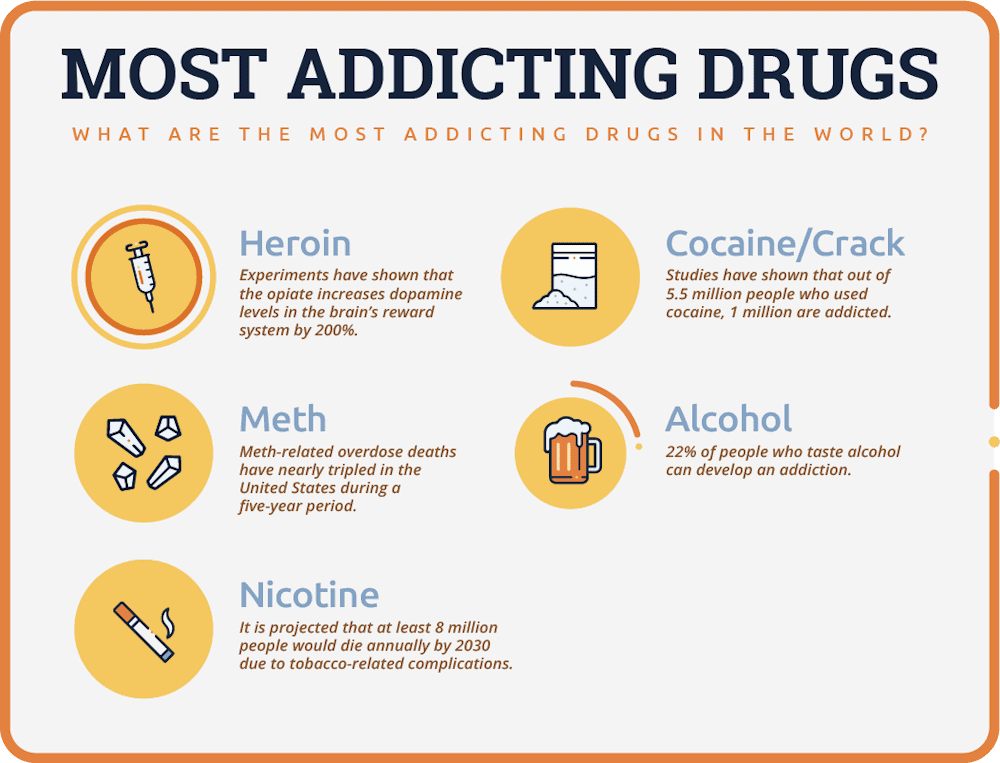
Understanding addiction is a multifaceted endeavor, encompassing various factors such as physiological impacts, psychological dependencies, and social dynamics. Among the plethora of substances that compel individuals towards continued use, certain drugs are recognized by experts for their remarkably addictive properties. This piece aims to elucidate the top ten most addictive drugs, delving into their mechanisms of action, societal implications, and the spectacular grip they exert on users.
1. Heroin
Heroin, an opiate derived from morphine, is notorious for its euphoric effects and rapid onset of dependency. Users often report an intense sense of pleasure, accompanied by a feeling of warmth and contentment. This drug binds aggressively to opioid receptors in the brain, leading to profound alterations in the brain’s chemistry that favor further use. The speed at which a heroin high can be achieved significantly contributes to its addictive nature, making it one of the most perilous substances available.
2. Cocaine
Cocaine is a powerful stimulant that affects neurotransmitter levels, particularly dopamine. The short-lived exhilaration produced by cocaine is followed by an equally intense comedown, which propels users towards repeated administration. Its socio-cultural prevalence and association with various lifestyles add layers to its allure, while the risk of psychological dependence cannot be overstated. Chronic use often leads to severe long-term repercussions for mental health and vitality.
3. Nicotine
Nicotine, the primary psychoactive compound in tobacco, possesses a surprising potency regarding addiction. While many might associate nicotine with smoking, the substance can also be found in other forms, like vaping products and smokeless tobacco. The immediate gratification it provides through enhanced alertness and potential weight control, combined with its accessibility, renders it an insidious gateway drug. Withdrawal symptoms can be both physically and emotionally taxing, prolonging addiction far beyond initial use.
4. Methamphetamine
Methamphetamine, commonly referred to as meth, is a stimulant that significantly enhances activity and decreases appetite. The drug’s structural similarity to amphetamine allows it to cross into the brain rapidly, resulting in a prolonged high that can last for hours. Users often succumb to the effects of increased energy and confidence, but the toll on mental and physical health can be catastrophic. Its highly addictive nature is exacerbated by the damaging alterations it inflicts on brain structure and function, fostering an unrelenting cycle of use.
5. Alcohol
Alcohol is more than just a socially accepted substance; it is also one of the most widely abused. While legal, its potential for addiction is both profound and prevalent. The depressant effects of alcohol can initially produce a sense of relaxation and euphoria, leading individuals into a cycle of repeated use. The sociocultural implications surrounding drinking often mask its addictive traits, but withdrawal can be severe and even life-threatening. For many, the struggle to attain moderation remains an elusive pursuit.
6. Prescription Opioids
Prescription opioids, including medications such as oxycodone, hydrocodone, and fentanyl, are frequently prescribed for pain management. However, the potential for addiction is staggering. As these drugs interact with the brain’s reward system, users may quickly progress from legitimate medical use to dependency. The accessibility of these medications, often viewed as safe, compounds the crisis of addiction linked to opioids, culminating in tragic outcomes across communities.
7. Benzodiazepines
Benzodiazepines, often prescribed for anxiety and insomnia, include medications like Xanax and Valium. Their effect on the central nervous system induces relaxation and drowsiness, which can be appealing for individuals seeking relief from distress. However, continued use can lead to tolerance and heightened dependence, trapping users in a vicious cycle. The danger of benzodiazepines often lies in their silent progression from therapeutic use to addiction, often complicated by the presence of additional substances.
8. Cannabis
While cannabis has gained mainstream acceptance and is even legal in many areas, its potential for addiction should not be underestimated. Cannabis can produce a pleasurable state of relaxation and heightened sensory perception, which may encourage repetitious use. Regular consumers can develop issues related to withdrawal and dependence, particularly on high-potency strains. As its legality expands, discussions around cannabis addiction remain nuanced, particularly concerning young and developing brains.
9. LSD (Lysergic Acid Diethylamide)
Despite being less addictive in a conventional sense, LSD deserves mention due to its psychological grip. Users often seek the profound dissociation and altered consciousness it provides. However, the risk of psychological dependence and adverse effects such as flashbacks or psychosis can coerce individuals into repeated use. The quest for the ultimate ‘trip’ becomes an obsession for some, diverging into darker paths of addiction.
10. MDMA (Ecstasy)
MDMA, known for its popularity in party settings, is both a stimulant and hallucinogen that elicits feelings of euphoria and connection. However, the common post-use feelings of depression and anxiety can lead individuals to seek repeated doses. Its effects on neurotransmitters like serotonin complicate the addiction landscape, as users may find themselves ensnared in cycles of use to recapture fleeting joy.
In summation, the prevalence and dangers of addiction to these substances illustrate a critical public health issue. Each of these drugs operates in its unique manner, pushing individuals into the clutches of dependency. Awareness, education, and open dialogues surrounding addiction remain imperative to combat these deadly substances effectively.








Leave a Comment