
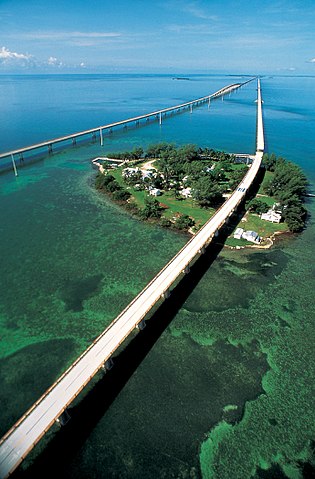
The United States boasts an intricate tapestry of bridges, each a marvel of engineering that spans vast distances and unites diverse landscapes. With each structure, there’s a story of innovation, resilience, and the human spirit’s desire to connect. While many might appreciate bridges merely as conduits for travel, there exists a profound fascination with their stature, purpose, and the ingenuity behind their construction. This article delineates the top ten longest bridges in the USA, unveiling the extraordinary feats accomplished in bridging not just space but also communities and cultures.
1. **Lake Pontchartrain Causeway**
Stretching an impressive 23.83 miles (38.35 kilometers) across the placid waters of Lake Pontchartrain in Louisiana, this bridge is often celebrated as one of the longest continuous bridges over water in the world. Completed in 1956, it’s comprised of two parallel spans connected by a series of spans and piers, creating a stunning visual as it seems to merge with the vast sky. The bridge not only facilitates local commuting but also serves as a lifeline, linking New Orleans to the north of the lake, illustrating the delicate balance between nature and human endeavor.
2. **Manchac Swamp Bridge**
Located along Interstate 55 in Louisiana, the Manchac Swamp Bridge extends 22.8 miles (36.6 kilometers) through a stunningly haunting landscape of marsh and cypress trees. Completed in 1979, this bridge navigates the largely uninhabitable swampy terrain, thereby offering a vital transportation route and showcasing a unique ecosystem. The bridge embodies a harmonious relationship with its surroundings, while at the same time, its elevated structure provides an unparalleled bird’s-eye view of the enchanting swamp.
3. **Atchafalaya Basin Bridge**
This remarkable structure, sometimes referred to as the Gross Tete Bridge, spans 18.2 miles (29.3 kilometers) and treks across the Atchafalaya Basin in Louisiana, a region notorious for its biodiversity. Constructed in 1973, the Atchafalaya Basin Bridge showcases the delicate interplay between ecological preservation and infrastructural development. Travelers traverse this bridge while marveling at the lush scenery below, a constant reminder of the importance of both transit and nature’s intricate web.
4. **Chesapeake Bay Bridge**
Touted as a testament to mid-20th-century engineering, the Chesapeake Bay Bridge spans 4.3 miles (6.9 kilometers) over the picturesque Chesapeake Bay in Maryland. Inaugurated in 1952, this dual span bridge connects Maryland’s Eastern and Western Shores. Known colloquially as the “Bay Bridge,” it is infamous for its breathtaking views, particularly at sunset. The structure has become a symbol of the region, reflecting the human drive to conquer the formidable waters while offering residents and visitors a scenic passage.
5. **Mackinac Bridge**
The Mackinac Bridge, with a length of 26,372 feet (about 5.16 miles or 8.38 kilometers), connects Michigan’s Upper and Lower Peninsulas. Opened in 1957, it stands as a monumental symbol of connection between two landscapes divided by the expansive Straits of Mackinac. Known for its towering suspension towers that rise majestically above, the Mackinac Bridge has not only facilitated transportation but has also ignited a sense of regional pride, underscoring the importance of unity across geographically distinct areas.
6. **San Francisco-Oakland Bay Bridge**
With an extensive total length of 7.2 miles (11.5 kilometers), the San Francisco-Oakland Bay Bridge is an engineering masterpiece that connects the cities of San Francisco and Oakland. Opened in 1936, this bridge features a combination of multiple spans and is historically significant as it embodies the spirit of American ingenuity during the Great Depression. The Bay Bridge is more than just a transportation route; it is a canvas painted by the fog and sun of California, evoking admiration from both residents and tourists alike.
7. **George C. Page Bridge**
Located in Florida, the George C. Page Bridge is a remarkable feat of engineering that stretches 2.8 miles (4.5 kilometers) across the winding St. Johns River. This bridge, completed in 1986, serves as a vital artery for commuters, providing a vital connection to the surrounding areas. The Ponce Inlet area, which it traverses, boasts an abundant marine ecosystem, serving as a reminder of the natural beauty that accompanies such constructed marvels.
8. **Always the Grand River Bridge**
Spanning 6.1 miles (9.8 kilometers) over the Grand River in Michigan, this bridge represents a pivotal link between the greater Grand Rapids area and the neighboring regions. Opened in 1996, it integrates seamlessly into its environment, allowing for both vehicular travel and a connection to local communities. Its expansive views and proximity to natural reserves serve as a reminder of the importance of infrastructure that respects its surroundings.
9. **Jeffrey E. McKinney Bridge**
The Jeffrey E. McKinney Bridge, a key part of the Denver metropolitan area, extends approximately 5.2 miles (8.4 kilometers) over the South Platte River. Established in 2002, this bridge not only serves vehicle and pedestrian traffic but also incorporates lush green spaces that encourage ecological preservation. The bridge stands as a model of modern engineering that aligns urban development with environmental sustainability, portraying a narrative of coexistence.
10. **Tower Bridge, Sacramento**
Although shorter than many other notable bridges on this list, Sacramento’s Tower Bridge is iconic thanks to its unique design and historical significance. At 732 feet (223 meters) long, it represents a bridge that seamlessly integrates aesthetics with functionality. Completed in 1935, it allows vessels to pass through the river below, embodying the spirit of adaptability. It captures the hearts of locals and tourists alike, serving as a tangible piece of Sacramento’s heritage.
In summation, the fascination with bridges in the USA extends beyond mere practicalities. These colossal structures illustrate the convergence of innovation, geography, and artistry. They invite us to ponder the histories and stories woven into their fabric while simultaneously reflecting our desires to traverse landscapes and connect communities. As paths that unite, they embody the very essence of human experience across the vast and varied American terrain.







Leave a Comment