
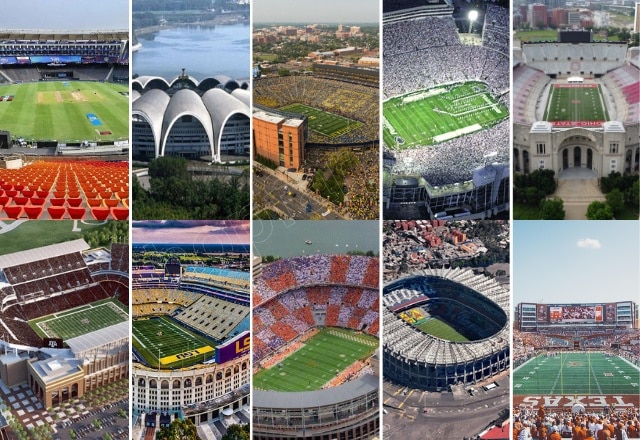
Sports and entertainment have an unparalleled ability to unite individuals from diverse backgrounds, and at the heart of this phenomenon lie some of the largest stadiums in the world. More than mere structures, these colossal arenas serve as modern-day coliseums, reverberating with the energy of passionate spectators and hosting events of historic significance. The sheer scale of these stadiums often leaves one in awe, sparking curiosity not only about their architectural prowess but also about their capacity to evoke intense emotions. Below, we explore the top ten largest stadiums globally, delving into their history, unique features, and the meaning they hold for countless enthusiasts.
1. Rungrado 1st of May Stadium
Address: 1-3, Rungra Island, Pyongyang, North Korea
Capacity: 114,000
The Rungrado 1st of May Stadium in Pyongyang is a behemoth of concrete and ambition. Opened in 1989, it was designed to host a myriad of sports events and boasts an aesthetic inspired by a magnolia blossom. The stadium is famed for its distinctive scalloped roof and is not only the largest in capacity but also serves as the venue for the annual Arirang Festival, a breathtaking celebration of North Korean culture and athleticism. The stadium represents not just sporting excellence but a manifestation of national pride and the desire for global recognition.
2. Melbourne Cricket Ground (MCG)
Address: Yarra Park, Melbourne, Australia
Capacity: 100,024
The Melbourne Cricket Ground, affectionately known as the MCG, is a sacred site for cricket aficionados and a multi-purpose venue that transcends sports. Established in 1853, it holds the title of the oldest cricket ground in Australia. Its sprawling expanse has hosted iconic events such as the Melbourne Cup and the 1956 Olympics. The electrifying atmosphere, especially during Test matches, is palpable, turning passionate fans into an indistinguishable sea of colors and sounds, each representing loyalty to their teams.
3. Camp Nou
Address: Carrer d’Aristides Maillol, 12, 08028 Barcelona, Spain
Capacity: 99,354
Home to the illustrious FC Barcelona, Camp Nou captivates visitors not only with its capacity but its historical significance in football. Opened in 1957, this stadium has witnessed some of the greatest moments in football history. The unique architecture complements the passionate Catalan identity, making it more than just a sports venue; it stands as a cultural emblem. Each match day, the fervor of 99,000 fans chanting in unison creates an unforgettable ambiance, showcasing the symbiotic relationship between sport and cultural identity.
4. FNB Stadium
Address: Nasrec, Johannesburg, South Africa
Capacity: 94,736
FNB Stadium, also known as Soccer City, is a landmark of South African sports where history intertwines with modern architecture. Opened in 2009, it was crafted to resemble the traditional African pot, symbolizing cultural unity. It was the primary stadium for the 2010 FIFA World Cup, showcasing South Africa on the global stage. The palpable excitement during matches and events echo the country’s transformative journey, reaffirming the power of sports as a catalyst for social cohesion and national pride.
5. Wembley Stadium
Address: Wembley, London, England
Capacity: 90,000
Wembley Stadium epitomizes the essence of English football, serving as a national treasure since its reopening in 2007. With its iconic arch, it stands as a beacon of sporting excellence and historical significance, having hosted countless FA Cup Finals and international matches. The stadium’s remarkable design facilitates an unparalleled viewing experience, ensuring that every spectator feels like part of the action. Wembley is not just a venue; it’s a pilgrimage site for football fans, embodying centuries of passion and tradition.
6. Gelora Bung Karno Stadium
Address: Gelora, Senayan, Jakarta, Indonesia
Capacity: 88,306
The Gelora Bung Karno Stadium, often abbreviated as GBK, is the epicenter of Indonesian sports and culture. Opened in 1962 for the Asian Games, it has since been the venue for numerous significant events, including the 1997 Southeast Asian Games. Its distinct architecture, characterized by a circular design, reflects the nation’s rich heritage and aspirations. The stadium resonates with fervent cheers during events, creating an electrifying environment that unites people from all walks of life in a shared celebration of athleticism and national pride.
7. Estadio Azteca
Address: Av. Acueducto, S/N, Ciudad de México, Mexico
Capacity: 87,523
Estadio Azteca is monumental, steeped in rich history and cultural significance. Opened in 1966, it has hosted two FIFA World Cups, making it the only stadium to achieve such a feat. The arena is renowned for its dramatic atmosphere, where the roar of Mexican fans reverberates as they cheer for their beloved national team. The stadium is not just a place where games are played; it serves as a haven for shared experiences, showcasing the unifying power of sport across generations.
8. Bukit Jalil National Stadium
Address: Kompleks Sukan Negara, 57000 Kuala Lumpur, Malaysia
Capacity: 87,411
The Bukit Jalil National Stadium stands as a testament to Malaysia’s sporting ambitions. Inaugurated in 1998 for the Commonwealth Games, it is now a staple in hosting various international sporting events. Architecturally striking, its design mirrors the aspirations of the country. The stadium pulsates with energy during major events and reflects the camaraderie and nationalistic fervor of its citizens, turning moments of sporting glory into shared national memories.
9. Salt Lake Stadium
Address: Salt Lake, Kolkata, India
Capacity: 85,000
Salt Lake Stadium holds a prominent place in the hearts of Indian football fans, being one of the largest stadiums in the country. Established in 1984, it became a sanctuary for football enthusiasts and is renowned for its fervent crowds. It has hosted national and international matches, fostering a deep-seated love for the sport in the region. The stadium embodies the spirit of Kolkata, where traditions interplay with modernity, creating an exciting atmosphere filled with excitement and passion.
10. Wembley Stadium (Restoration)
Address: Wembley, HA9 0WS London, England
Capacity: 90,000
The original Wembley Stadium, an iconic symbol of English football, gave way to its modern counterpart. Reopened in 2007, it retains its reputation as a temple for football greatness, combining historical echoes with contemporary facilities. The atmosphere of the place draws fans into an immersive experience where dreams are pursued on the pitch. Each event becomes a grand performance, where the narratives of triumph and despair weave through the great stories of sport.
In summary, the allure of the largest stadiums in the world transcends mere figures and statistics. These grand edifices are imbued with the spirit of competition and collective memory, serving as the backdrop against which history unfolds. They not only signify impressive architectural feats but also embody the dreams and aspirations of nations, cultures, and communities. Whether it’s the deafening roar of excited fans or the memories etched into their very foundations, these stadiums continue to capture the imagination of millions, making them more than just places to watch sports; they are arenas where the human spirit thrives.







Leave a Comment