
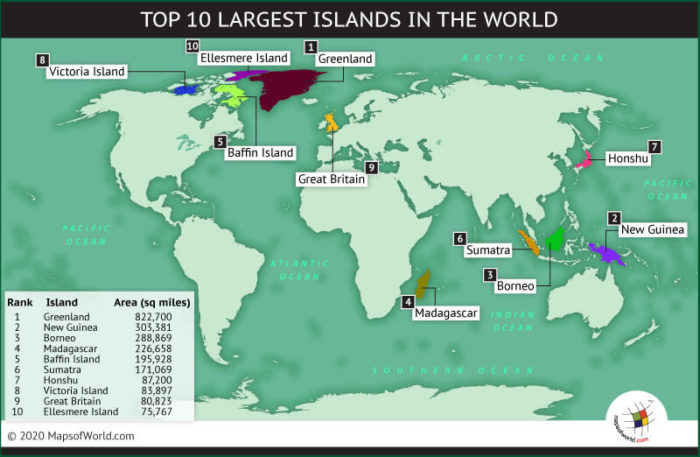
When contemplating the sheer expanse of our planet, one cannot overlook the staggering majesty of its islands. These landmasses, often surrounded by vast oceans, harbor unique ecosystems, rich cultures, and breathtaking vistas. The largest islands serve not only as geographical markers but also as living tapestries woven with history, nature, and the human experience. Let’s embark on a fascinating exploration of the ten largest islands in the world, inviting you to shift your perspective on these monumental landforms.
1. Greenland
Greenland reigns supreme as the largest island in the world, encompassing approximately 2,166,086 square kilometers. Predominantly covered by an ice sheet, the island presents a stark and ethereal landscape punctuated by jagged mountains and vast glaciers. Its sparse population, mainly concentrated in coastal regions, reflects the challenging climatic conditions. Greenland’s indigenous Inuit culture is rich and varied, showcasing a deep connection to the land through traditional practices and modern adaptations. The island’s dramatic fjords and icebergs offer a spectacular visual experience, drawing adventurers and researchers alike.
2. New Guinea
New Guinea, the second-largest island, covers around 785,753 square kilometers and boasts an astounding biodiversity. This tropical island is divided between two nations: Papua New Guinea and Indonesia. Culturally, it is a mosaic with over 800 distinct languages, making it one of the most linguistically diverse places on Earth. Rainforests blanket the landscape, home to exotic flora and fauna, including the resplendent bird of paradise. The island’s rugged terrain—a combination of mountainous regions, valleys, and coastal areas—offers myriad opportunities for exploration and study.
3. Borneo
Spanning 743,330 square kilometers, Borneo is the third-largest island and is shared by Indonesia, Malaysia, and Brunei. This lush, tropical haven is recognized for its vibrant ecosystems, including some of the oldest rainforests in the world. Borneo is a sanctuary for endangered species such as orangutans, pygmy elephants, and proboscis monkeys. The island is also rich in cultural diversity, housing various indigenous tribes, each with its own unique traditions and history. The intricate rivers that snake through the island provide a glimpse into its ecological richness and facilitate the livelihoods of local communities.
4. Madagascar
Madagascar, an island nation covering 587,041 square kilometers, is a realm unto itself. Isolated from the African continent for millions of years, it has evolved a plethora of endemic species, including lemurs and the unique baobab trees. The island’s diverse ecosystems range from tropical rainforests to arid deserts, each teeming with life. Culturally, Madagascar is an intriguing blend of influences from Africa, Asia, and Europe, evident in its music, art, and culinary traditions. Visiting Madagascar offers an unparalleled opportunity to explore one of the planet’s most unique biological and cultural landscapes.
5. Baffin Island
With an area of 507,451 square kilometers, Baffin Island is the largest island in Canada and the fifth-largest in the world. Dominated by a cool Arctic environment, the island is known for its breathtaking landscapes, including rugged mountains and expansive tundra. Baffin Island is home to various Inuit communities who have adapted to the Arctic climate, preserving a rich heritage and honing survival skills passed down through generations. The island also serves as a vital habitat for polar bears, seals, and migratory birds, providing insight into the complexities of Arctic ecosystems.
6. Sumatra
Sumatra, Indonesia’s second-largest island, stretches over 473,481 square kilometers and is a treasure trove of natural wonders. Its diverse landscapes include volcanic mountains, dense rainforests, and pristine beaches. The island is a biodiversity hotspot, harboring unique species such as the Sumatran tiger and orangutan, and is critically important for conservation efforts. Culturally, Sumatra is home to various ethnic groups, each contributing to the island’s rich tapestry of traditions and folklore. Exploring Sumatra is akin to traversing a living history book, with every corner revealing new stories and experiences.
7. Honshu
Honshu, the largest island of Japan, covers 227,962 square kilometers and is the heart of this archipelago. This island is a blend of ancient tradition and modern marvels, featuring bustling cities like Tokyo and historical sites such as Kyoto. Honshu’s topography is equally captivating, with majestic mountains, serene lakes, and vibrant coastal regions. The island is home to a myriad of cultural practices and festivals that reflect Japan’s unique heritage. Exploring Honshu offers visitors a chance to experience the juxtaposition of nature and urban life within a single, compelling environment.
8. Great Britain
Great Britain, encompassing 209,331 square kilometers, is a politically and culturally significant island that consists of England, Scotland, and Wales. The island’s landscape is a tapestry of rolling hills, rugged highlands, and scenic coastlines, punctuated by historic castle ruins and charming villages. Great Britain is renowned for its contributions to literature, science, and the arts. The island presents a complex interplay of cultures, with its diverse population and rich history influencing everything from cuisine to language. A journey through Great Britain is an exploration of rich narratives and enduring legacies.
9. Victoria Island
At 217,291 square kilometers, Victoria Island is the second-largest island in Canada and a prominent feature in the Arctic Archipelago. Its remote location and harsh climate have forged a unique ecosystem that supports polar bears, musk oxen, and a few hardy communities primarily consisting of Inuit people. Victoria Island is not only a critical component of Canada’s geography but also a cultural hub where indigenous traditions and sustainable practices thrive despite the challenges of modernity. The icy landscapes speak to the resilience of life amid adversity.
10. Sao Miguel
Completing our list is Sao Miguel, the largest island in Portugal’s Azores archipelago, covering approximately 746 square kilometers. Ruggedly beautiful, Sao Miguel is replete with stunning landscapes, from volcanic craters to lush, green hillsides adorned with hydrangeas. The island is known for its geothermal activity, evident in hot springs and bubbling mud pots, making it a natural spa paradise. The warmth of its people and the richness of its culinary offerings, such as traditional cozido, enhance the island’s allure. A visit to Sao Miguel is a journey into a verdant paradise where nature and culture converge harmoniously.
In conclusion, these largest islands of the world not only claim immense sizes but also unfold rich narratives of nature, culture, and history. Each island offers a unique lens through which to explore our planet’s stunning diversity. From the glacial expanses of Greenland to the vibrant ecosystems of Madagascar, they beckon adventurers, scholars, and curious souls to delve deeper into their enigmatic beauty. As we traverse these landmasses, we are reminded of the interconnectedness of our world, fostering a sense of stewardship for the remarkable habitats and communities that thrive upon them.











Leave a Comment