
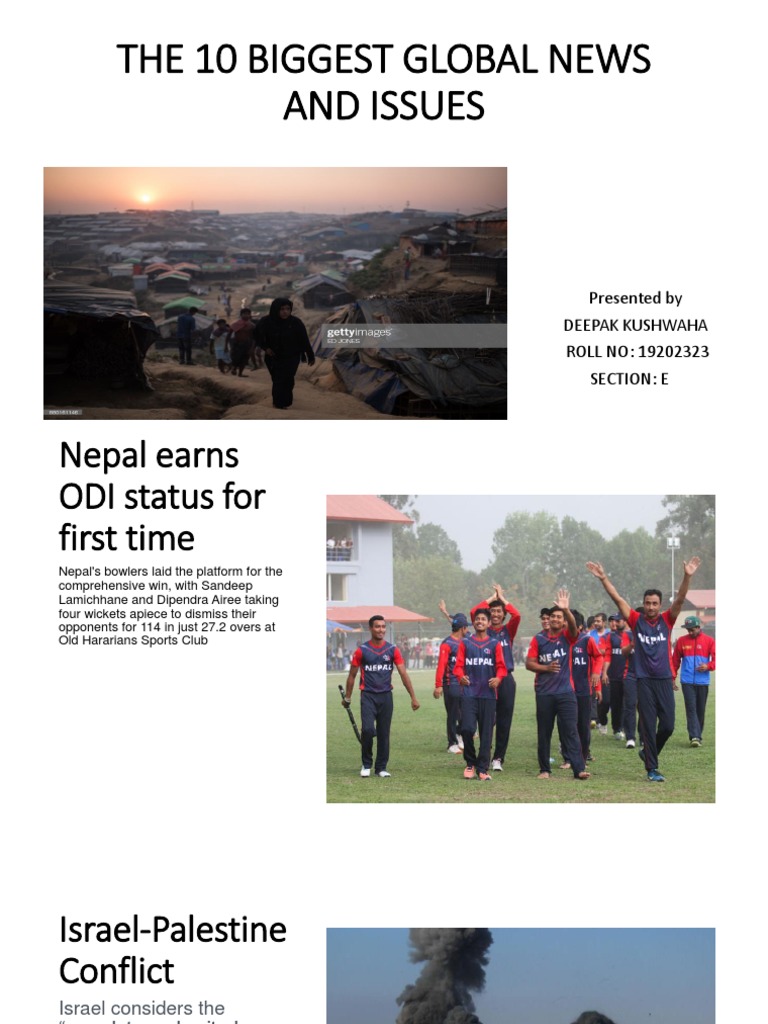
In an era of intricate interdependence, the world is akin to a grand tapestry—each thread representing a global issue that, while seemingly isolated, intricately intertwines to create a complex design affecting us all. The following discourse delves into ten pressing global issues that resonate universally, casting long shadows over the socio-economic landscape and challenging the fabric of human existence. Each issue is not merely a statistic; rather, it is a narrative of resilience and urgency, calling for collective action.
1. Climate Change: The Overheated Earth
At the pinnacle of global concerns lies climate change, a relentless specter haunting the planet. This phenomenon, often likened to a slow, simmering kettle, manifests in rising sea levels, extreme weather events, and biodiversity loss. As carbon footprints expand, ecological balance teeters on the brink. The urgency to pivot towards sustainable energy sources mirrors the ancient adage: “a stitch in time saves nine,” underscoring that proactive measures today may avert catastrophic consequences in the future.
2. Global Health Crises: A Pandemic’s Grim Repercussions
Health crises, epitomized by the recent pandemics, illustrate how a microscopic virus can ripple through the fabric of societies, unraveling economies and fracturing communities. The interconnectedness of global health demonstrates an intrinsic reality: as one nation suffers, the ramifications are felt worldwide. Vaccination disparities and healthcare inequities manifest as societal fractures, necessitating a robust global health infrastructure to fend off future calamities akin to a lighthouse safeguarding ships from tumultuous seas.
3. Poverty: The Silent Thief of Potential
Poverty, often described as a silent thief, stealthily steals the dreams and aspirations of millions. It is a pervasive shadow that looms over billions, suffocating potential and stymying opportunities for advancement. With over 700 million people subsisting on less than $1.90 a day, the implications of poverty extend beyond mere economic statistics; they shape societal paradigms and perpetuate cycles of disenfranchisement. Alleviating poverty is not merely an act of charity but a moral imperative that underscores our shared humanity.
4. Inequality: The Chasm between Haves and Have-Nots
The widening gulf of inequality, another potent issue, is akin to a rift in the ground creating two distinct worlds. The contrast between affluence and destitution exacerbates societal tensions, leading to unrest and disillusionment. Whether in wealth, gender, or race, the disparities challenge the foundational principles of justice and equity. Addressing inequality necessitates structural reforms and a commitment to fostering inclusive practices that knit societies together rather than tear them apart.
5. Education: The Key to Empowerment
Education, the bedrock of informed societies, remains a critical global issue. Access to quality education can no longer be deemed a privilege reserved for the elite; it must be recognized as a fundamental human right. The disparity in educational resources creates barriers to advancement, particularly for marginalized communities. Envision education as a key in a lock, unlocking opportunities and potential while illuminating paths previously shrouded in darkness. Investment in education is tantamount to sowing the seeds of a more equitable future.
6. Migration and Refugee Crises: The Humanitarian Exodus
Migrations, often borne from conflict, persecution, and environmental disasters, represent a humanitarian exodus that transcends borders. Refugees embark on perilous journeys, seeking sanctuary and safety, while host nations grapple with the ramifications of their arrival. The narratives of migration—tales of hope and despair—highlight the necessity for compassionate policies that embrace our shared humanity and foster understanding amid diversity. Cultivating a culture of acceptance transforms host communities into rich tapestries woven from varied experiences.
7. Political Instability: The Erosion of Trust
Political instability, akin to a brittle bridge, jeopardizes the stability of nations and fosters an atmosphere of uncertainty. Unrest, fueled by disenchantment and disillusionment, threatens the very tenets of democracy. In an age where information is omnipresent, the critical need for transparency and accountability becomes increasingly vital. Strengthening democratic institutions and fostering civic engagement are essential for rebuilding trust and ensuring that governance reflects the collective will of the populace.
8. Technological Disruption: The Double-Edged Sword
The rapid evolution of technology serves as both a boon and a bane, akin to a double-edged sword. While innovation propels progress and unveils unprecedented avenues for development, it also engenders ethical dilemmas and socioeconomic disparity. The digital divide exacerbates inequalities, where access to technology becomes commodified. Embracing technology requires a vigilant balance—harnessing its transformative potential while safeguarding against its risks.
9. Natural Resource Depletion: The Ever-Diminishing Stock
The relentless pace of consumption and exploitation leads to natural resource depletion, likened to a bank account slowly draining to emptiness. Water scarcity, deforestation, and overfishing not only threaten ecosystems but also endanger livelihoods. The imperative for sustainable management of resources echoes the age-old wisdom of preservation: safeguarding our planet’s wealth is essential for our survival and that of future generations.
10. Global Governance: The Call for Collaboration
Finally, global governance, a nebulous concept often shrouded in ideological conflict, requires urgent attention. As issues transcend borders, collaborative frameworks are paramount for addressing challenges effectively. Multilateral dialogues and cooperative efforts facilitate shared solutions, fostering peace and stability. In this interconnected world, the call for global citizenship amplifies—a collective conscience urging us to work towards common goals for the advancement of humanity as a whole.
In conclusion, the tapestry of global issues presents a compilation of intricate patterns, each thread intertwined with another, collectively shaping the future of humanity. Addressing these issues requires not just awareness but a concerted effort towards collaborative action. As global citizens, the onus rests upon us to weave a narrative of resilience, empathy, and proactive change—a legacy worthy of future generations. Only by acknowledging these challenges can we begin to forge a path towards a more equitable and sustainable world.







Leave a Comment