
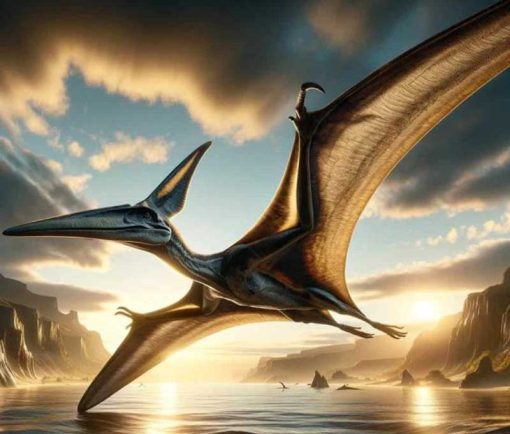
The age of dinosaurs was a grand tableau of evolutionary marvels, a time when the skies were not solely the domain of birds and bats but also inhabited by magnificent flying reptiles. These captivating creatures ruled the skies, soaring majestically through the air, their silhouettes cutting mesmerizing shapes against the backdrop of a primordial sky. Let us embark on a journey to explore the top ten most intriguing flying dinosaurs, each a testament to the magnificence of evolution and adaptation.
1. Pteranodon
Pteranodon is one of the most iconic flying reptiles, known for its astonishing wingspan reaching up to 33 feet. With a sleek body and a distinctive crest atop its head, Pteranodon resembled a living kite, gliding effortlessly over the waters of the late Cretaceous period. This extraordinary creature was primarily a piscivore, using its elongated beak to snatch fish from the depths. Its unparalleled aerial acrobatics allowed it to master the thermals, soaring high like a masterful pilot navigating the vast ocean of air.
2. Quetzalcoatlus
Quetzalcoatlus, named after the Aztec feathered serpent god, is another titan of the skies, with an estimated wingspan of up to 39 feet. If Pteranodon was a kite, Quetzalcoatlus was an airborne whale, dominating the skies with its immense size and remarkable prowess. Fossil evidence suggests that this gargantuan pterosaur roamed the land, scavenging for carrion and small terrestrial animals, bridging the worlds of air and ground. Its intimidating presence was sure to bring both awe and fear to those who beheld it.
3. Archaeopteryx
Archaeopteryx stands as a pivotal figure in the evolution of birds from dinosaurs. With feathers adorning its body and a blend of avian and reptilian features, this small creature is often hailed as the “first bird.” It embodied the transitional beauty between two realms, a glimpse into the genesis of modern avian life. Imagine a blend of a feathered dinosaur and a primordially humble bird, flitting through the lush canopies of the late Jurassic, the dawn of true flight captured in its delicate form.
4. Ramphorhynchus
With its long tail and retractable claws, Ramphorhynchus resembled a miniature dragon, echoing the enchanting tales spun in the fabric of folklore. This small pterosaur, measuring about six feet in wingspan, possessed a sharp, hooked beak that suggested a diet rich in fish and small reptiles. The exquisite skeletal structure reveals a creature adept at maneuvering through the air, an aerial hunter weaving through the lush landscapes, effortlessly dancing on the winds.
5. Dimorphodon
Dimorphodon is often recognized for its distinctively varied teeth; it had both sharp and flat teeth, delicately balanced between catching fish and tearing into flesh, indicating an adaptable diet. Its robust frame and wide wingspan lent it a robust appearance reminiscent of a lumbering giant attempting to conquer the air. It exemplifies nature’s enchanting ability to innovate, a sentinel of survival in the dynamic ecosystems of the early Jurassic period.
6. Pterosauria
The Pterosauria group encapsulates an extraordinary variety of flying reptiles from the late Triassic to the Cretaceous period. While some Pterosauria members rivaled helicopters in size, others were as small as sparrows. Their evolutionary landscape showcases a profound adaptability, with features like elongated beaks and sophisticated flight techniques reflecting the diversity of diets and habitats. Each variant tells a different story, interweaving with the narrative of Earth’s prehistoric skies like a vividly painted tapestry.
7. Sordes
Sordes, meaning “the dirty one,” was an aptly named pterosaur adorned not just with wings but a lush coat of fur-like fibers. These structures likely played a role in thermoregulation, akin to how some mammals adapt for survival. This fascinating creature was relatively small compared to its counterparts but showcased remarkable features that hint at the evolutionary experimentation with flight. Sordes embodies nature’s artistry, forming an intricate connection between feathers and fur.
8. Tropeognathus
Tropeognathus was notable for its impressive cranial crest, combining both ornamental beauty and possibly a role in vocalizations or displays during courtship. With a wingspan reaching 16 feet, it navigated through the air with a sense of grace and purpose. This creature, akin to a regal aviator, reveals a parallel between beauty and functionality, emphasizing how evolution intertwines attractiveness with survival mechanisms.
9. Azhdarchidae
Azhdarchidae, a family of pterosaurs, are often considered the giants among their kin, with some species boasting wingspans exceeding 33 feet. Resembling a fusion of crane and dinosaur, their long necks and beaks made them efficient scavengers and hunters. They present an intriguing paradox of elegance and size, ruling the skies with an air of authority, much like the majestic eagles of modern times that command respect and admiration.
10. Pterodaustro
Pterodaustro is a stunning example of nature’s creativity, equipped with a specialized filter-feeding system reminiscent of a modern flamingo. With its elongated snout lined with tooth-like structures, it thrived in ancient lagoons, sifting the water for minute organisms. This unique adaptation epitomizes the versatility of life forms, showcasing how pterosaurs ventured into previously unexplored ecological niches, reshaping their evolution narrative.
Throughout the ages, these flying dinosaurs exemplified the extraordinary ebb and flow of life on Earth. While they have long disappeared from our skies, their legacy still captivates the imagination, turning our gaze upward to marvel at the potential of adaptability and evolution. Each of these exquisite creatures tells a story not only of flight but of resilience, creativity, and the breathtaking journey of life through epochs past. Indeed, their spirits soar on, inspiring awe, wonder, and a deep appreciation for the tapestry of life that once blanketed our planet.







Leave a Comment