
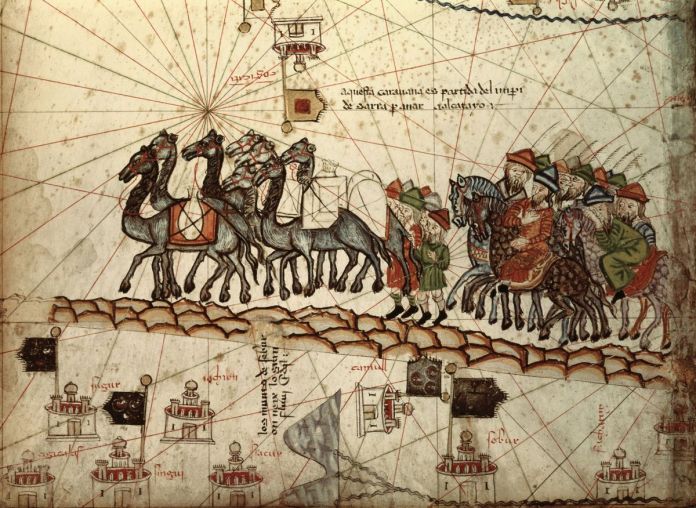
Throughout the annals of history, explorers have carved their names into the stone of time, forever altering the landscape of human understanding and connection. These intrepid souls ventured into the unknown with a heart full of courage and an insatiable curiosity, navigating uncharted waters and traversing dense wilderness. Their discoveries tore asunder the tightly woven fabric of geographical ignorance, stitching together diverse cultures and spawning an age of enlightenment. Here, we recount the top ten explorers whose zest for adventure and transformative visions changed the world in profound ways.
1. Marco Polo
As the harbinger of the Silk Road, Marco Polo’s expeditions in the late 13th century illuminated the pathways between East and West. His voyages to China unfurled the silken threads of culture, trade, and innovative ideas, igniting the imaginations of Europe’s elite. His seminal work, “The Travels of Marco Polo,” acted as a gateway, inviting generations of explorers to dream of distant lands laden with riches and mysteries.
2. Christopher Columbus
Christopher Columbus, often dubbed the “Admiral of the Ocean Sea,” embarked on a fateful voyage in 1492 that would irrevocably alter the course of history. Believing he could bridge the expanse of the Atlantic to reach Asia, Columbus stumbled upon the New World instead. His journeys were not merely monumental for their discoveries of the Americas but also for their profound implications on colonization, trade, and cultural exchanges that ensued, like ripples of a stone cast into a still pond.
3. Vasco da Gama
Vasco da Gama emerged as a beacon of the Age of Discovery with his expedition around the Cape of Good Hope to India in 1498. By establishing a maritime route to the East, he crafted the first thin threads in the fabric of the spice trade that would enthrall Europe. His legacy is painted in bold strokes of maritime prowess and undeterred ambition, linking continents and ushering a new era in global trade.
4. Ferdinand Magellan
Ferdinand Magellan, the first captain to circumnavigate the globe, transformed the notion of exploration into a perilous odyssey. His voyage, which began in 1519, challenged the very limitations of human ambition and navigational capability. Though Magellan perished before the culmination of his journey, his expedition demonstrated the Earth’s spherical nature, unraveling an intricate tapestry of global interconnectivity. The world became smaller, and simultaneously, much larger.
5. Captain James Cook
Captain James Cook, the illustrious navigator, and cartographer, journeyed through the vastness of the Pacific in the 18th century, like a master painter coloring in blank canvases of the world. His meticulous mapping of New Zealand and the eastern coast of Australia rendered geographical knowledge more precise and informed future generations. Cook’s encounters brought forth a plethora of botanical, cultural, and anthropological insights, leaving an indelible mark on the annals of exploration.
6. Hernán Cortés
Hernán Cortés’s audacious conquest of the Aztec Empire in 1519 intertwined the destinies of Spain and the Americas in complex and often tragic ways. His audacity and tactical brilliance—much like a chess player deftly maneuvering pieces—changed the course of history, giving rise to an era of Spanish colonization. While his exploits resulted in the financial enrichment of his homeland, they also heralded a tumultuous period marked by cultural clash and transformation.
7. Lewis and Clark
The expedition of Meriwether Lewis and William Clark, commissioned by President Thomas Jefferson, unveiled the vastness of the American West in the early 1800s. Their two-year trek through rugged terrain and uncharted territories is akin to a heroic saga, as they charted rivers and mountains, meeting Native American tribes and documenting the lush flora and fauna. Their legacy is one of discovery, cooperation, and an enduring spirit of adventure.
8. Ibn Battuta
Ibn Battuta’s journey in the 14th century offers a unique lens through which to view medieval geography. Traveling over 75,000 miles across Africa, Europe, and Asia, the Moroccan explorer’s accounts in “Rihla” serve as both a travelogue and a historical document. His ability to navigate diverse cultures and integrate with local customs reveals a deep appreciation for humanity’s shared experiences, exemplifying exploration as an avenue for understanding and connection.
9. Robert Peary
Robert Peary is often heralded as the quintessential Arctic explorer, claiming to have reached the North Pole in 1909. His relentless pursuit of the ultimate geographic goal showcases the tenacity and unflagging determination required for such a feat. However, Peary’s aspirations were not devoid of controversy, sparking debates on the authenticity of his claims. Still, his expeditions helped to map the harsh Arctic, paving the way for future exploration in an inhospitable land.
10. Jacques Cousteau
Lastly, Jacques Cousteau, the famed French marine explorer, introduced the world to the wonders beneath the waves. His pioneering use of the Aqua-Lung and passion for aquatic conservation unlocked the mysteries of the ocean, encouraging a profound respect for marine ecosystems. His documentary work fostered an environmental consciousness that transcended borders, making him a custodian of the seas.
These explorers—each a unique thread in the rich tapestry of human history—have inspired generations to forge their paths into the unknown. They ventured beyond the familiar, embracing uncertainty and risk as essential companions on their grand quests. The world today stands as a testament to their courage, curiosity, and, perhaps most importantly, their unquenchable thirst for knowledge. As we continue to explore both the world around us and the realms of the mind, we honor their legacy with every new journey we undertake.










Leave a Comment