
Australia, often referred to as “the land down under,” boasts an eclectic array of wildlife, marked by both its enchanting beauty and inherent danger. From arid deserts to lush rainforests, the continent is home to a breathtaking variety of fauna. Among these creatures, many possess potent venom, formidable sizes, or predatory prowess, earning their reputation as some of the deadliest animals on the planet. Herein lies a list of the top ten deadliest animals in Australia, highlighting their unique attributes and the risks they pose to both humans and other creatures.
1. Box Jellyfish
The box jellyfish reigns supreme in the waters around Australia. Characterized by its translucent, box-like shape, this gelatinous predator boasts tentacles that can extend over ten feet. These tentacles are adorned with thousands of nematocysts, which, upon contact with skin, release toxins that can cause excruciating pain, paralysis, and even death. Encounters often occur in shallow waters, catching unsuspecting swimmers by surprise, making this ethereal creature a formidable adversary.
2. Inland Taipan
Hailing from the arid regions of central Australia, the inland taipan is the world’s most venomous snake. Holding enough neurotoxic venom to kill several adult humans in a mere minute, this snake is an ambush predator, relying on its remarkable camouflage to infiltrate the territory of its prey. Despite its lethal potency, it is notoriously reclusive, rarely seen by humans. This evasiveness contributes to its stature as a feared emblem of Australian wildlife.
3. Stonefish
A marvel of adaptation, the stonefish lies dormant on the sea floor, camouflaged amongst the rocks and coral. Its appearance is deceptively benign; however, it is equipped with dorsal spines loaded with venom. Stepping on a stonefish can lead to intense pain, tissue damage, and potentially death if not treated promptly. For divers and beachgoers, awareness and caution are paramount when traversing the shallow coastal waters frequented by these masters of disguise.
4. Sydney Funnel-Web Spider
Regarded as one of the most lethal arachnids on Earth, the Sydney funnel-web spider is primarily found in the lush, coastal forests of New South Wales. These spiders possess a potent venom that can induce severe neurological symptoms in humans. Their aggressive nature amplifies their threat; however, the availability of an effective antivenom has diminished fatalities. Treading carefully in their habitat is wise, as these spiders tend to inhabit gardens and bushy areas.
5. Cone Snail
Upon first glance, one might mistake a cone snail for a beautiful seashell. Yet, lurking within its elegantly spiraled exterior lies a venomous dart capable of immobilizing prey and posing a grave danger to humans. The venom from a single cone snail can cause paralysis, respiratory failure, and even death within hours. Beachcombers need to exercise caution and avoid handling live specimens to prevent an erroneous encounter with this deceptively charming mollusk.
6. Great White Shark
The great white shark, an iconic apex predator, commands respect and fear in equal measure. Known for its massive size and exceptional hunting prowess, this formidable marine creature can reach lengths of over 20 feet. While unprovoked attacks on humans are rare, they can occur, leading to devastating consequences. Awareness of their habitats, primarily coastal waters, can help mitigate the risk of an unsettling encounter.
7. Blue-Ringed Octopus
The blue-ringed octopus, small and seemingly innocuous, packs a lethal punch with its venom. Found primarily in tidal pools and coral reefs, this cephalopod displays vibrant blue rings when threatened, serving as a warning signal. Its venom contains tetrodotoxin, which can cause paralysis and respiratory failure within minutes. Despite their small stature, encounters with these creatures can be life-threatening, underscoring the importance of vigilance in marine environments.
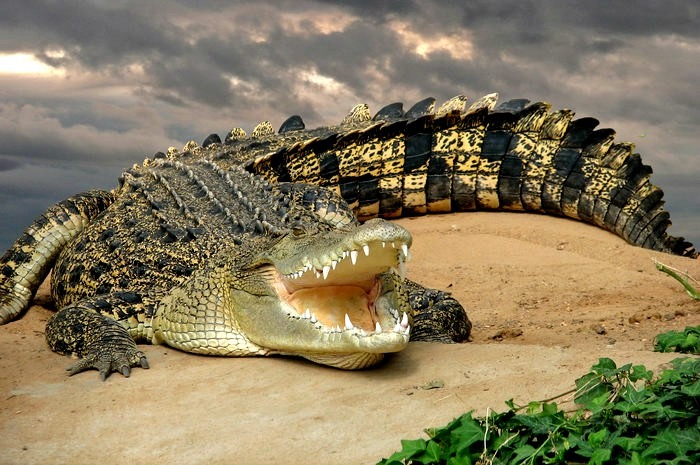
8. Saltwater Crocodile
The saltwater crocodile, the largest living reptile, epitomizes primal power and ferocity. Found in northern Australia, their size can reach lengths of over 20 feet, making them formidable hunters. They are ambush predators, capable of swift and devastating attacks, often on unsuspecting prey near waterholes. Their presence in both salt and freshwater habitats makes them a constant threat to humans near coastlines and rivers in their territory.
9. Redback Spider
A ubiquitous presence across Australia, the redback spider is easily recognized by its glossy black body adorned with a distinctive red stripe. While bites are often not fatal, they can induce severe discomfort and distress, including nausea, fever, and muscle pain. As they frequently inhabit urban areas, encounters with humans are common. Awareness and caution in addressing cobwebs and possible habitats can help prevent bites.
10. Bull Shark
The bull shark is renowned for its aggressive nature and ability to thrive in both salt and freshwater. Found in rivers and coastal waters alike, it is responsible for a significant number of shark attacks on humans. Its robust physique and unpredictable behavior render it a potent threat to unsuspecting swimmers and surfers. Familiarity with local habitats is crucial for minimizing dangerous encounters.
In conclusion, Australia’s rich and diverse wildlife showcases some of the most lethal animals on the planet. From venomous serpents to formidable ocean predators, the continent’s fauna is a testament to the intricate web of life that thrives, often in perilous ways. Awareness and respect are pivotal when navigating this extraordinary environment, ensuring that interactions with its inhabitants remain safe, enriching, and memorable.






Leave a Comment