
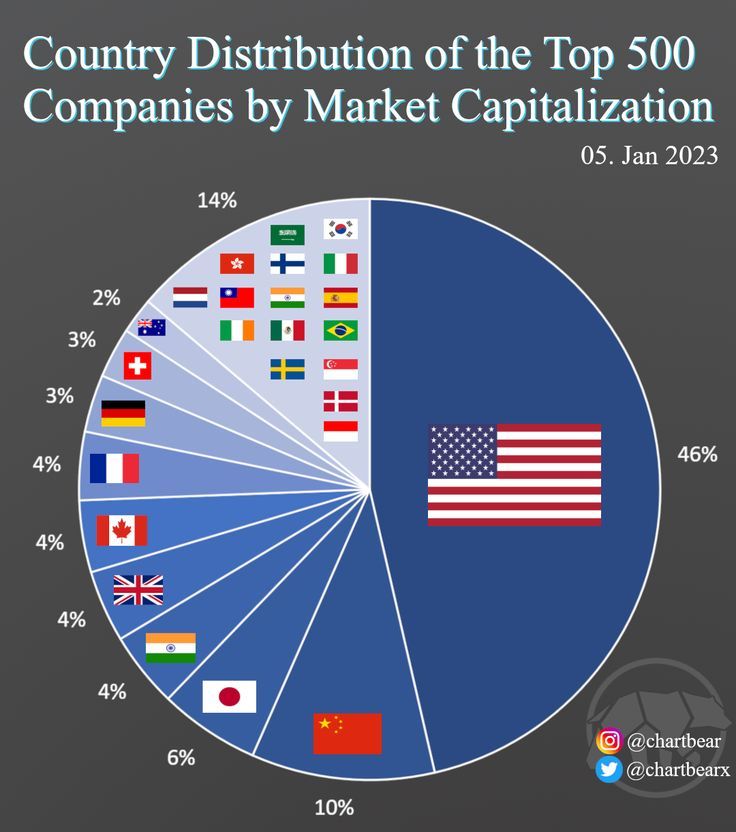
In the ever-evolving landscape of global finance, the stature of a company is often encapsulated by its market capitalization— a pivotal measure that reflects a company’s market value based on its outstanding shares multiplied by its share price. This intriguing metric serves as a touchstone for investors, industry analysts, and economists alike, providing insights into a firm’s financial health and its competitive positioning in the marketplace. As we embark on a journey to explore the top 10 companies by market capitalization, we unveil not only the giants that dominate the financial realm but also the underlying factors contributing to their immense valuation.
### 1. Apple Inc. (AAPL)
With its headquarters nestled in Cupertino, California, Apple Inc. epitomizes innovation in technology and consumer electronics. Renowned for its flagship products, including the iPhone, iPad, and Mac, Apple has revolutionized the way individuals interact with technology. Its market capitalization often surpasses $2 trillion, making it the world’s most valuable company. The allure of Apple lies not only in its cutting-edge products but also in its prolific ecosystem, including services like iCloud and Apple Music, which foster customer loyalty and recur revenue streams.
### 2. Microsoft Corporation (MSFT)
Headquartered in Redmond, Washington, Microsoft Corporation has become synonymous with software solutions that have defined personal computing. With a market capitalization exceeding $2 trillion, Microsoft’s diverse portfolio includes the ubiquitous Windows operating system and cloud computing services through Azure. Its strategic pivot toward cloud services and artificial intelligence signals not just an adaptability but a foretelling of future growth, much to the fascination of investors.
### 3. Saudi Aramco (2222.SR)
Saudi Aramco stands as a testament to the fossil fuel industry’s enduring prominence in global markets. Based in Dhahran, Saudi Arabia, this oil behemoth has been valued at over $2 trillion at its peak, primarily owing to its unparalleled oil reserves and production capacity. The company’s market cap fluctuates with oil prices, providing a captivating study of how geopolitical factors and energy demands intertwine to shape financial landscapes.
### 4. Alphabet Inc. (GOOGL)
The parent company of Google, Alphabet Inc., is a tech titan that sits atop a market capitalization exceeding $1.5 trillion. Based in Mountain View, California, Alphabet has diversified its operations beyond search engines to include ventures in advertising, cloud computing, and autonomous vehicles through Waymo. Its relentless pursuit of innovation and data-driven decision-making highlights a deeper exploration into the digital ecosystem and the adroit ways firms can leverage technology for substantial market advantage.
### 5. Amazon.com, Inc. (AMZN)
With its headquarters in Seattle, Washington, Amazon.com, Inc. has transformed from a mere online bookstore into a colossal e-commerce and cloud computing powerhouse. Its market capitalization frequently nudges toward $1.5 trillion. Amazon’s fascination stems from its pursuit of operational efficiency and customer-centric philosophy, continually redefining retail dynamics while investing in logistics and artificial intelligence, which positions it strategically for future competitiveness.
### 6. Berkshire Hathaway Inc. (BRK.A)
Based in Omaha, Nebraska, Berkshire Hathaway Inc., led by the astute investor Warren Buffett, is a confluence of diverse business interests, including insurance, utilities, and consumer goods. Known for its unique investment strategy that emphasizes long-term value, the company boasts a market capitalization that hovers around $700 billion. Its investment portfolio serves not only as a barometer for market trends but also as an intriguing case study on the principles of prudent financial management and inherent risk assessment.
### 7. Tesla, Inc. (TSLA)
Tesla, Inc. has become an emblematic figure in the electric vehicle industry, operating from Palo Alto, California. Frequently oscillating around a market cap of $800 billion, Tesla’s success story is deeply intertwined with advancements in sustainable energy and cutting-edge automotive technology. The company’s charismatic CEO, Elon Musk, has captivated public imagination and investor interest, sparking debates over the sustainability of its meteoric valuation amid an evolving automotive landscape.
### 8. Nvidia Corporation (NVDA)
Nvidia Corporation is at the forefront of graphics processing technology and artificial intelligence, with its headquarters in Santa Clara, California. The company has seen its market capitalization soar past $1 trillion, driven by the explosive demand for GPUs in gaming, data centers, and AI applications. Nvidia’s prominent role in shaping the future of technology not only underscores the importance of semiconductor industries but also provides a fascinating lens into how technological advancements can redefine entire sectors.
### 9. Meta Platforms, Inc. (META)
Formerly known as Facebook, Meta Platforms, Inc. represents the intersection of technology and social connectivity, headquartered in Menlo Park, California. With market capitalization levels fluctuating around $800 billion, Meta’s innovative approach to social media, virtual reality, and digital advertising creates a compelling narrative about the potential influence of social platforms in shaping human interaction and communication. The company’s forward-looking initiatives in the metaverse realm highlight a strategic vision for future growth.
### 10. Taiwan Semiconductor Manufacturing Company (TSM)
Headquartered in Hsinchu, Taiwan, the Taiwan Semiconductor Manufacturing Company (TSMC) has garnered a formidable reputation as a leading semiconductor foundry globally. With market capitalization approaching $700 billion, TSMC plays a pivotal role in powering technology across various sectors, from smartphones to automotive electronics. The company’s position underscores the significance of semiconductor supply chains and their influence on global technology trends.
In conclusion, the companies that dominate the market capitalization landscape are not merely exceptional in their financial achievements; they embody innovation, adaptability, and strategic foresight. Each firm holds an intriguing narrative shaped by cultural, technological, and economic currents that drive their success. As we traverse through these titans of industry, the deeper reasons for their valuation become clearer, providing valuable insights into the intricacies of the modern economy and the relentless pursuit of progress.







Leave a Comment