
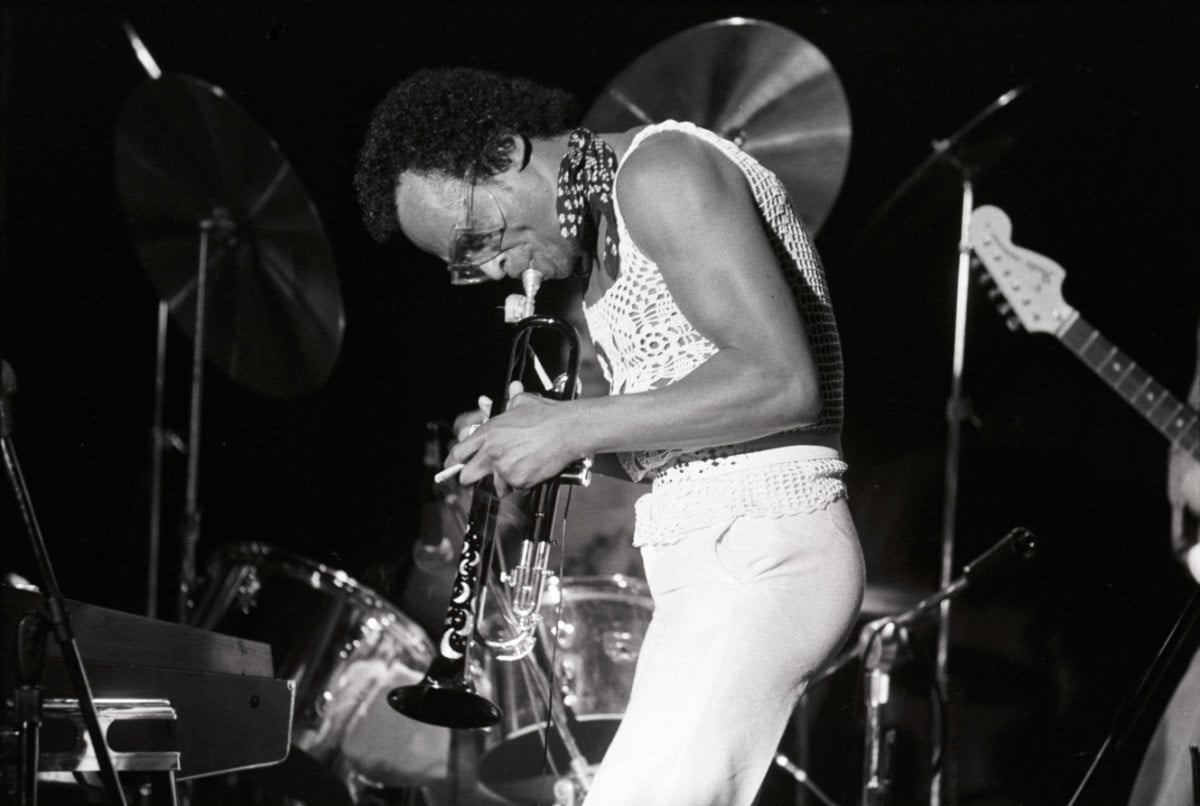
When one delves into the kaleidoscopic world of jazz, it is nearly impossible to overlook the indelible mark left by Miles Davis. Renowned for his innovative spirit and elusive style, Davis was a catalyst for jazz’s evolution throughout the decades. Imagine this: if a novice were tasked with uncovering the essence of jazz through a single artist, would he or she need to explore any one artist beyond Miles Davis? To immerse in his works is to dance through a spectrum of emotions and musical forms. In this engaging voyage, we’ll traverse the lush landscape of his top ten masterpieces, each a testament to his unparalleled genius. Let’s prepare to be enchanted by the sounds that continue to resonate through time.
1. So What
Arguably the most iconic piece in jazz history, “So What” serves as the introductory track on the groundbreaking album “Kind of Blue.” This composition epitomizes modal jazz, a radical departure from traditional chord progressions. Its serene yet elusive atmosphere invites listeners to engage in a meditative experience. The playful question lingers: does simplicity hold more complexity than meets the ear? On this track, Davis masterfully pairs his trumpet’s cool timbre with a languid rhythm, beckoning contemplation of life’s profound mysteries.
2. Freddie Freeloader
Continuing the journey through “Kind of Blue,” we arrive at “Freddie Freeloader,” a composition that intertwines bluesy grooves with harmonically rich textures. With a slow, relaxed tempo, the piece elevates the listener’s spirit while allowing space for introspection. The poignant interplay between Davis and the other musicians prompts us to ponder: how does each sound layer contribute to the narrative of the song? Through the seamless transitions, the band coalesces while simultaneously showcasing their individual artistry, generating a symphonic dialogue.
3. All Blues
Another gem from “Kind of Blue,” “All Blues” stands as a prime example of the musical tapestry Davis weaves. Built upon a 6/8 time signature, the work blends elements of blues and jazz. As horns caress the air with their sultry tones, one cannot help but wonder: does the cyclical nature of the melody reflect the rhythms of life itself? This piece exemplifies the elegance of Davis’s improvisation, as he navigates through uncharted musical territories, leaving listeners spellbound.
4. Bitches Brew
Transitioning to a more avant-garde sound, “Bitches Brew” launches us into the psychedelic stratosphere of jazz fusion. With sprawling soundscapes punctuated by discordant harmonies, this 1970 album is an audible journey through tumultuous emotions and bold experimentation. Here lies the challenge: can listeners appreciate the chaotic beauty of the piece, or does understanding require a threshold of discomfort? Davis’s fearless exploration reshapes the jazz canon, proving that musical boundaries are made to be challenged.
5. Sketches of Spain
A fusion of jazz and Spanish folk music, “Sketches of Spain” demonstrates Davis’s adept cultural amalgamation. This enchanting suite captures the essence of traditional Spanish melodies while infusing them with a contemporary flair. Each note exudes a sense of longing, inviting reflection. Within this realm of cross-cultural dialogue, the question emerges: can the essence of a different culture be authentically represented through jazz? As Davis traverses these rich textures, he renders an homage to the poignancy of human experiences.
6. Birth of the Cool
The titular track from Davis’s seminal album “Birth of the Cool” fundamentally altered the jazz landscape. This composition introduces an orchestrated ensemble, offering a refreshing contrast to the standard jazz quintet. It mesmerizes with its understated elegance, which leads one to consider: can the quietest moments in music evoke the loudest feelings? The meticulous arrangement showcases the harmonic sophistication that characterizes cool jazz, catalyzing a movement towards sophistication.
7. Round Midnight
Davis’s rendition of “Round Midnight,” originally composed by Thelonious Monk, exemplifies his capacity for emotive expression. The song’s nocturnal melancholy is enveloped in a shroud of mystery, inviting listeners into a dimly lit jazz club. Here lies the essence of introspection: does the music carry the weight of silence? Davis’s trumpet whispers, expressing longing and, at times, heart-wrenching sorrow. This masterpiece beautifully highlights the shadows and silhouettes of the human condition.
8. Impressions
Taking the modal concept a step further, “Impressions” is an audacious composition that showcases an incandescent interplay of improvisation. The colors of the soundscape evoke a rich visual tapestry, with each note painting vivid emotions. But what happens when improvisation transcends the artist’s intent? In this track, Davis and his ensemble exhibit an almost telepathic connection, allowing the music to flow with a life of its own, challenging the listener to embrace spontaneous creativity.
9. Miles Ahead
In “Miles Ahead,” Davis collaborates with arranger Gil Evans to produce a lush orchestral sound. The sweeping melodic lines are imbued with deep emotional resonance. An intriguing question arises: can an artist’s vision be expanded through collaboration? As this piece unfolds, the layers of brass, strings, and woodwinds converge into an awe-inspiring collective, affirming that harmony can be found in diverse perspectives.
10. Tutu
Rounding out our exploration is “Tutu,” a contemporary masterpiece that ushers in the era of electronic jazz. Melding synthesizers with traditional instrumentation, this audacious work invites exploration of new sounds and innovations. It poses yet another challenge: how do new technologies reshape artistic expressions? Davis embraces the future with this vibrant creation, demonstrating that the possibilities within jazz are as boundless as the artist’s imagination.
As we reflect on these top ten masterpieces, it becomes clear that Miles Davis is not merely a musician; he is a perennial beacon illuminating the intricate paths of jazz. Each composition is a chapter in the ongoing narrative of this enchanting genre, inviting us to engage with it at multiple levels. Whether into the depths of melancholy or the heights of exuberance, the challenge remains: how will you respond to the call of improvisation and innovation that flows from Davis’s pen?







Leave a Comment